What You Pay
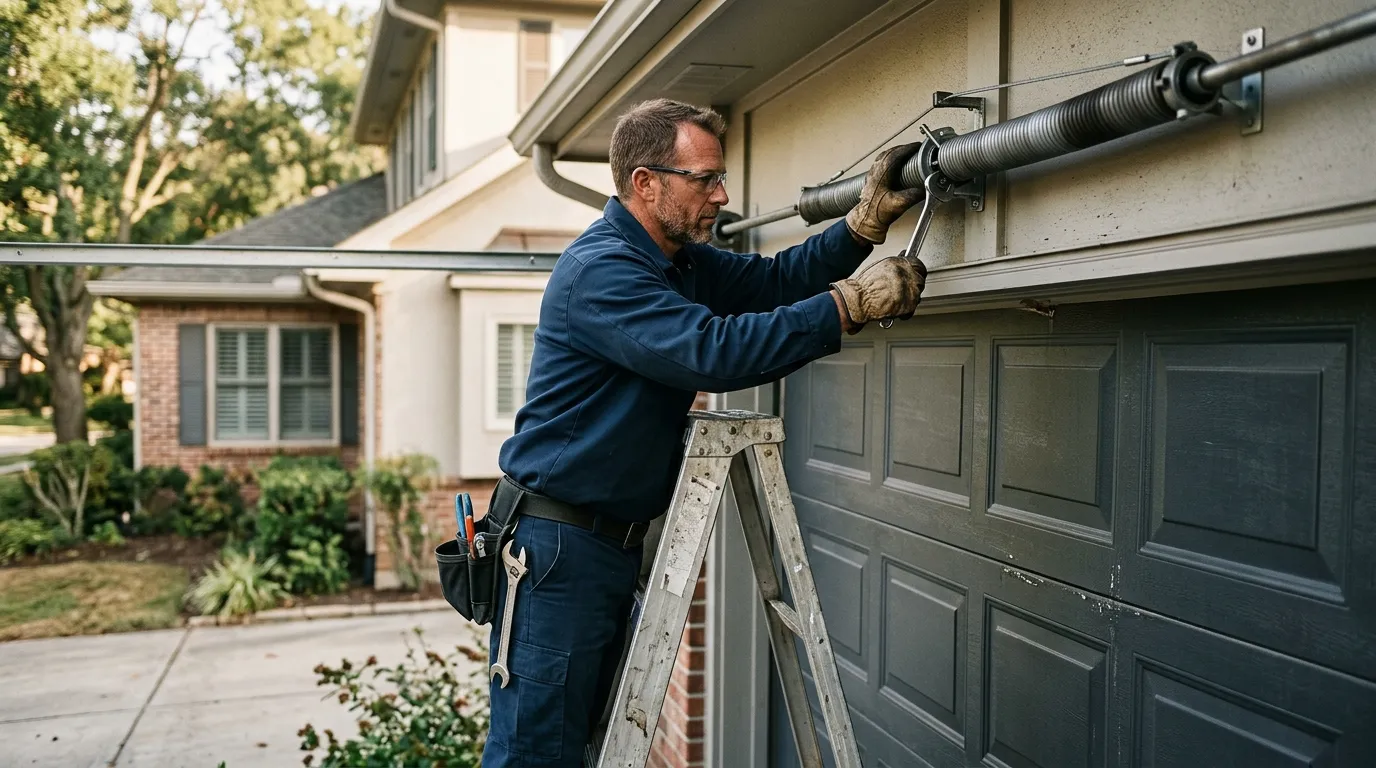
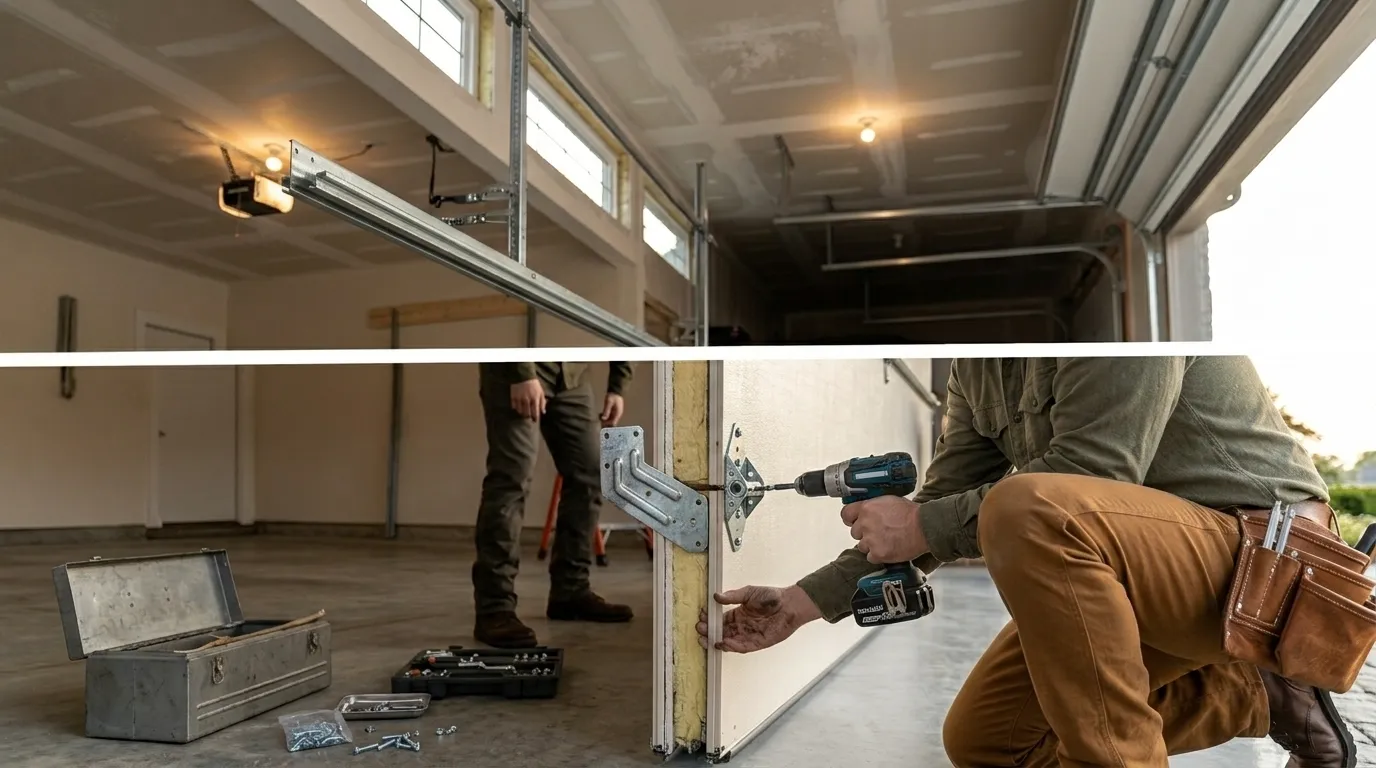
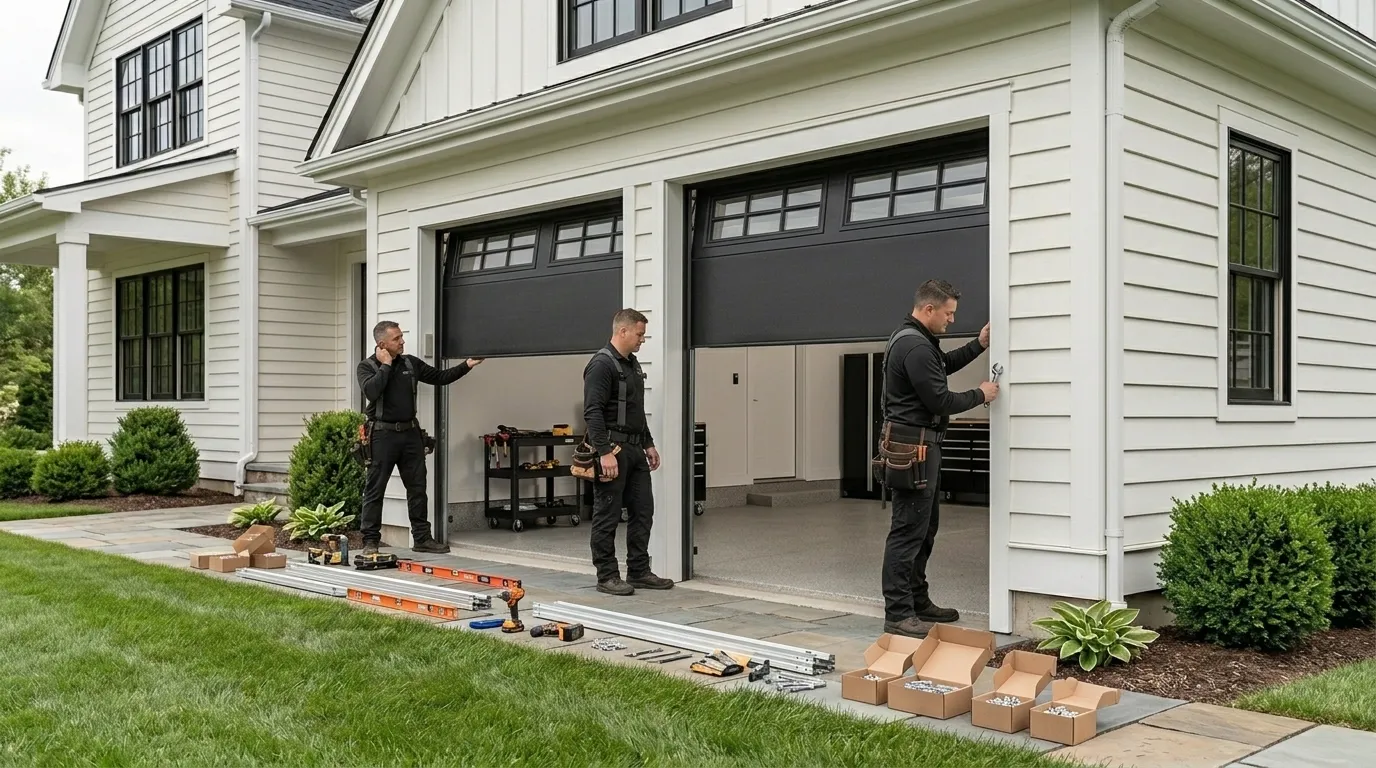
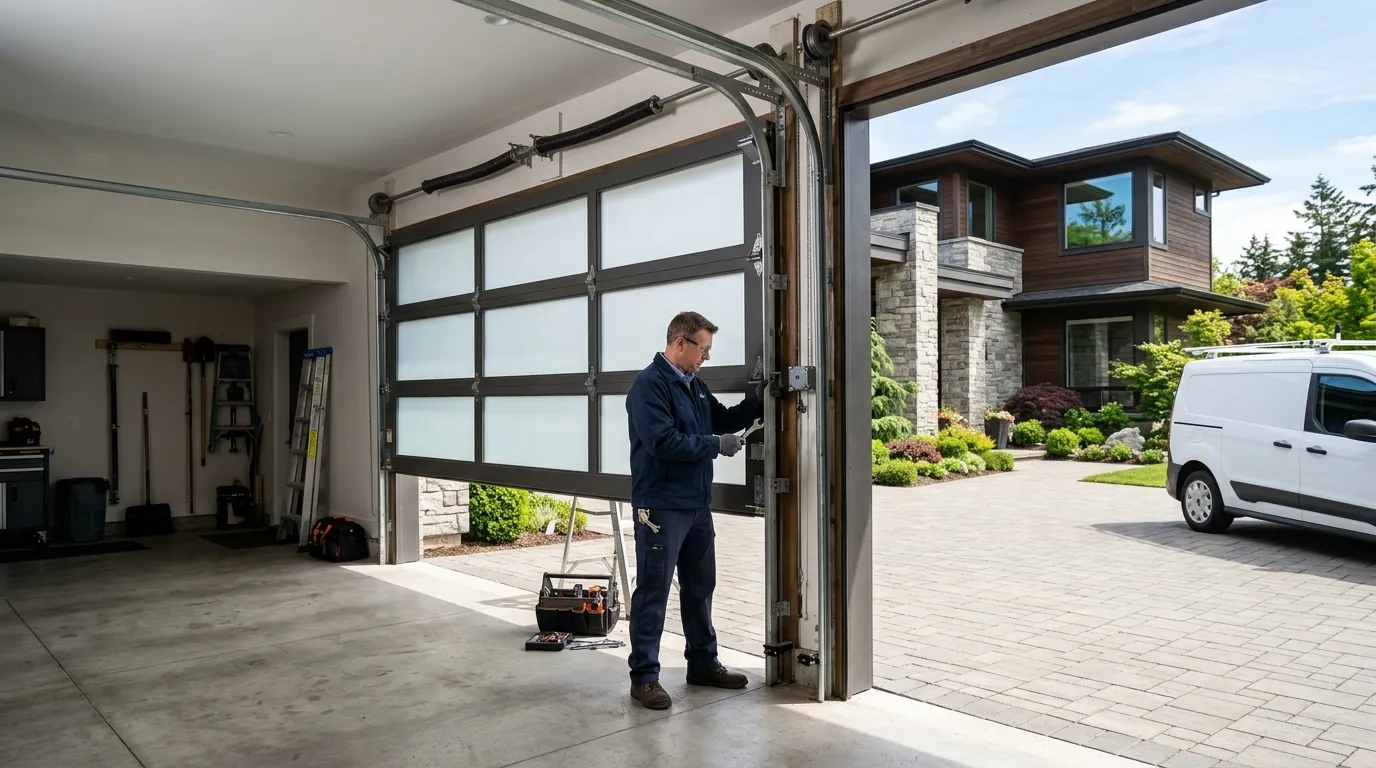
We can't give you a number over the phone, and we won't pretend to. A broken torsion spring on a double door costs different money than a snapped cable on a single, and a burned-out opener motor is its own job entirely. What we can tell you is what drives the cost: spring size and count, whether the track bent along with the spring failure, whether the opener's logic board took damage from the same event, and how old the door itself is. Doors on houses built in the 1958-2010 range we work in most often use torsion hardware that isn't always stocked on the truck - if your door is an older one-piece or a less common panel width, parts can mean a return trip instead of a same-visit fix. That's the honest limitation here: we diagnose on site, price the actual parts and labor for your door, and we don't quote sight-unseen because a guess that's wrong either overcharges you or underbids the job and stalls it halfway through. If a spring or cable failed and pulled a panel or track out of alignment with it, that's a bigger repair than the spring alone, and we'll tell you that before we start, not after.'
Where This Job Goes Sideways
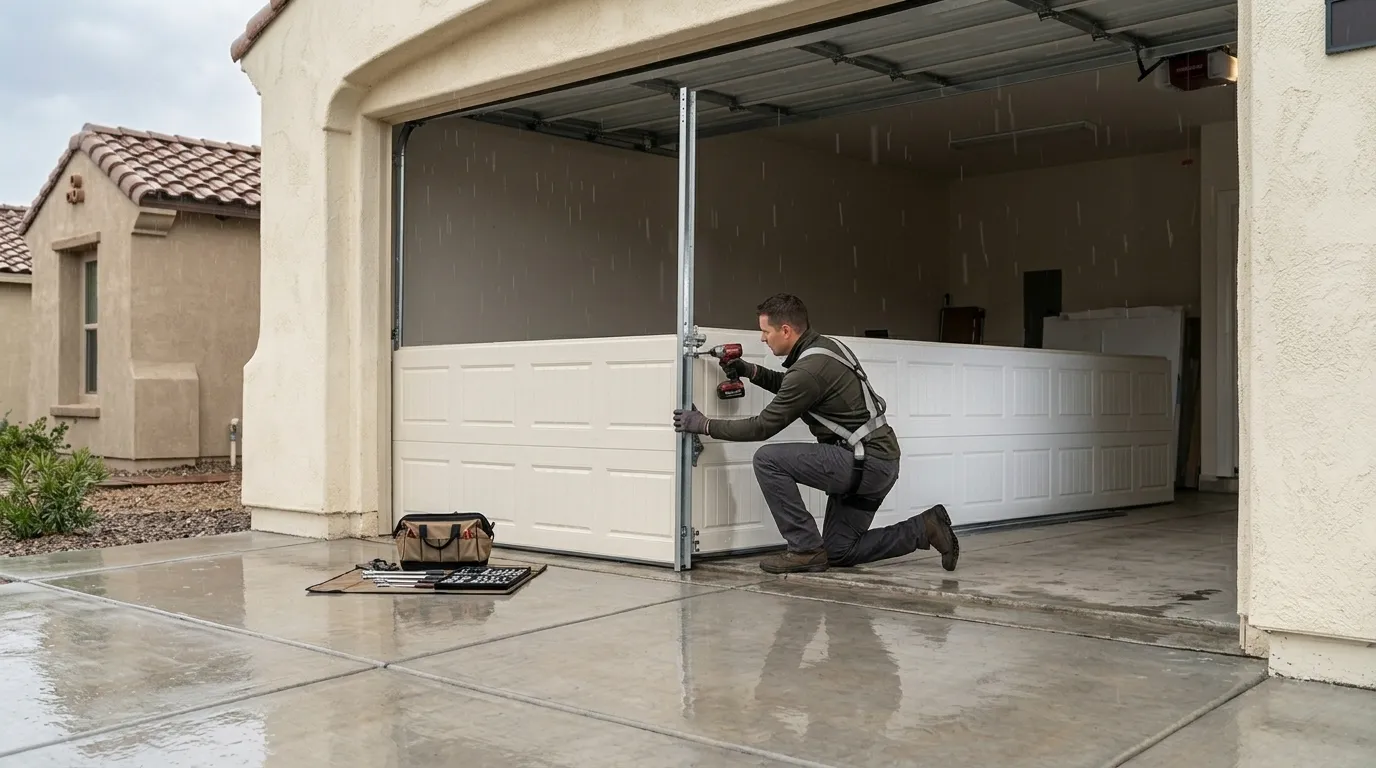
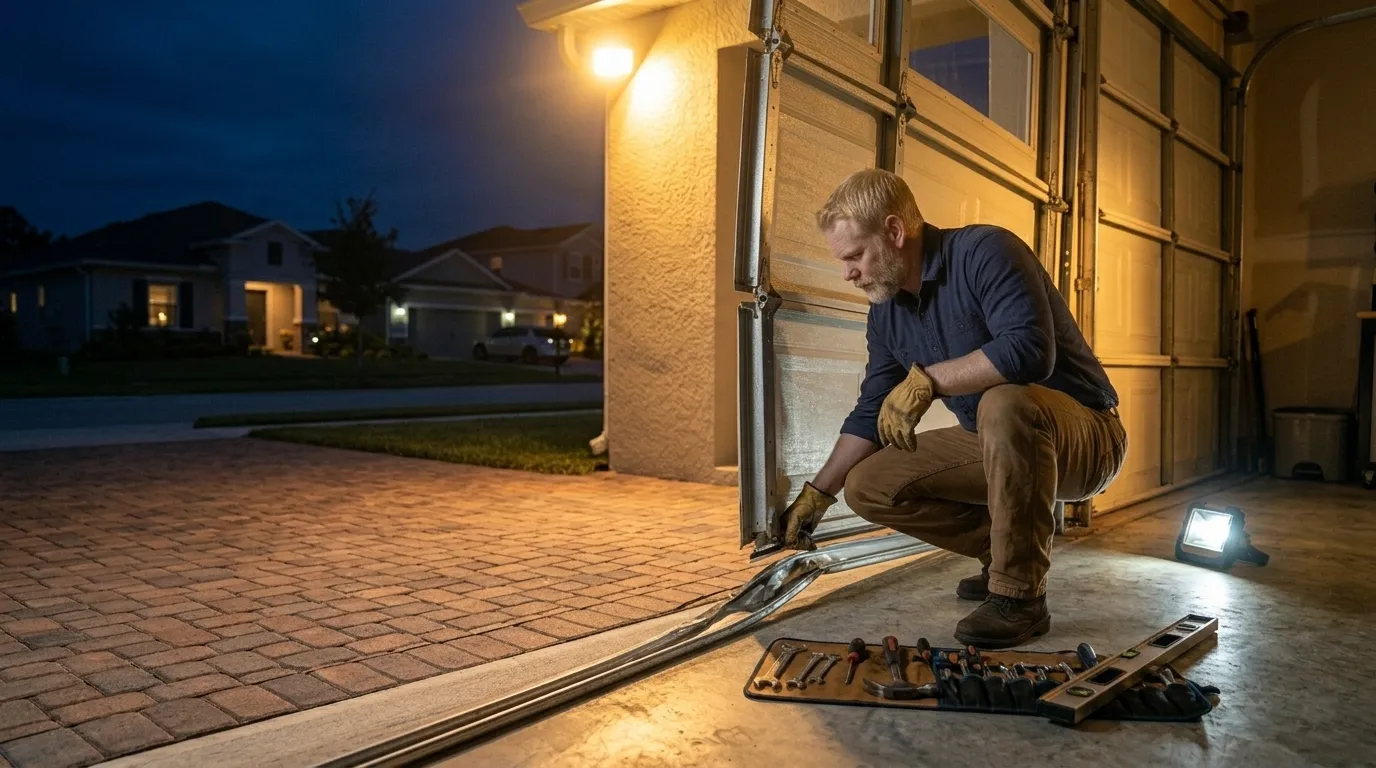
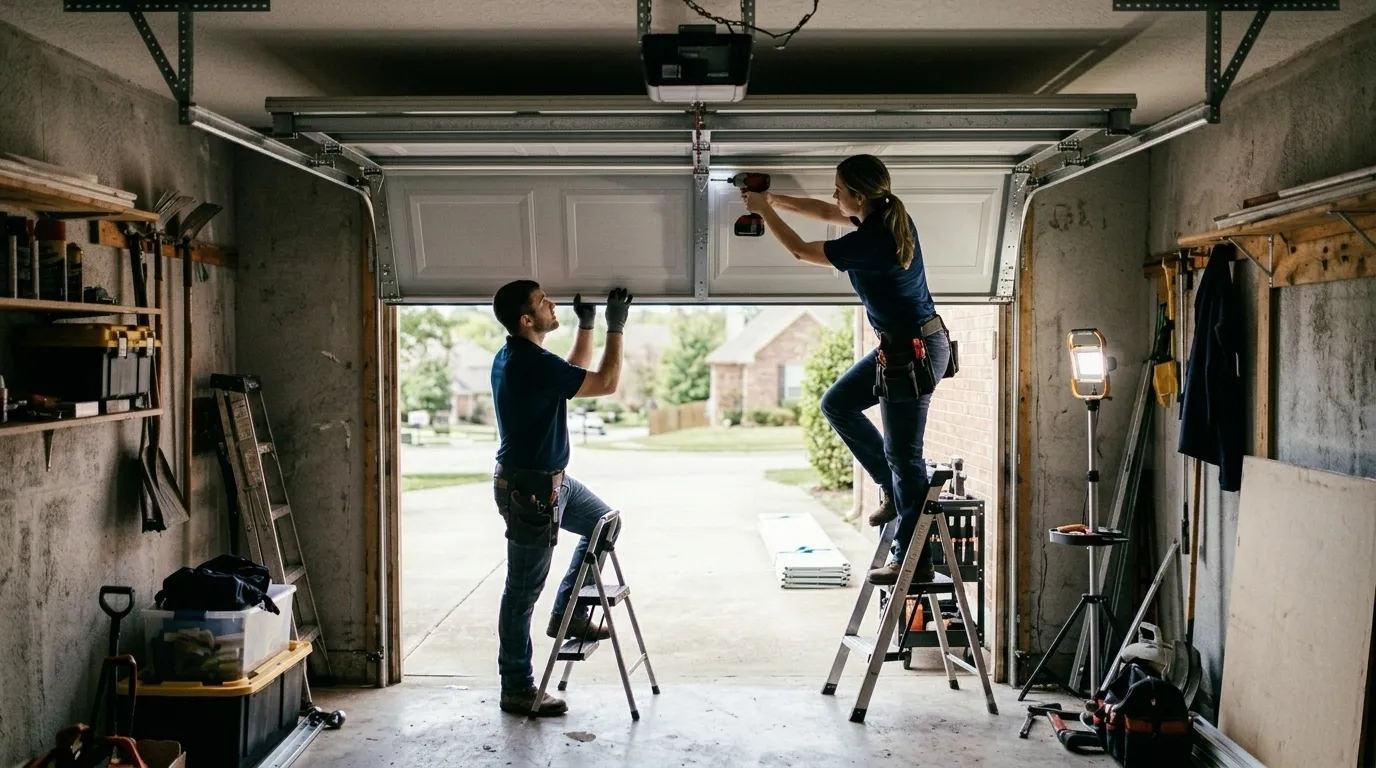
The call usually starts small. A door that's been groaning for two weeks finally stops halfway - one spring went, the other's still under tension, and the door is holding on a cable that's now doing double duty. That's the moment it goes sideways: someone tries to force it up by hand or run the opener anyway, and the second spring or the remaining cable lets go too. Now you've got a door with no controlled way down, an opener motor straining against dead weight, and sometimes a bent track from the door dropping unevenly on one side. We also see it start the other way - opener quits first, door gets forced up manually while people figure out what's wrong, and that manual strain is what finishes off a spring that was already near the end of its life. Either direction, the fix gets bigger the longer the door sits half-open or gets worked by hand. A stuck garage door isn't just an inconvenience in this area - it's an open house in weather that punishes an open house, and it's a job that costs less fixed at step one than at step three.
The Symptom
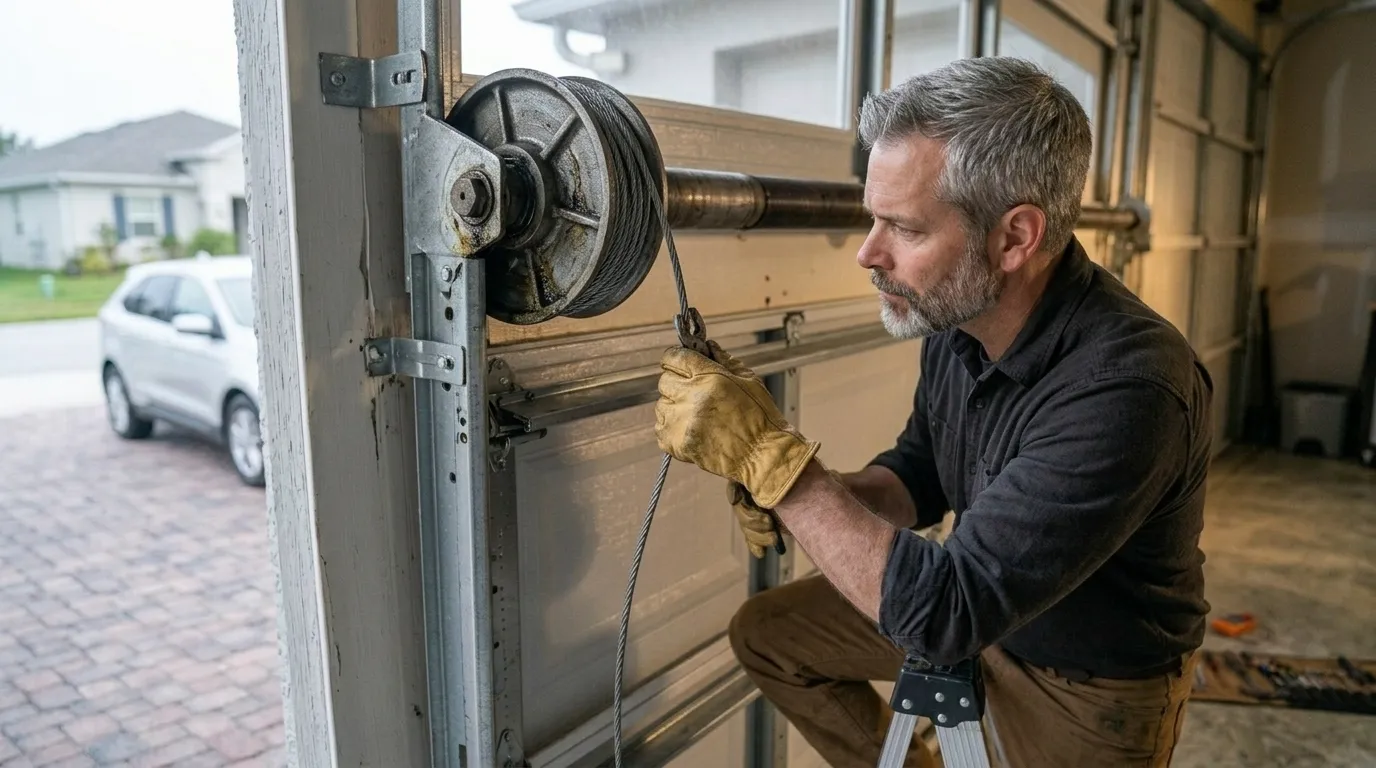
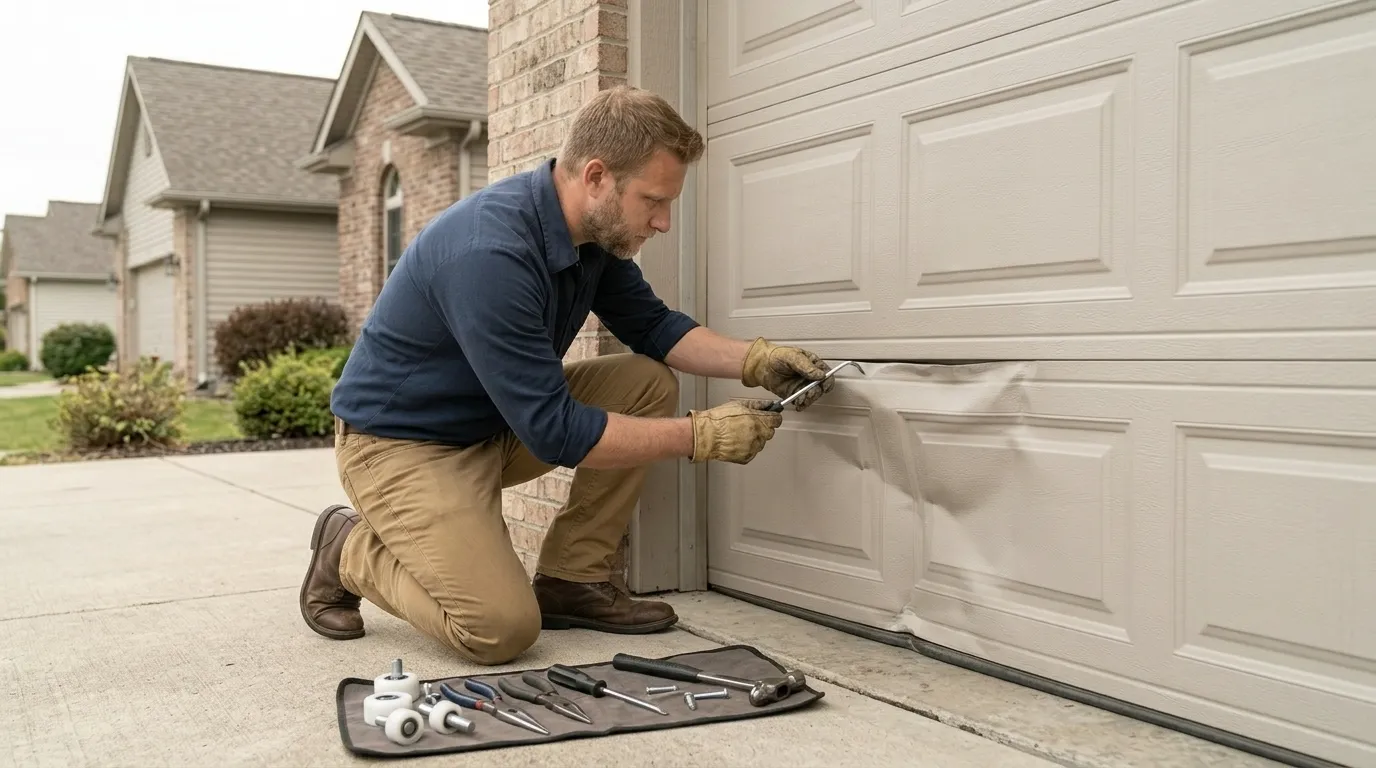
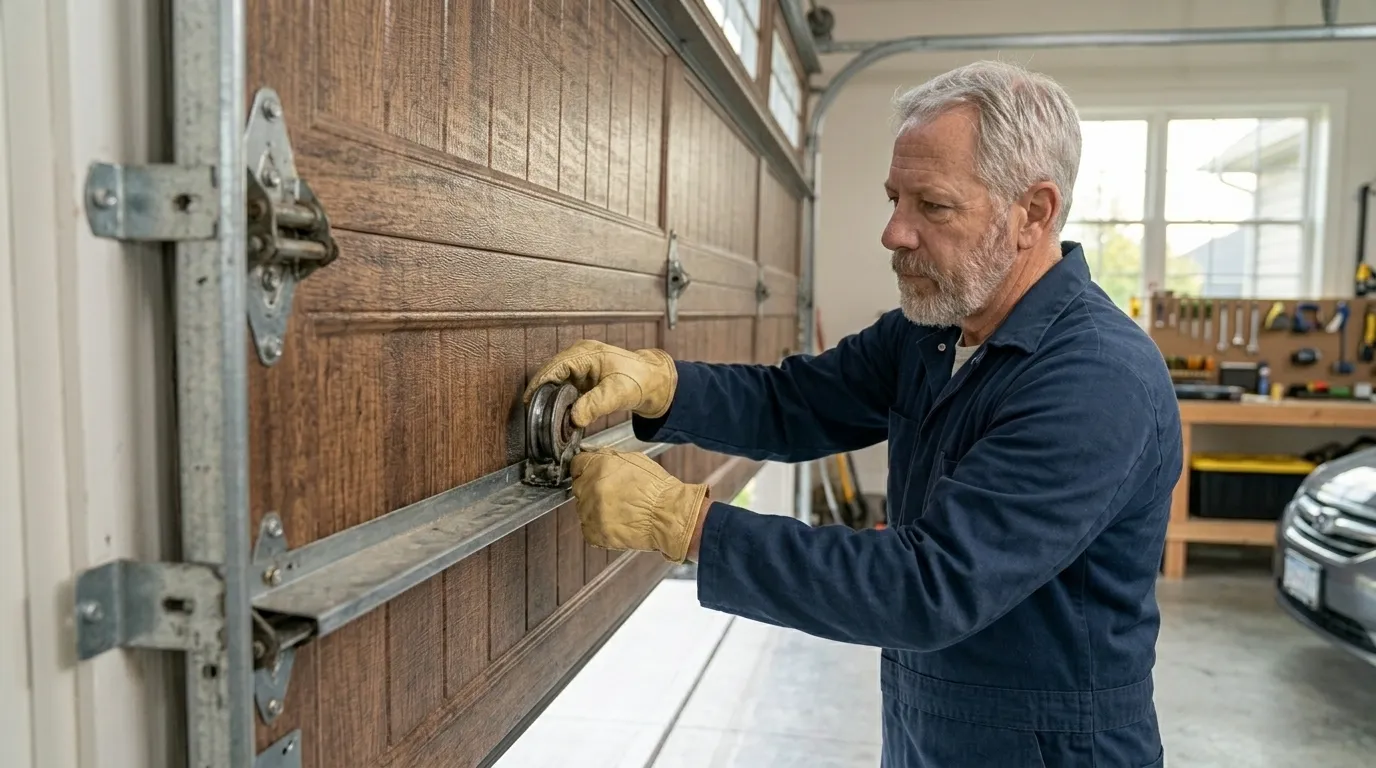
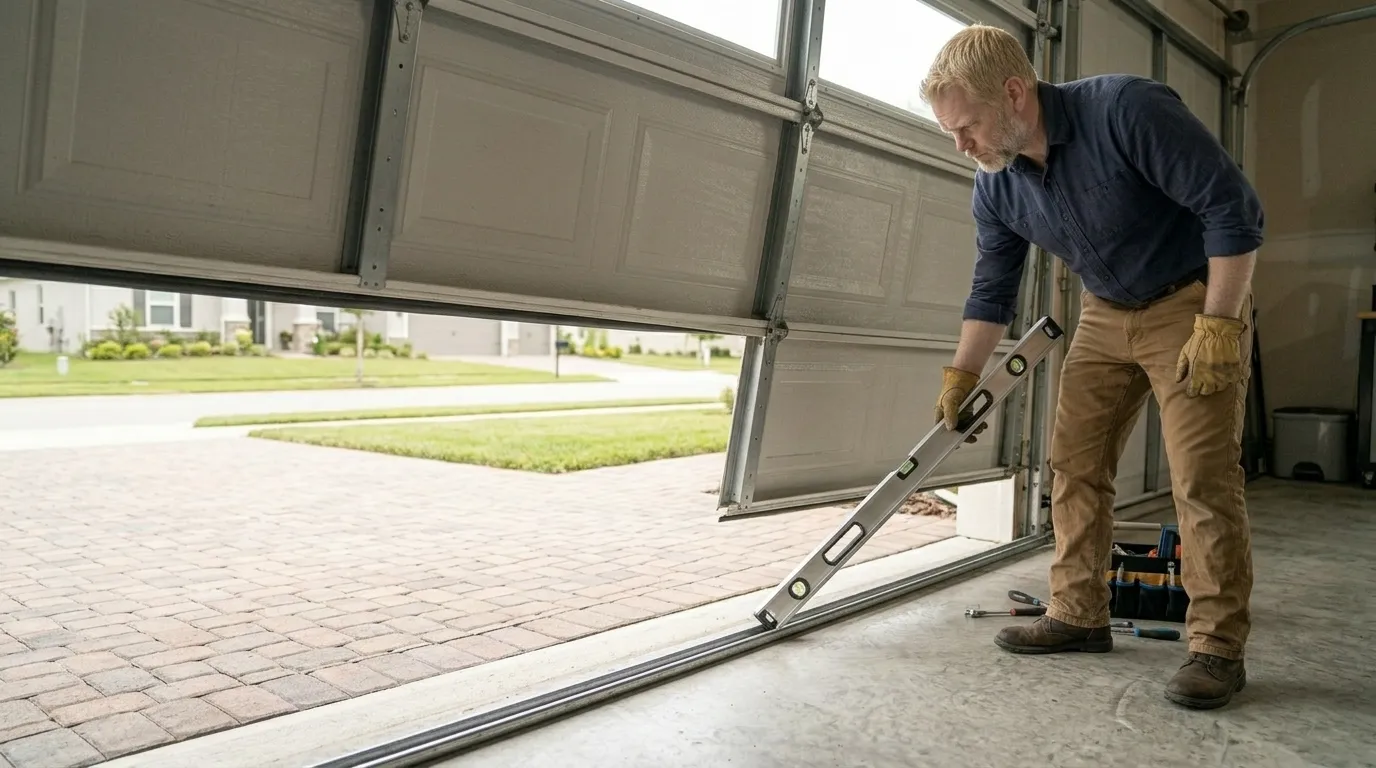
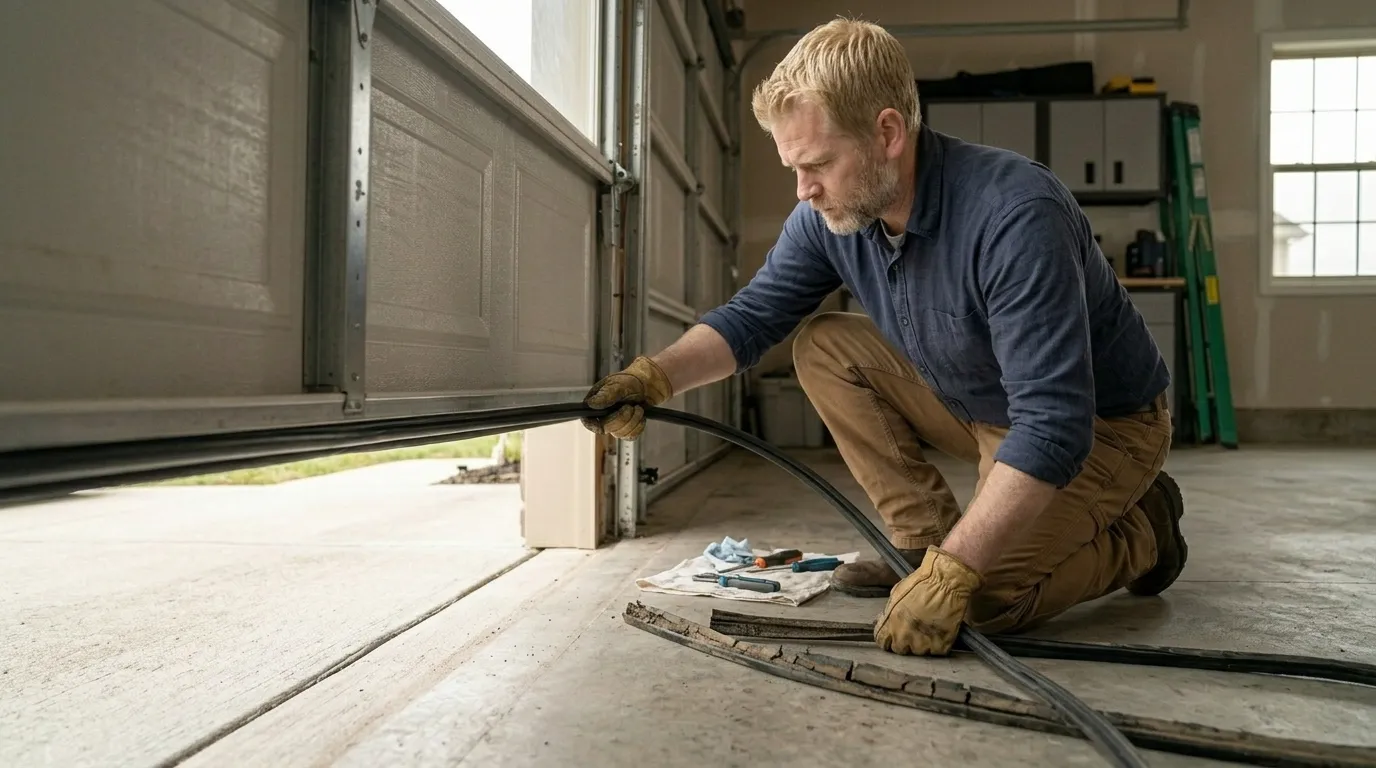
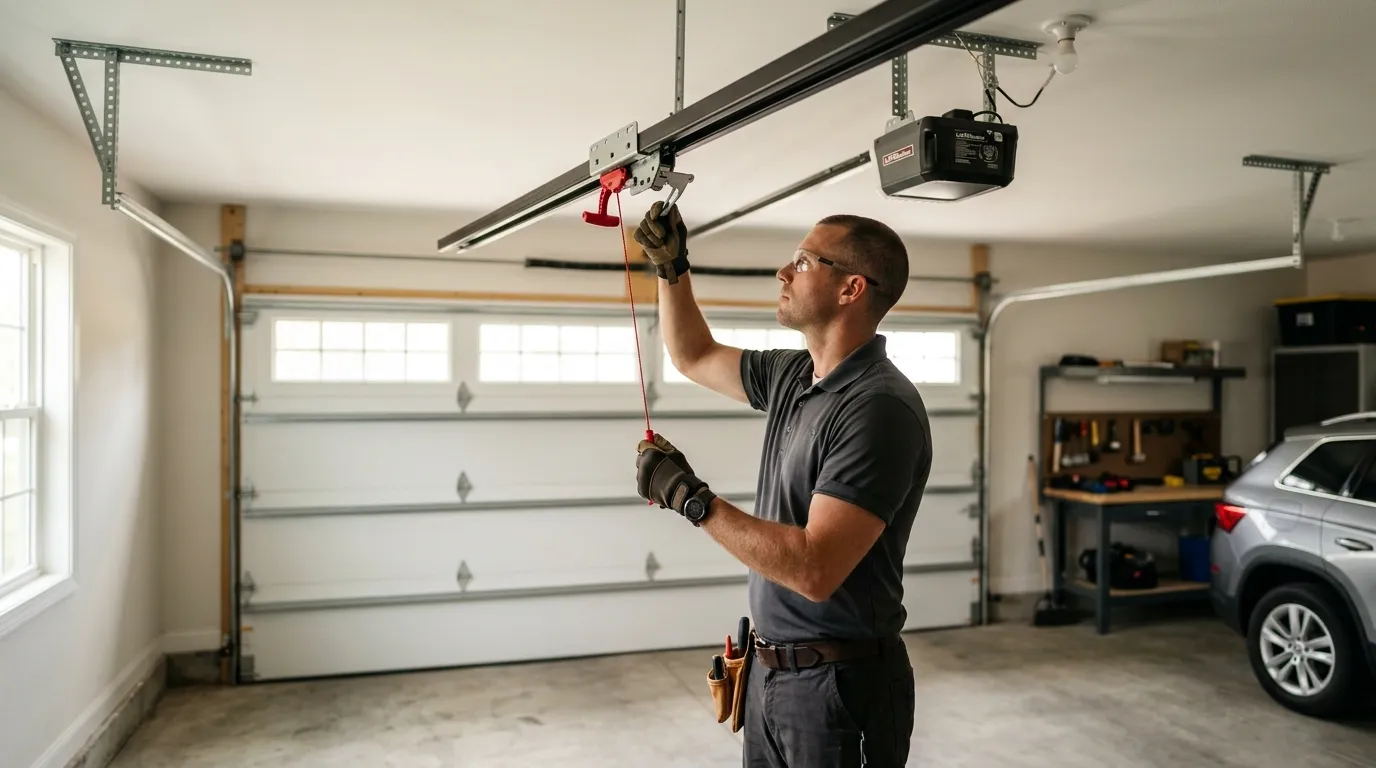
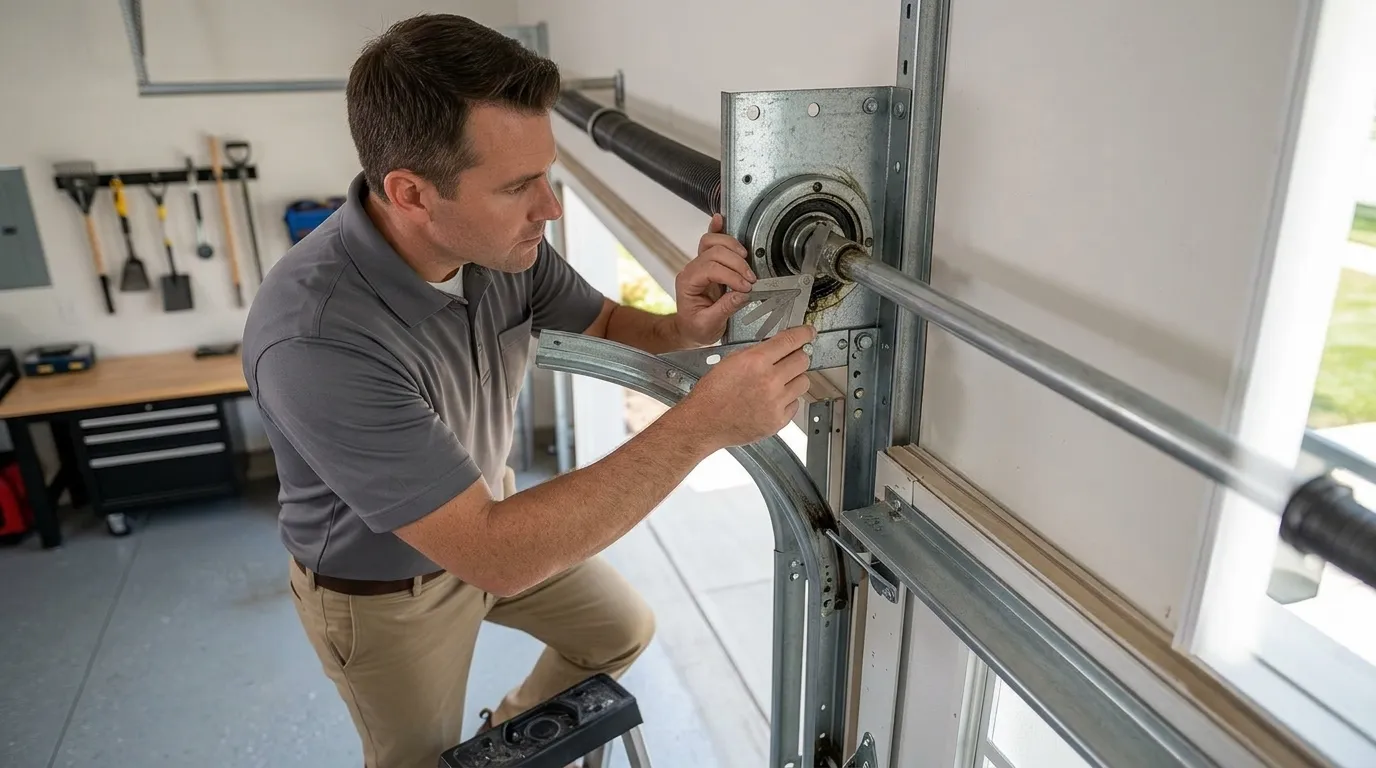
Most calls sound like one of a few things. A loud bang from the garage, followed by a door that won't move at all or moves and drops fast on one side - that's a spring. A door that opens partway then reverses or won't close all the way, opener clicking or humming without lifting - that's often the opener motor losing the fight against a spring that's already gone soft. A frayed or visibly kinked cable on one side, with the door hanging crooked, means the cable is close to failing outright and shouldn't be run again until it's replaced. Grinding or scraping along the track usually means the track's bent, sometimes from the same event that took out the spring, sometimes from something hitting it. If your door just feels heavier than it used to when you lift it by hand with the opener disconnected, that's the spring losing tension gradually rather than snapping - worth a call before it fails outright rather than after.