What You Pay
We don't post a flat number here because roller jobs vary more than people expect. A straight swap of nylon rollers on a door that's already tracking well is a short job. A door where the rollers wore unevenly because the track is bent, or where the stem is bent inside the roller bracket, takes longer and costs more because you're not just swapping parts, you're realigning the track too.
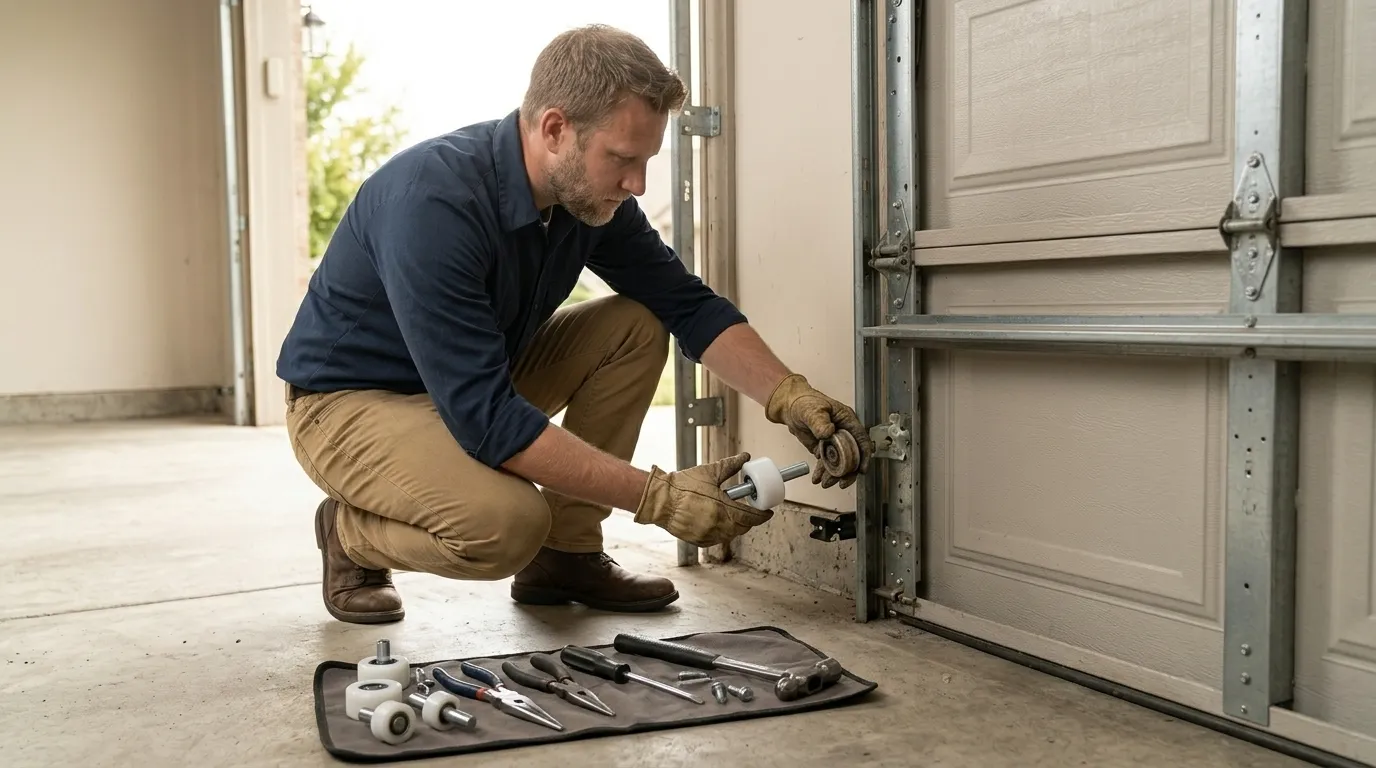
What drives the price on most calls in this service area: how many rollers are shot versus just worn, whether you're going nylon or steel with sealed bearings, and whether the track brackets need to come off the jamb to get it straight again. Steel ball-bearing rollers cost more up front than nylon but run quieter and hold up better through repeated freeze-thaw cycling, which matters here given our cold band.
The honest limitation: if your rollers are original to a house built in the 1958-2010 range common across this area, and nobody's touched the track in that time, don't be surprised if the tech finds the track itself is out of plumb. That's a second problem, not an upsell - and it's one more reason a phone quote without seeing the door is a guess, not a number.
Where This Job Goes Sideways
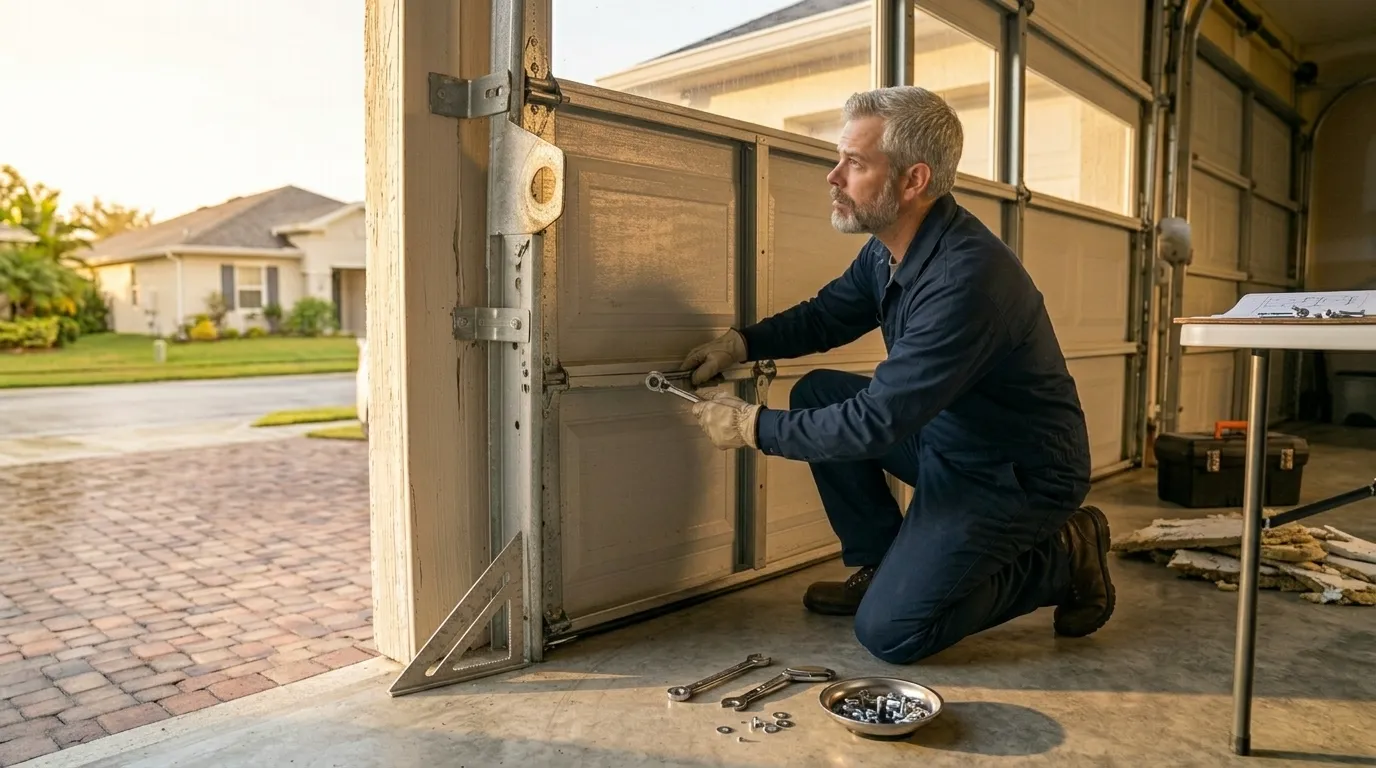
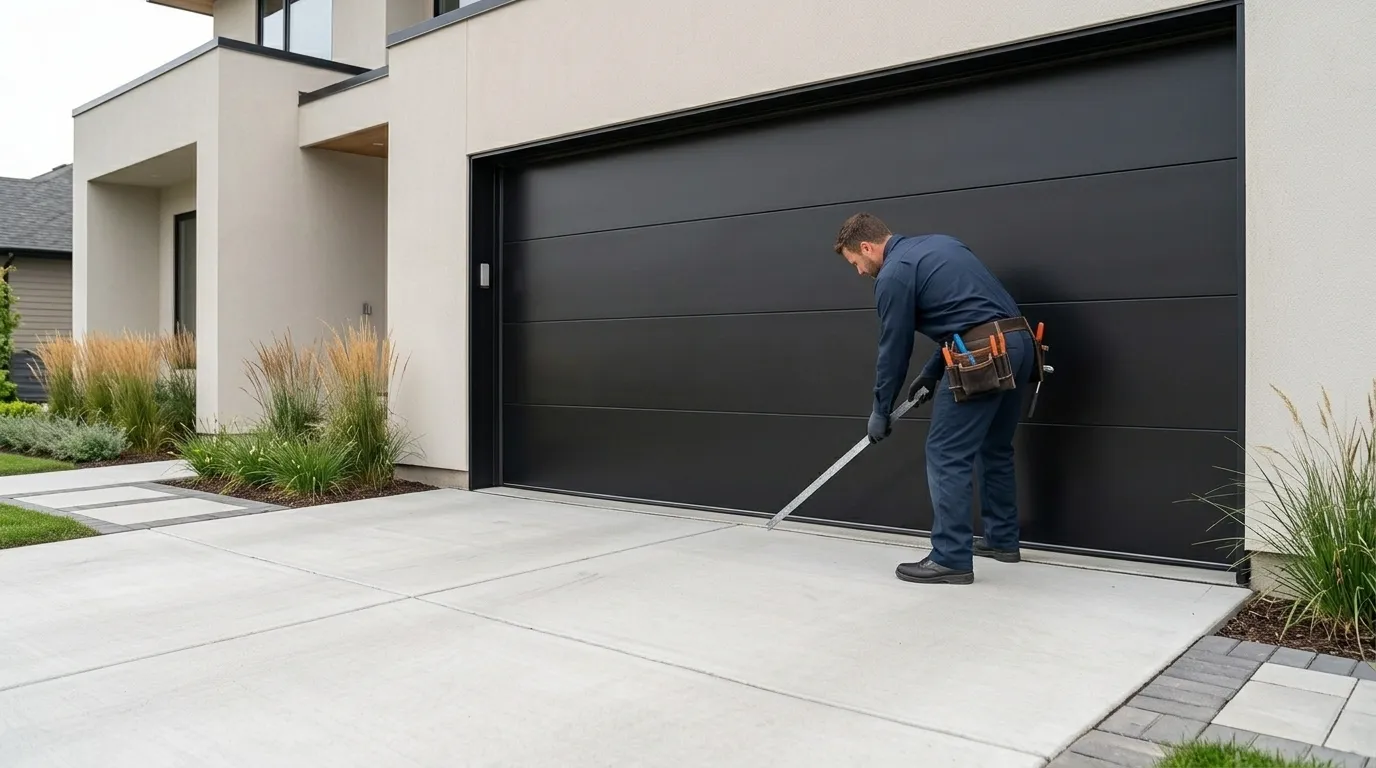
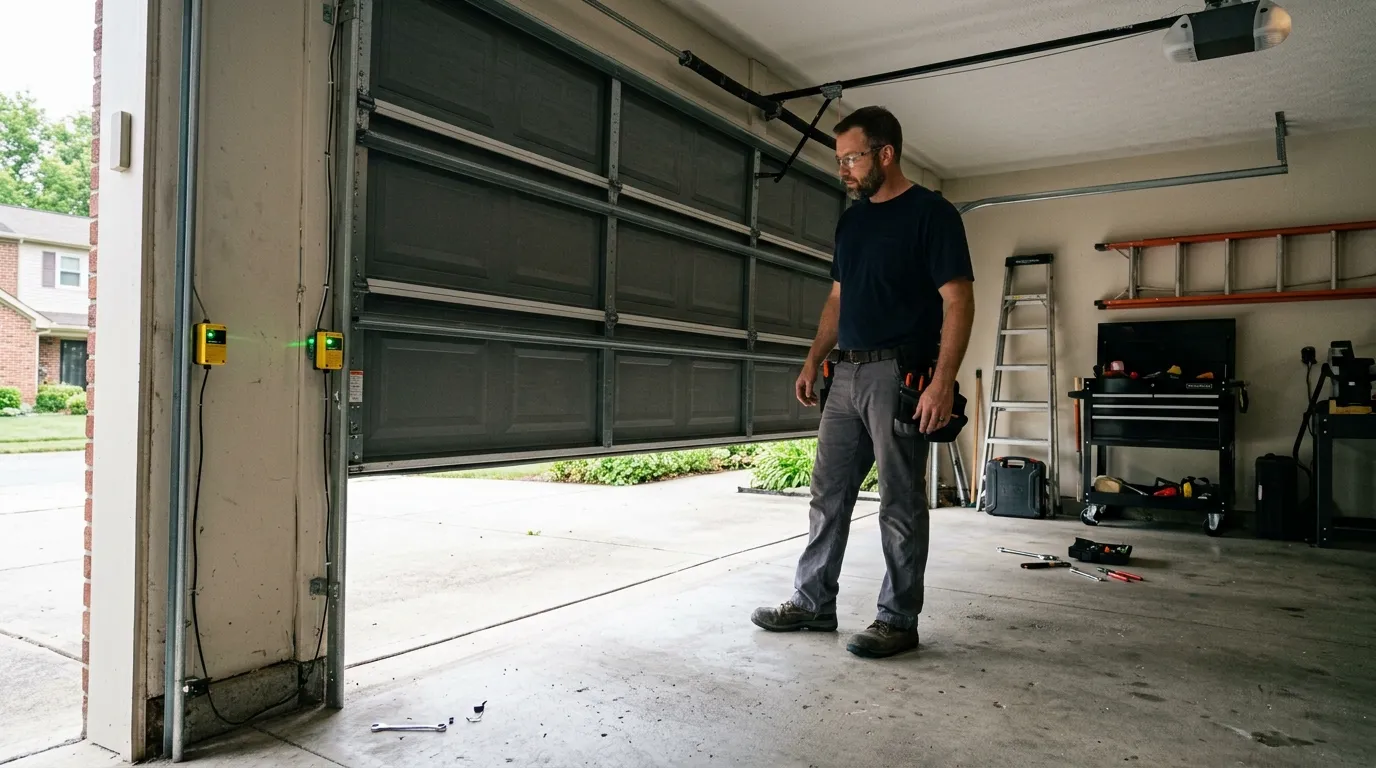
The most common mistake is replacing rollers without checking the track they ride in. If the vertical track has pulled away from the jamb even a little, new rollers will grind against the same edge that ate the old ones, and you're back out in six months. A tech who just swaps parts and doesn't check plumb is doing half the job.
Second spot it goes wrong: mismatched roller stems. Older doors in this area, especially the stock built in the 1980s and 90s that makes up most of what we see across the 23 named areas here, often used a shorter stem than the ten-inch stems sold today. Force the wrong stem into an old bracket and you get a roller that binds under load, which reads to the homeowner as "the new part is bad" when it's actually a fit problem.
Third: doing rollers on one side only because that's the side that's loud. Rollers wear as a set. If one side is shot from age, the other side is close behind, and coming back out for the second side in a few months costs more than doing both now.
The Symptom
You'll usually hear it before you see it: a grinding or rattling sound as the door travels, worse at the top or bottom of the run where the roller carries more load going around the curve into horizontal track. Sometimes it's a rhythmic thump, one clunk per rotation, which usually means a single roller has a flat spot or a cracked wheel.
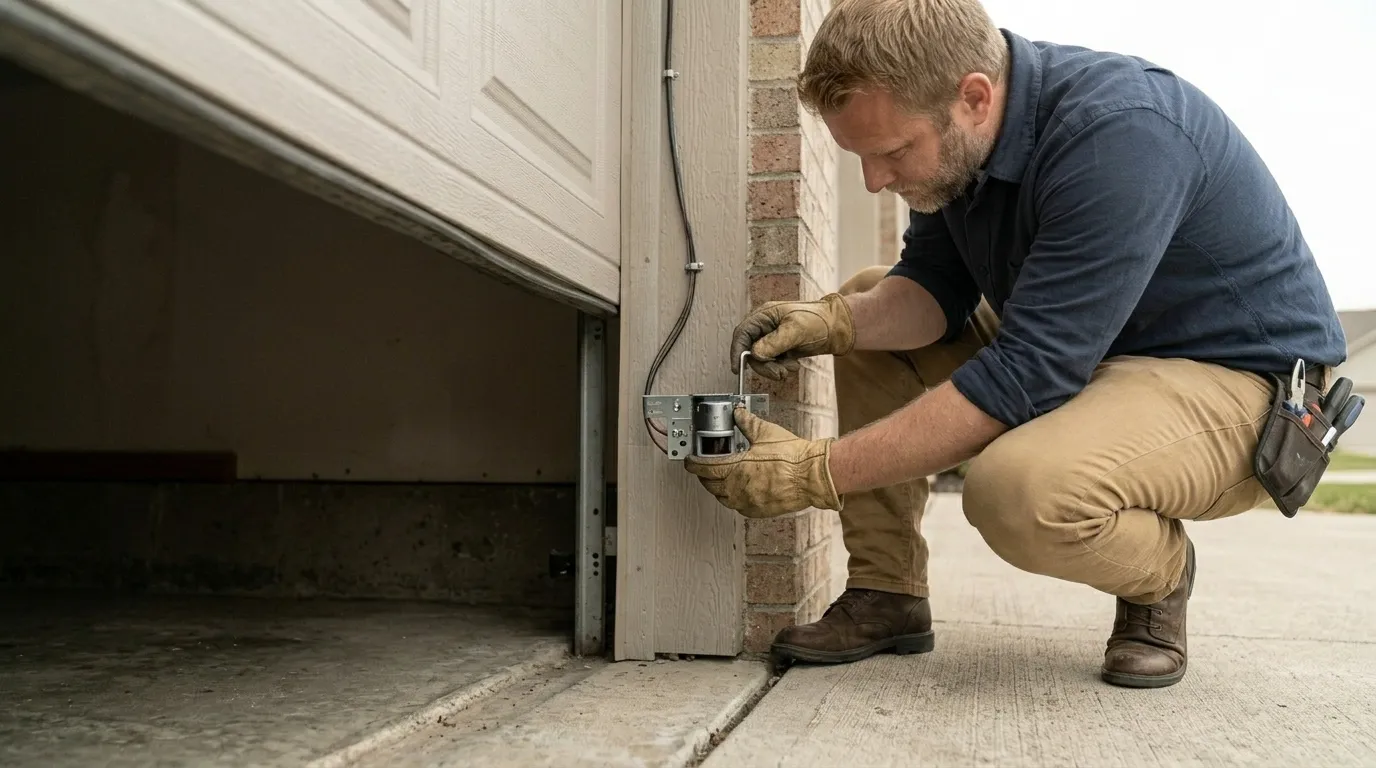
Visually, look for a roller that doesn't spin freely when you turn it by hand with the door closed, or one sitting crooked in its bracket. Cracked nylon is easy to spot once you know to look - a roller with a chunk missing or a stem that wobbles side to side instead of just spinning.
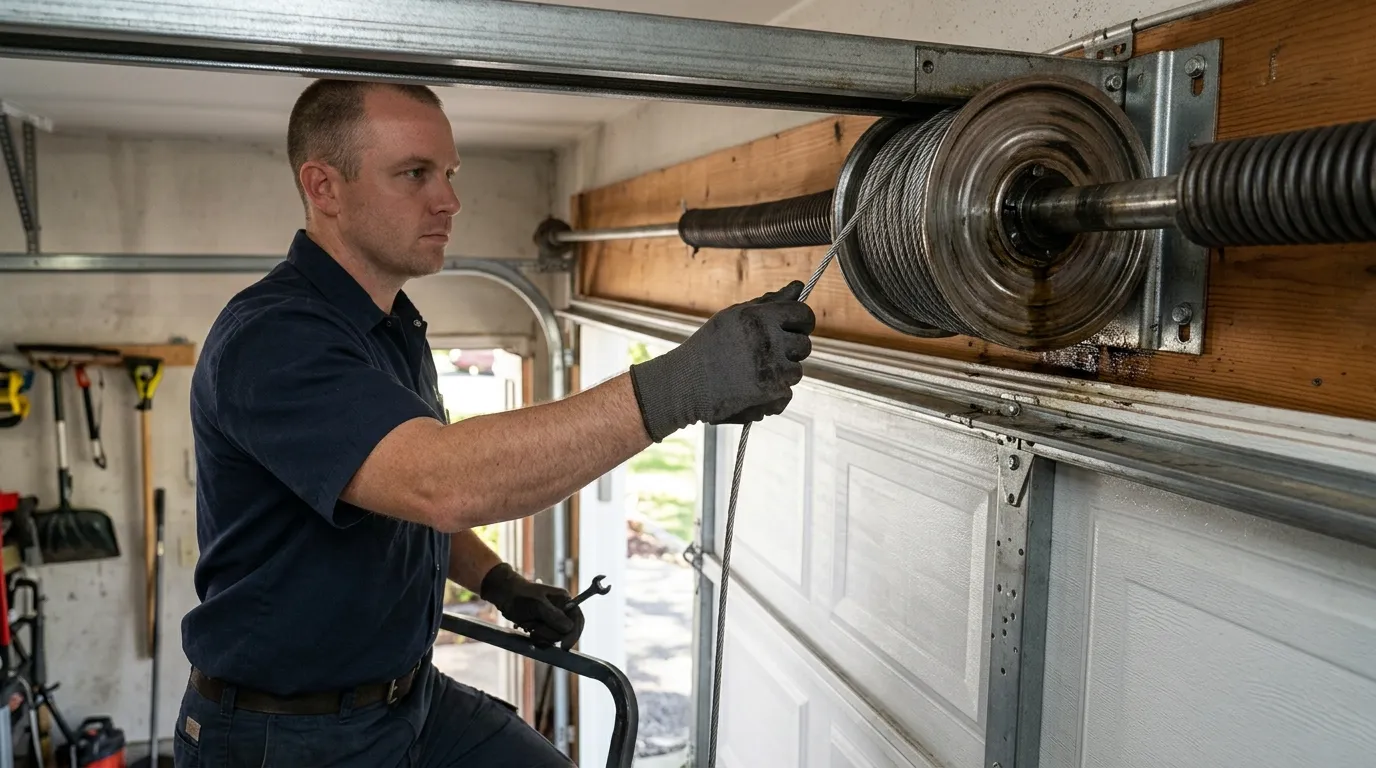
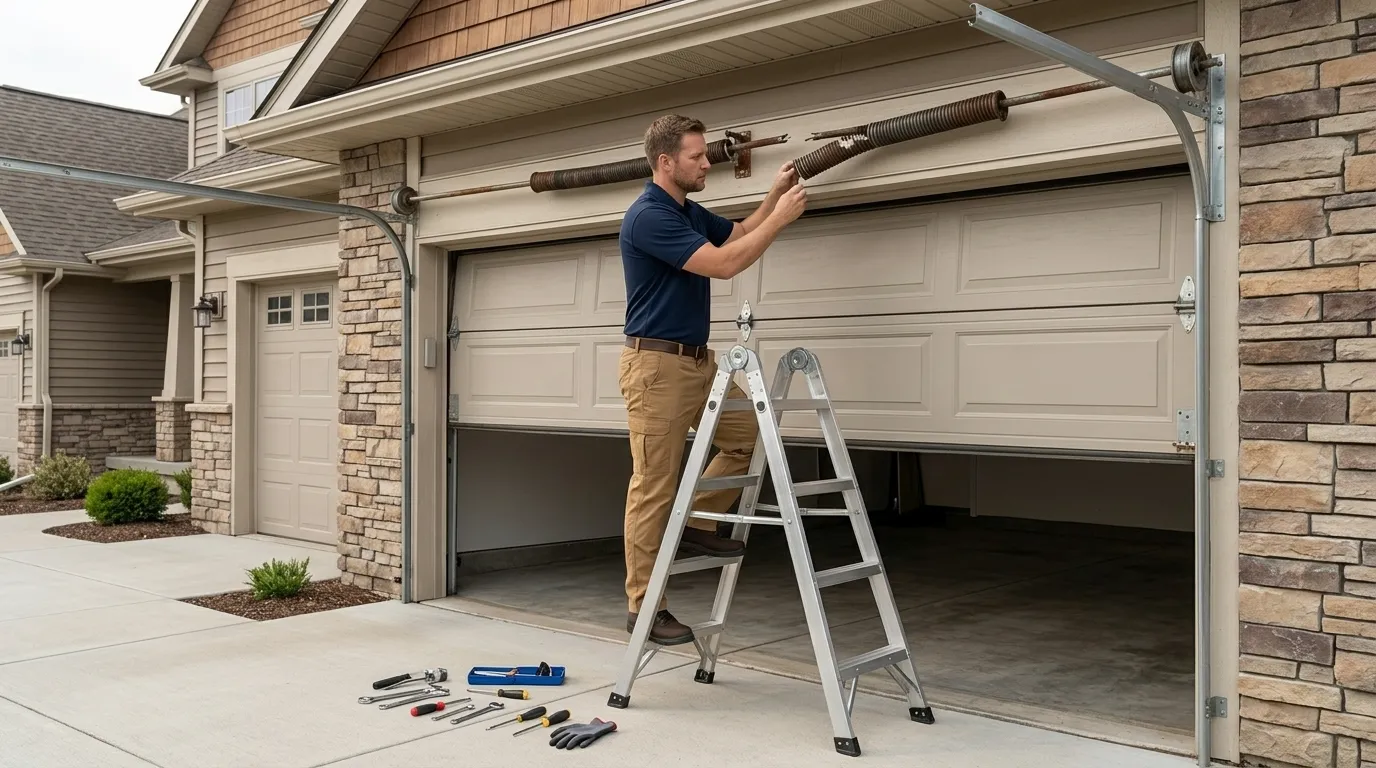
If the door is also harder to lift by hand than it used to be, that's usually a separate problem (springs, most likely) showing up at the same time as roller wear, since both are age-related failures on the same original hardware. Don't assume one fix solves both.