
How Long You Are Without the Door
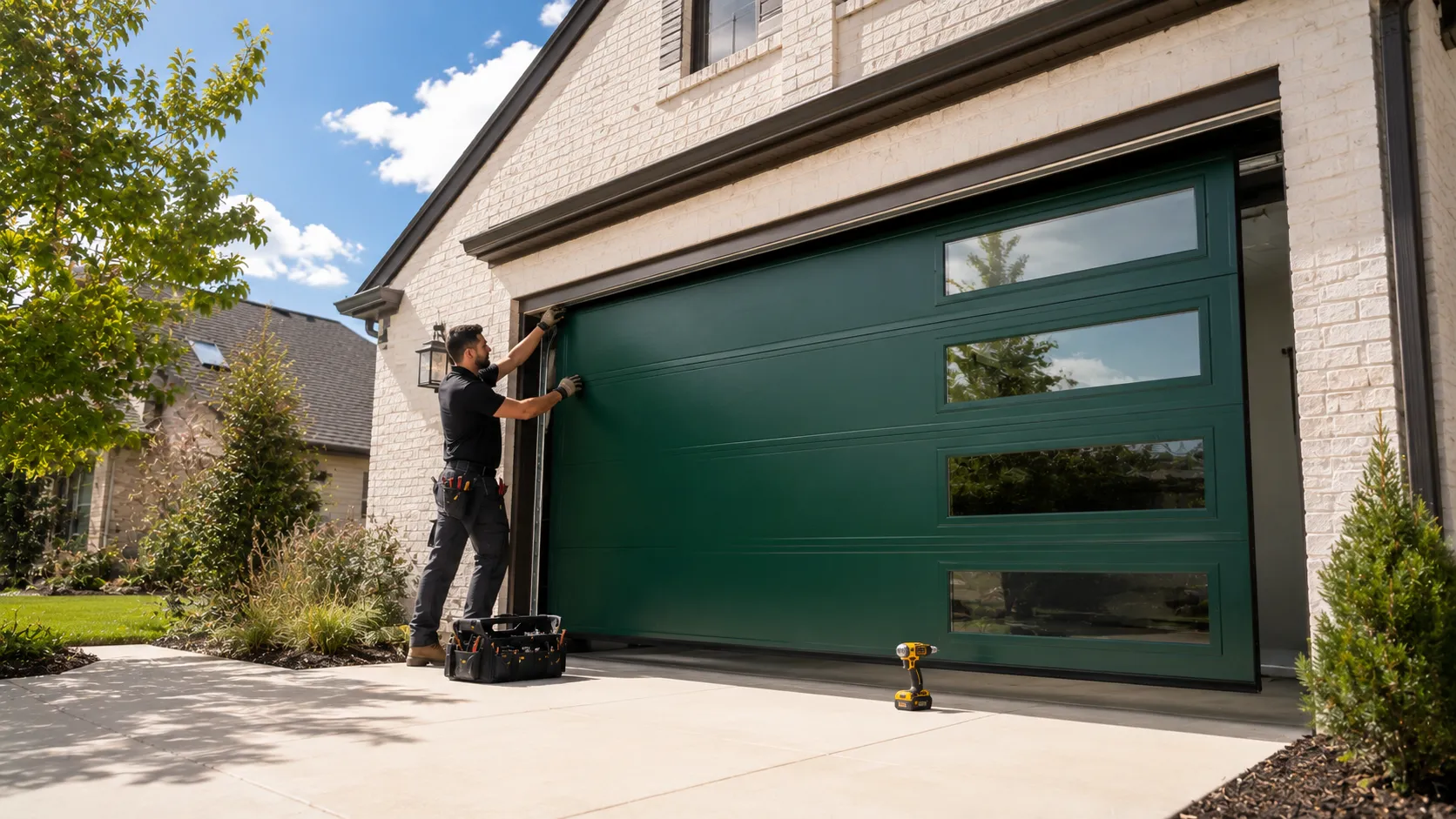
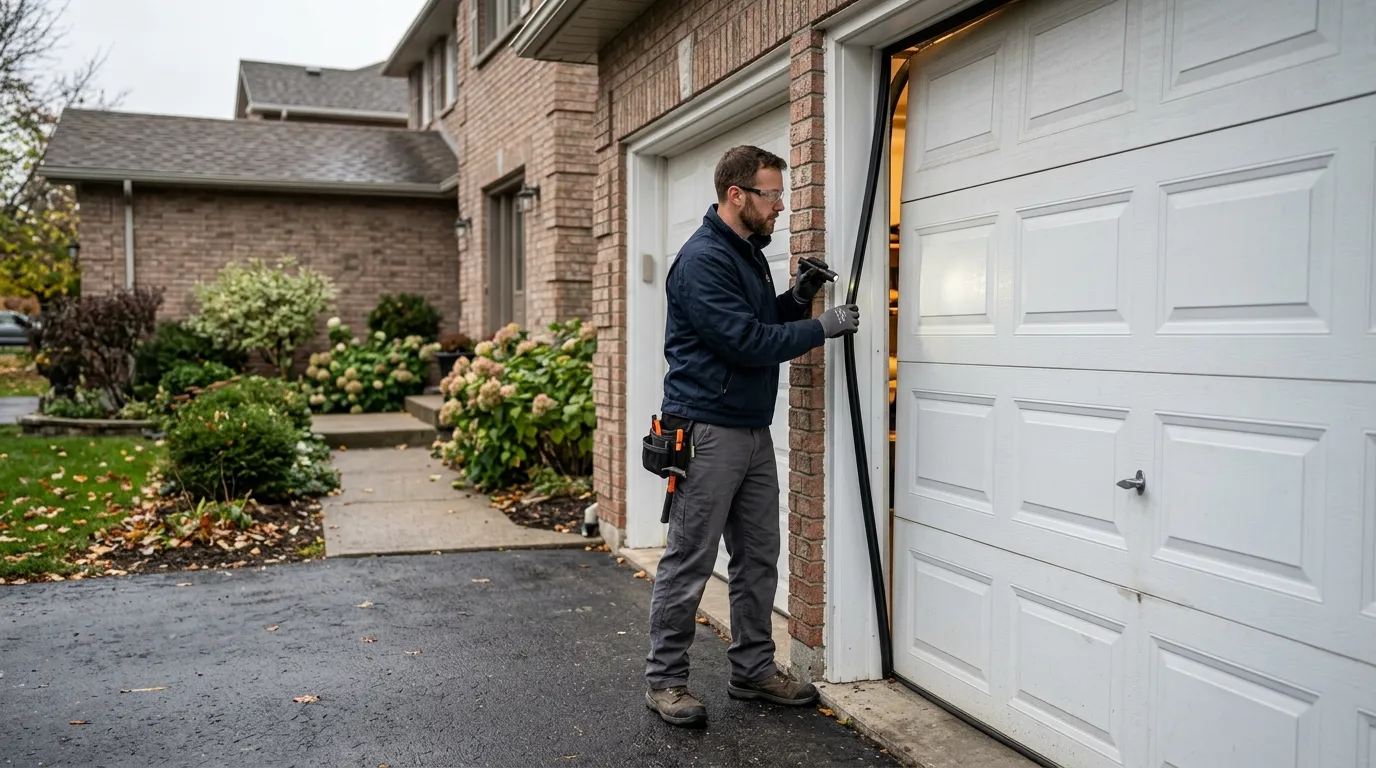
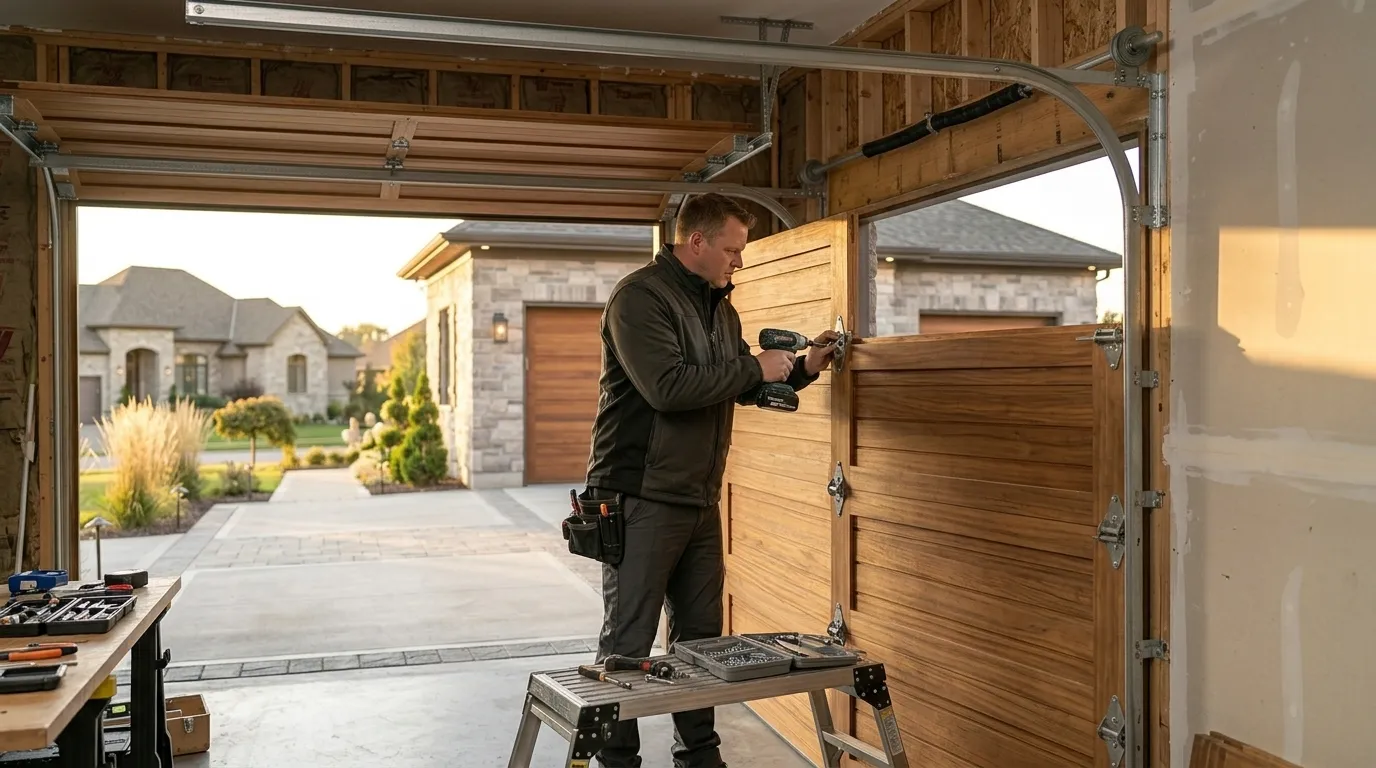
A broken torsion spring on a door built after 2005, which is the median build year for houses in Lochbuie, is usually a straightforward swap. The hardware is standard, the drums and shafts are recent enough that rust and stripped set screws aren't the fight they are on older doors elsewhere in the service area. That's the difference newer construction makes: less time spent freeing frozen bolts, more time actually on the spring.
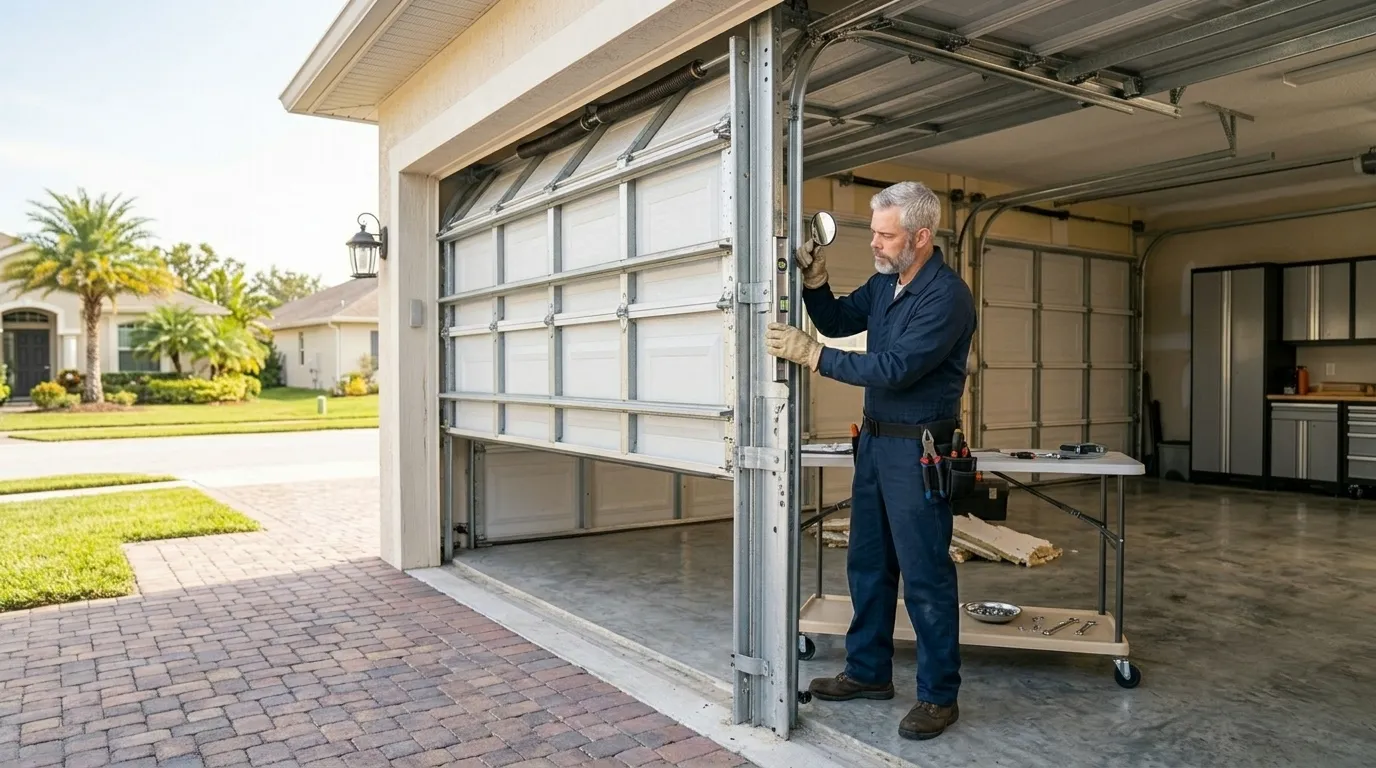
Where it runs longer is a double-wide door with two springs where one has already failed and the second is close behind - sagging cables, a drum that's walked sideways, a track pulling out of alignment. On a 2005-era door that's still rare, but it happens when the original springs were undersized for the door weight, which we do see on a handful of production-built garages from that period.
We don't quote a fixed number of hours here, because until we're standing in front of the door and can see the spring size, the drum condition, and whether the opener has been fighting a bad spring for weeks, that number isn't honest. What we can tell you is that a single-spring job on newer hardware is the shortest visit we make.
What You Pay
Lochbuie's median household income sits at $88,548, a shade above the $87,623 median across the rest of the service area. That gap is small, but it matters for one decision: at what point does fixing the spring stop making sense and replacing the whole door start to.
On a door built around 2005, the door panel itself, the track, and the opener are usually still sound - this isn't a 1970s door where the spring failure is the first of five things wrong. So the math for most Lochbuie jobs is simple: replace the spring, maybe the cable it snapped, and you're done. We don't see the same push toward full replacement here that we see on older stock elsewhere in the area, because the rest of the door hasn't earned its retirement yet.
Where the math changes is a door that's been limping on a bad spring for a long stretch - the opener motor straining, the track bent from the door dropping unevenly. That kind of neglect costs more regardless of the town, and it's the one case where we'll tell a homeowner that a spring swap alone won't fix what's actually wrong.
Getting It Booked In
We run out of Brighton, and Lochbuie is a five-mile drive from there. That's close enough that scheduling a spring job here works the same as scheduling one anywhere close to Brighton - it's not a special trip, it's a normal one.
When you call, the useful details are the door's age or the builder if you know it, whether it's a single or double door, and whether one spring broke or both look worn. On a neighborhood built mostly in the 2000s, the spring size is usually predictable, but telling us up front saves a second visit if the size turns out to be non-standard.
See the Lochbuie service area page for what else we cover out here, and the Brighton spring repair page if you want the fuller rundown on how we handle torsion versus extension springs in general.
The DIY Question
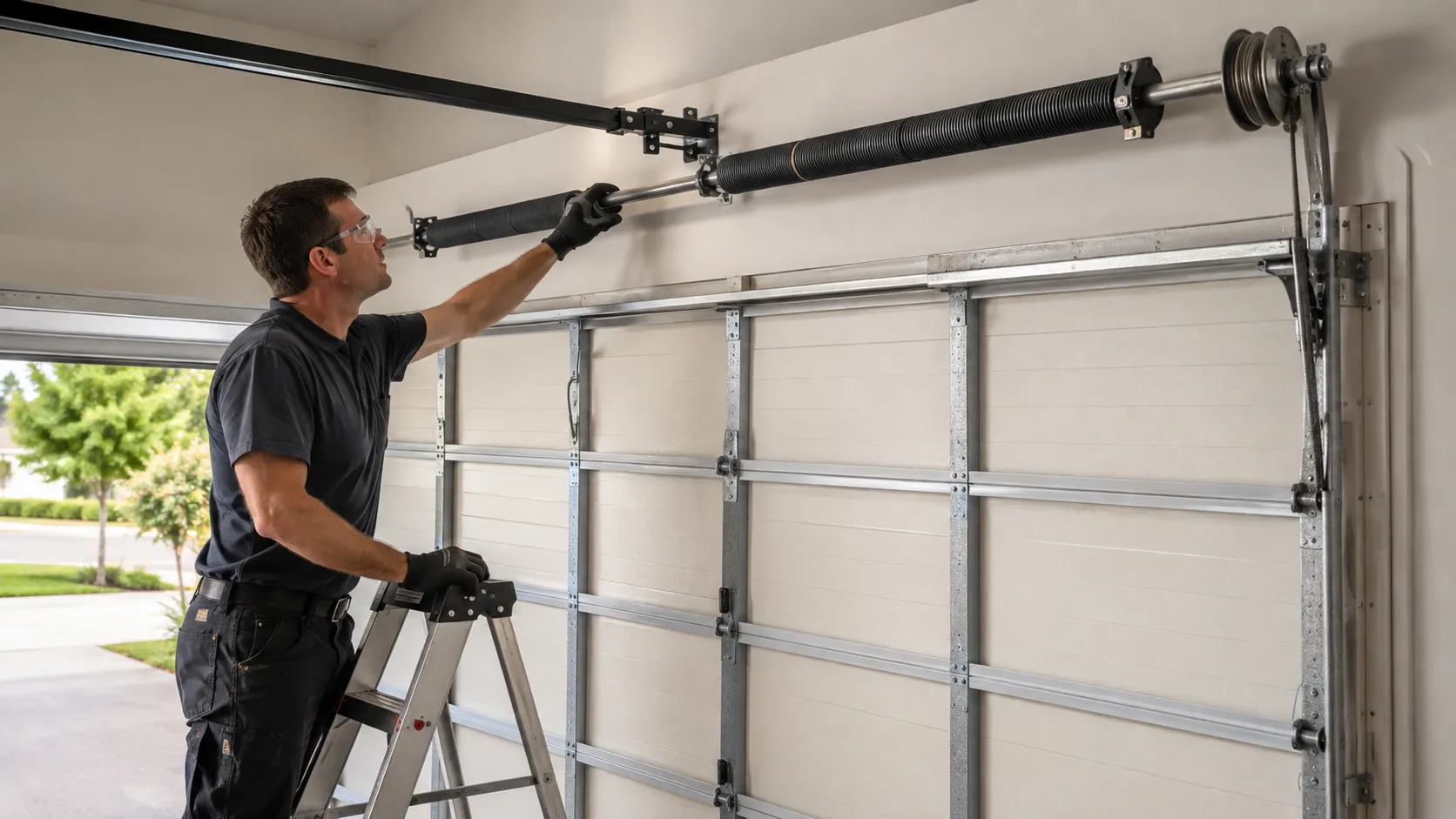
A torsion spring under full tension can break a wrist or worse - the winding bars and the tension involved aren't something to learn on your own garage. That's true no matter how new the door is. Extension springs, the kind mounted along the horizontal track on some older or lower-cost doors, are lower tension and a bit more forgiving, but they're also less common on the newer construction that makes up most of Lochbuie.
The honest limitation: we won't talk a homeowner through a phone-guided spring swap. It's not a liability dodge, it's that the margin for error with a wound torsion spring is genuinely small, and a slipped winding bar can put someone in the hospital. What you can safely do yourself is the diagnosis - look at the spring, see if it's separated with a visible gap, check if the door is noticeably heavier to lift by hand than it used to be - and call with that information ready. That part saves everyone time. The winding itself isn't a DIY job here or anywhere.