What the Repair Takes
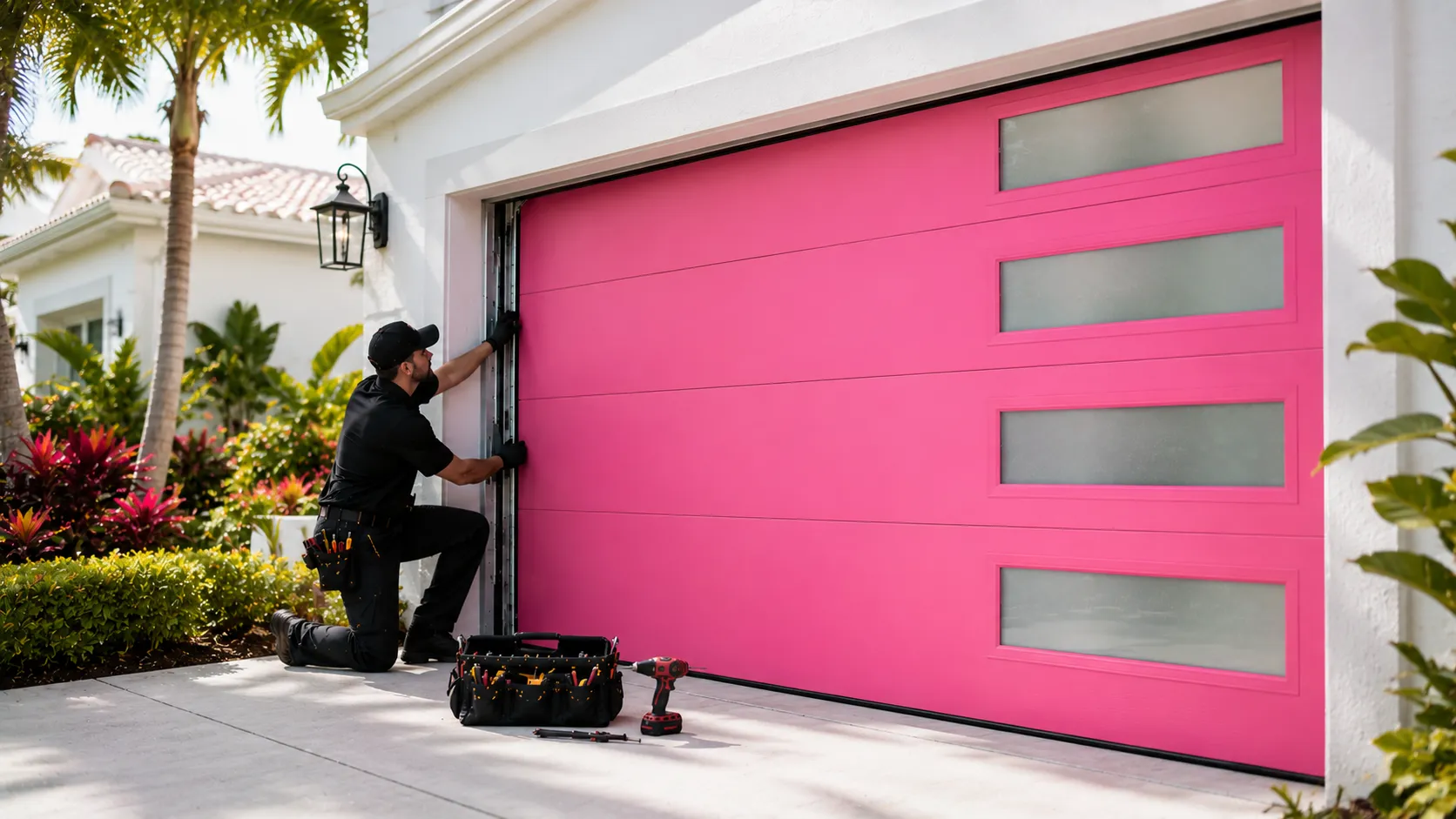
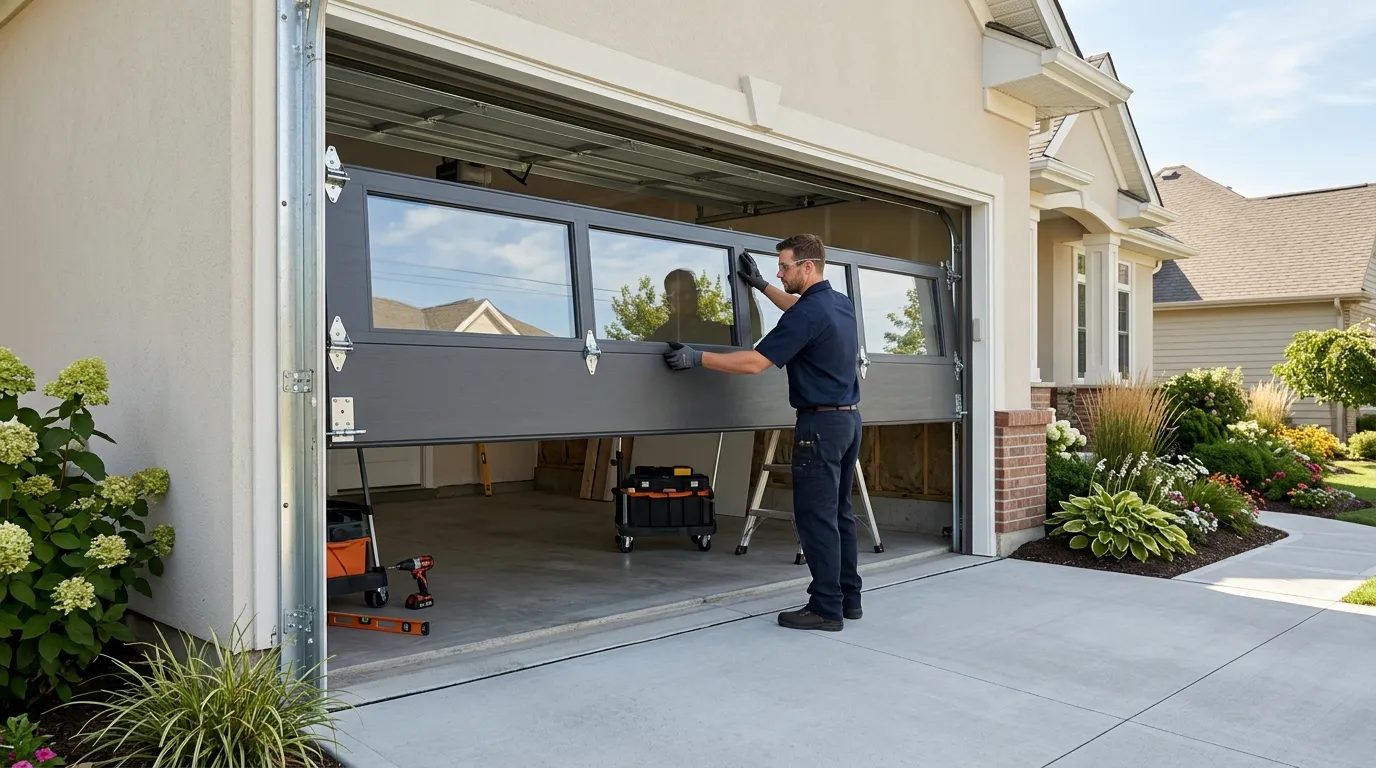
Most of Dacono went up well after the towns closer to Brighton, with build years pushing up toward 2010 rather than the 1980s stock that fills a lot of this service area. That means the doors themselves look different before you even get to the fault. You're mostly looking at steel sectional doors sized for a full two-car opening, run on standard-lift torsion springs mounted center, not the narrower single-car doors or the older side-mounted hardware you find on houses built in the 1970s and 80s. A double door of this size and vintage carries more spring weight per side, which matters when a spring breaks: it's not a small coil, and it's not a job to eyeball. The panels are usually factory steel with a foam core, not the old flush single-layer steel you'd find on an older door, so dents and rust patterns show up differently too. None of this changes with the fault - a broken spring is a broken spring - but it changes the parts a repair truck needs on hand and the lift weight the tech plans for before pulling into the driveway. Houses this age also tend to have the original opener still in place, which by now is old enough that a logic board failure is as common as a motor failure.
Where This Job Goes Sideways
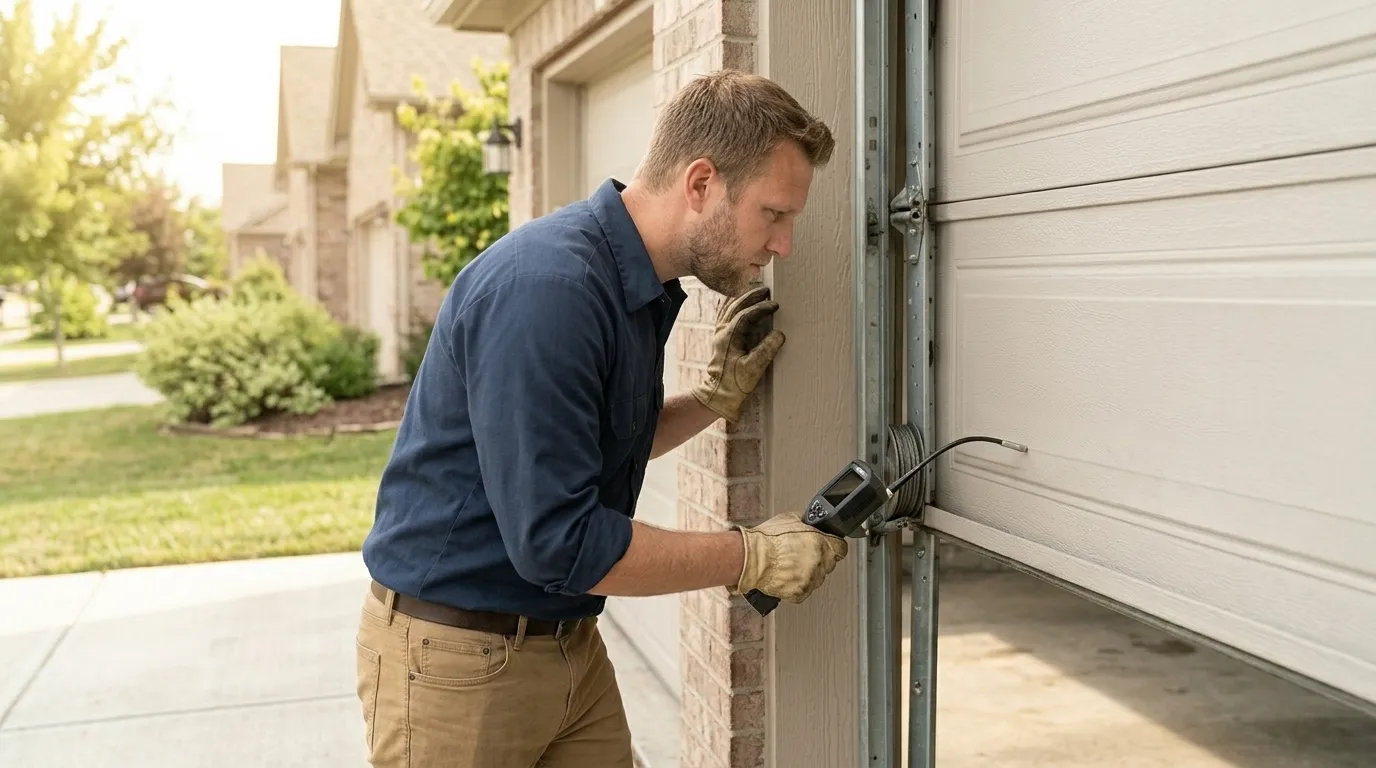
With newer stock, the failure that catches people off guard isn't age-related wear so much as a part that was never quite right from the install. Rollers on builder-grade doors are often plastic, not nylon, and they wear out faster than the rest of the door around them - so you get a door that's ten years old sounding like it's forty. Cable fraying on these doors shows up at the bottom bracket first, since factory tension on newer installs runs tighter than it needs to. The other common one: openers from this era often still run on the original remote and keypad, and when the board goes, people assume the whole opener needs replacing when it's a $30-part fix. The honest limitation here - if the opener logic board is dead and the model's been discontinued, sourcing that exact board can take longer than we'd like, and at that point replacing the opener outright is usually the better call than waiting on a part.
Getting It Booked In
Because Dacono's roughly 2,212 households sit at the edge of the coverage run, jobs out here get scheduled around the route rather than treated as a drop-in stop. That's not a knock on the town - it's just what a 10-mile trip means for routing. Median household income here runs close to $99,389, noticeably higher than the $87,623 median across the wider service area, and the housing matches that: newer builds, standard hardware, fewer of the odd legacy fixes that turn up on 1960s stock closer in. Booking a repair is straightforward for that reason - there's less guessing about what's behind the door before the truck arrives.
What Is on the Truck
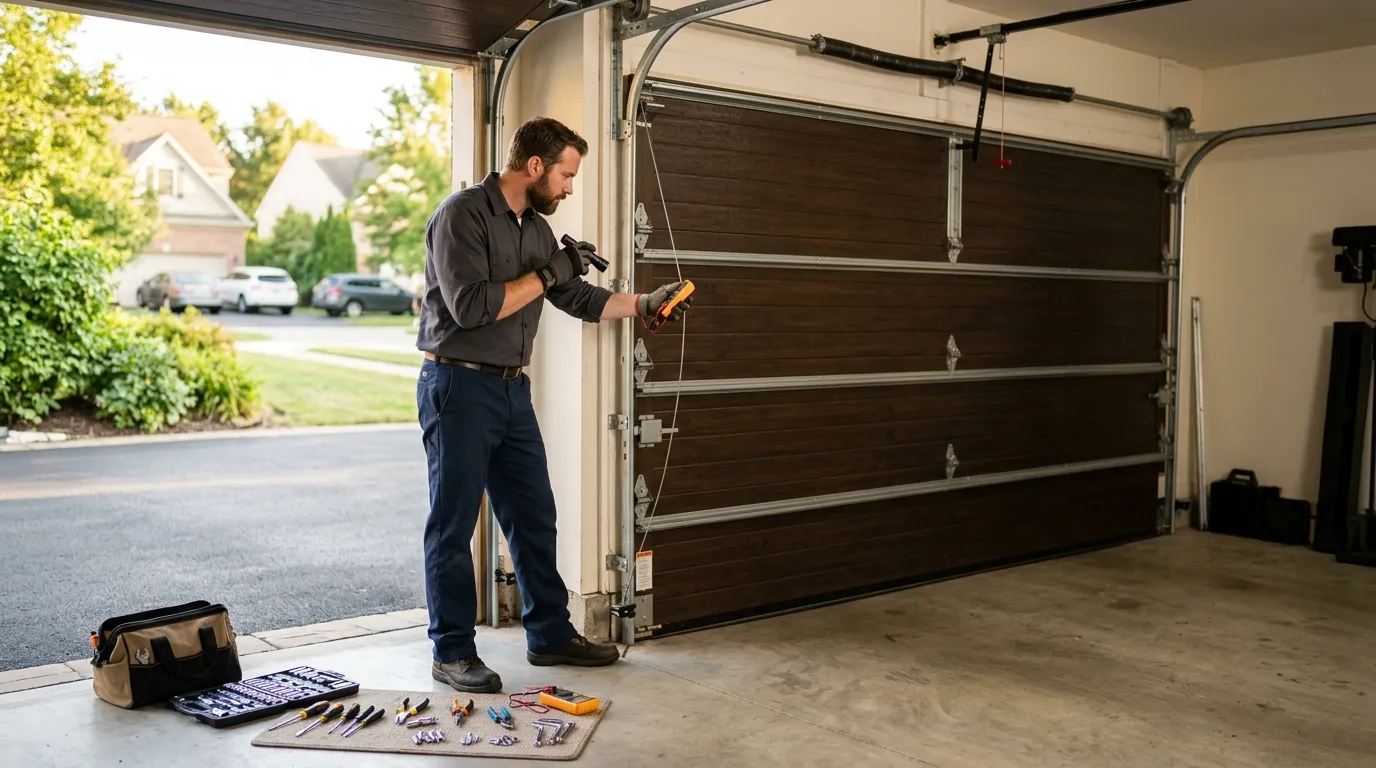
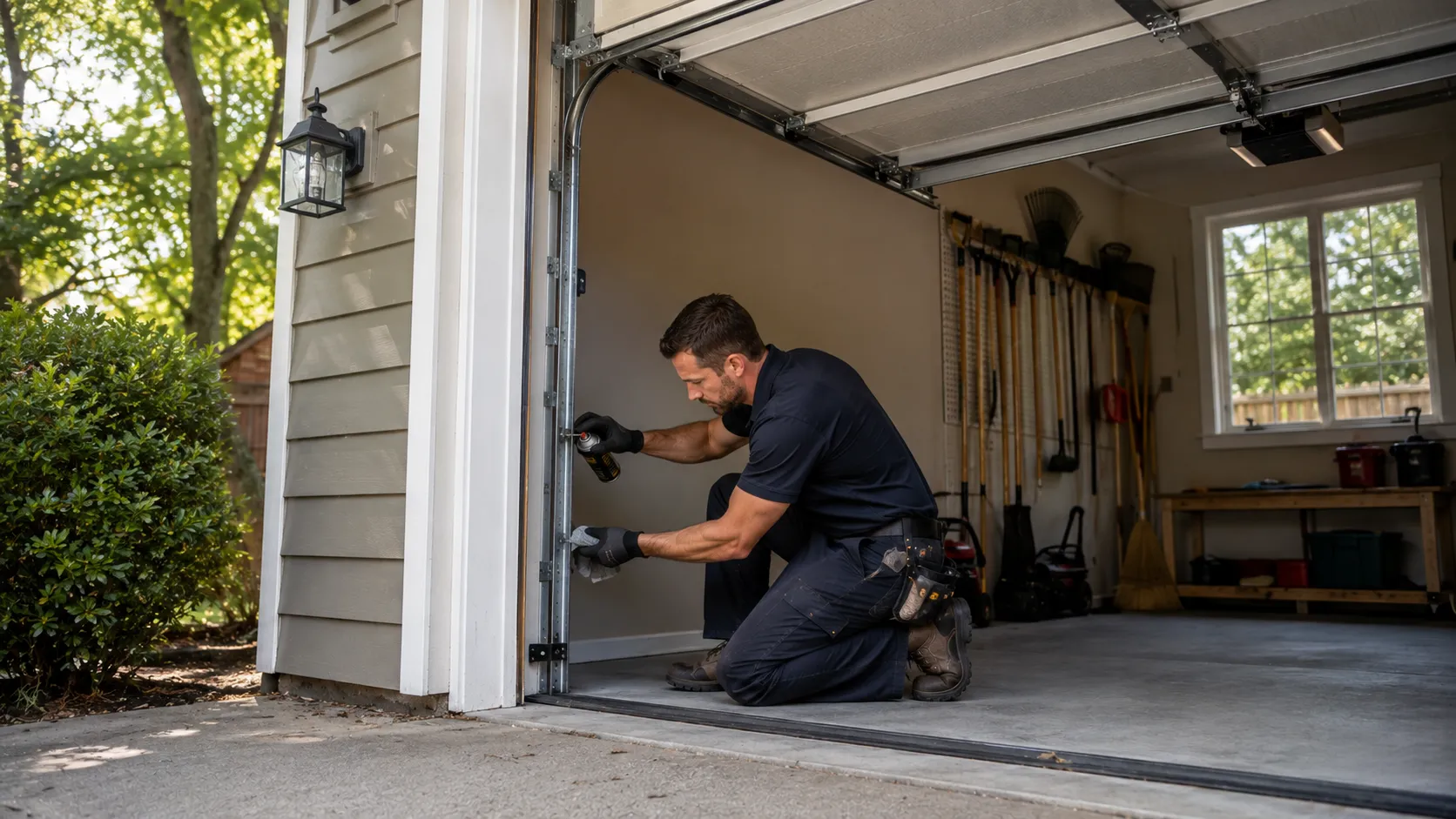
For a Dacono call, the truck carries torsion springs sized for standard-lift double doors, since that's what most of the stock here calls for, along with steel roller sets and the bottom cable hardware that wears first on newer sectional doors. Opener boards for the common builder-installed models from this era ride along too, though not every discontinued model can be matched on the spot. The cold-climate band that covers this whole area still applies to Dacono, so spring cycle counts get checked the same way they would anywhere else on the route - winter cold changes how a torsion spring behaves under load, regardless of how new the door is.