What You Pay
Fort Lupton's housing stock centers on 1978, well ahead of the broader service area's 1991 median build year. That gap matters for pricing because older openings often need more than a swap-in door - track realignment, header reinforcement, or a wider jamb kit to match a panel size that isn't made anymore. We quote after we see the opening, not off a phone call, because a 1978 double-car bay in this town rarely matches a 1995 one in a newer part of the service area. Income here runs lower than the wider service area's median of $87,623 - Fort Lupton's local median is $64,850 - and we price the job on the door and labor in front of you, not on a regional average. What we won't do is quote a flat number sight unseen; a door that looks fine from the driveway can still be sitting on a track that's been shimmed twice already.
Why This Fails Locally
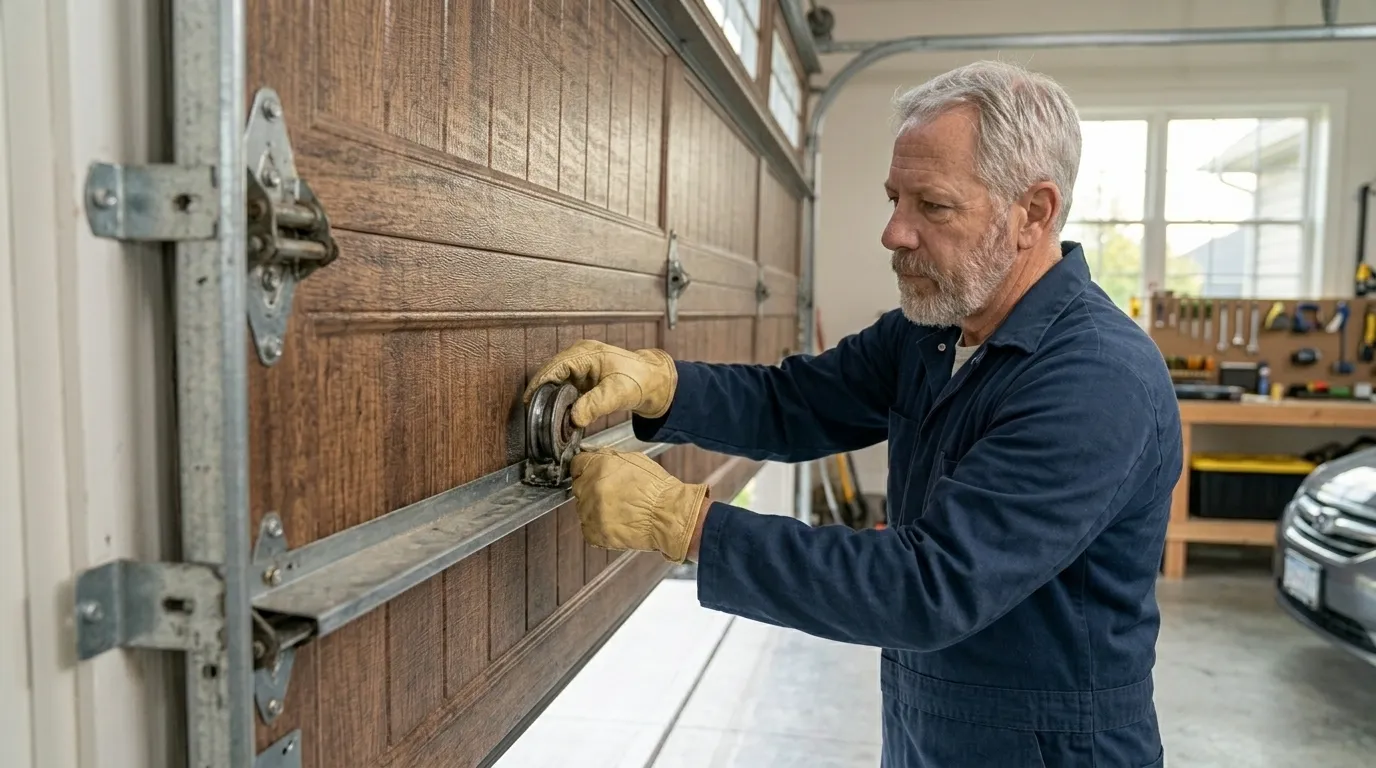
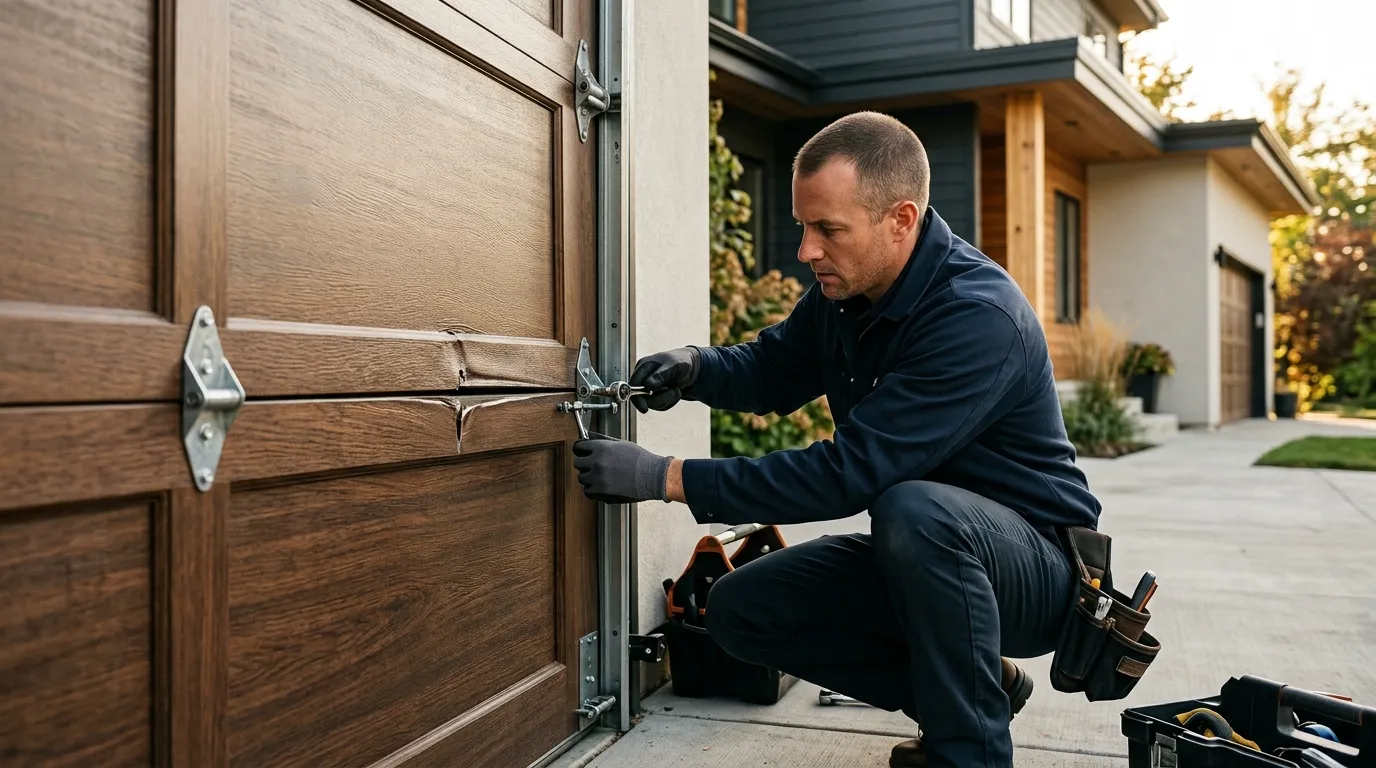
A house built around 1978 in Fort Lupton has had roughly forty-five years to wear through its original rollers, hinges, and cable, and in a lot of cases nobody's touched any of it. The track hardware from that era was built to a lighter spec than what goes in today, and it wasn't built for a severe cold climate cycle repeated for four and a half decades - steel fatigues, galvanizing wears off cable strand, and hinges loosen in their rivets faster than most owners expect. We see original springs still on the door in houses this age more often than not, which is a specific kind of risk: a torsion spring that old has outlived its rated cycle count and gives no warning before it lets go.
How Long You Are Without the Door
We come from Brighton, 8 miles out, so travel time is part of scheduling here in a way it isn't for jobs closer to the shop. A straight swap - same size opening, no header work - is usually a same-visit job once we're on site. If the opening needs reframing because the original 1978 jamb has shifted, or if we have to special-order a size that isn't stocked locally, that pushes to a second visit. We tell you which one it is before we start, not after we've pulled the old door off the track.
Where This Job Goes Sideways
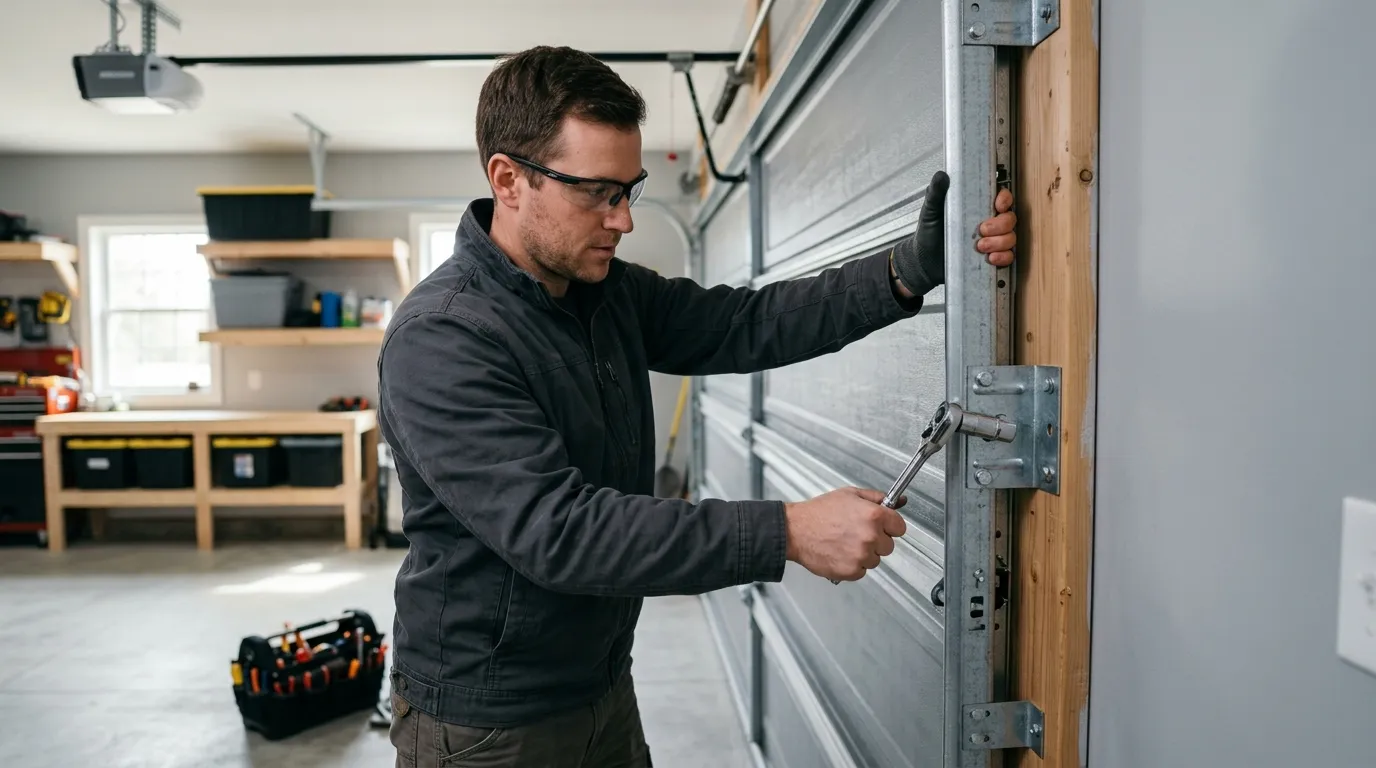
The trouble spot on a house this age is almost always the header above the opening. If it was framed for a lighter, thinner door in 1978 and someone's already replaced it once with a heavier insulated panel, the header may be carrying more than it was sized for. We check that before we hang anything new - not after the door's already up and sagging at the seam. The other place this goes sideways is assuming a same-size replacement door will bolt onto original track and brackets from that era; hardware tolerances have changed enough since then that we usually replace the track as part of the job rather than force new panels onto old rail. That adds cost, but it's the difference between a door that runs quiet and one that rattles the day after we leave.