What You Pay
Fort Lupton is a small town, roughly 2,887 households, so the roller jobs here don't come in bunches the way they do in bigger pockets of the service area. A truck from Brighton makes the 8-mile run for one door at a time, not a block of them, which is just the nature of a town this size. What you pay depends on how many rollers are shot, whether the track needs straightening along with them, and whether you go with the steel rollers most of these doors already have or move up to sealed nylon. We don't have a set price list to hand you here - every door's wear pattern is different, and quoting a number without seeing the track first is a good way to under- or over-charge you. What we can tell you is the material choice matters more in a place like this than in newer subdivisions, because of what's actually on these doors.
Why This Fails Locally
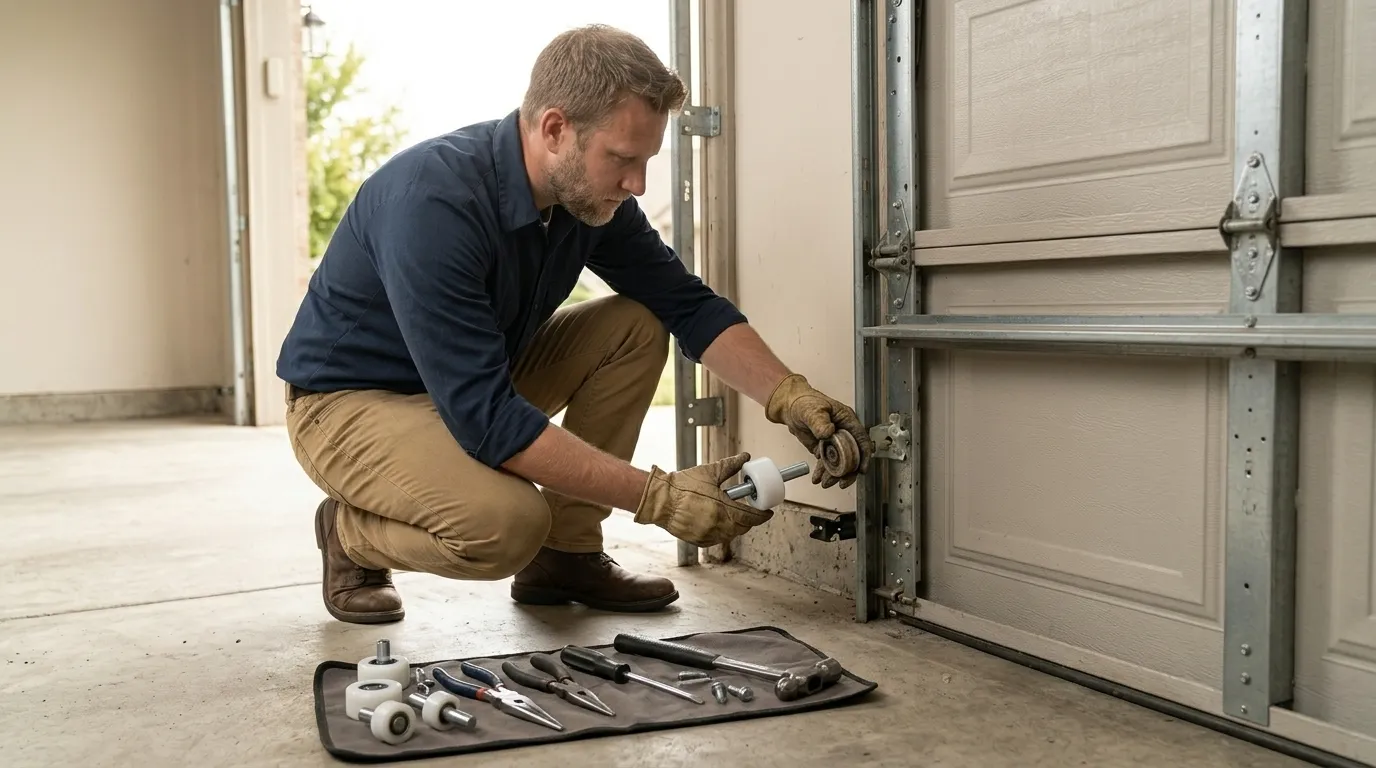
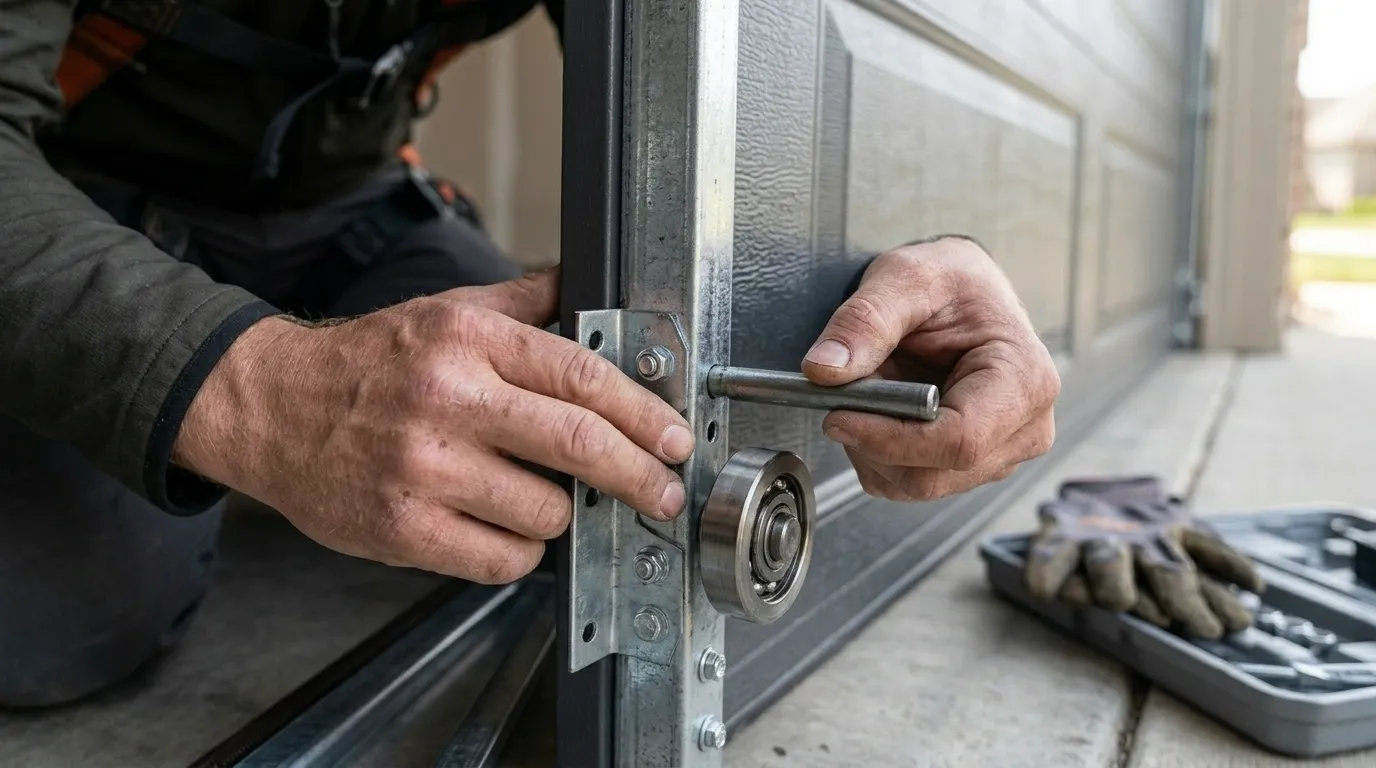
The median year built for homes in Fort Lupton is 1978, well ahead of the roughly 1991 median across the wider service area. That gap matters. Doors installed in the late 1970s typically came with plain steel rollers riding directly in steel tracks, no nylon, no sealed bearings, just metal on metal with a coat of grease that dried out decades ago. Add a cold, severe winter climate on top of that and you get rollers that lose their lubrication fast, then start grinding a groove into the track itself. By the time an owner notices the noise, the roller has usually already scored the track enough that a straight swap won't fully quiet the door - the track needs attention too. This is a different failure than what shows up on a 1990s door with nylon rollers from the factory; those wear slower and fail quieter.
How Long You Are Without the Door
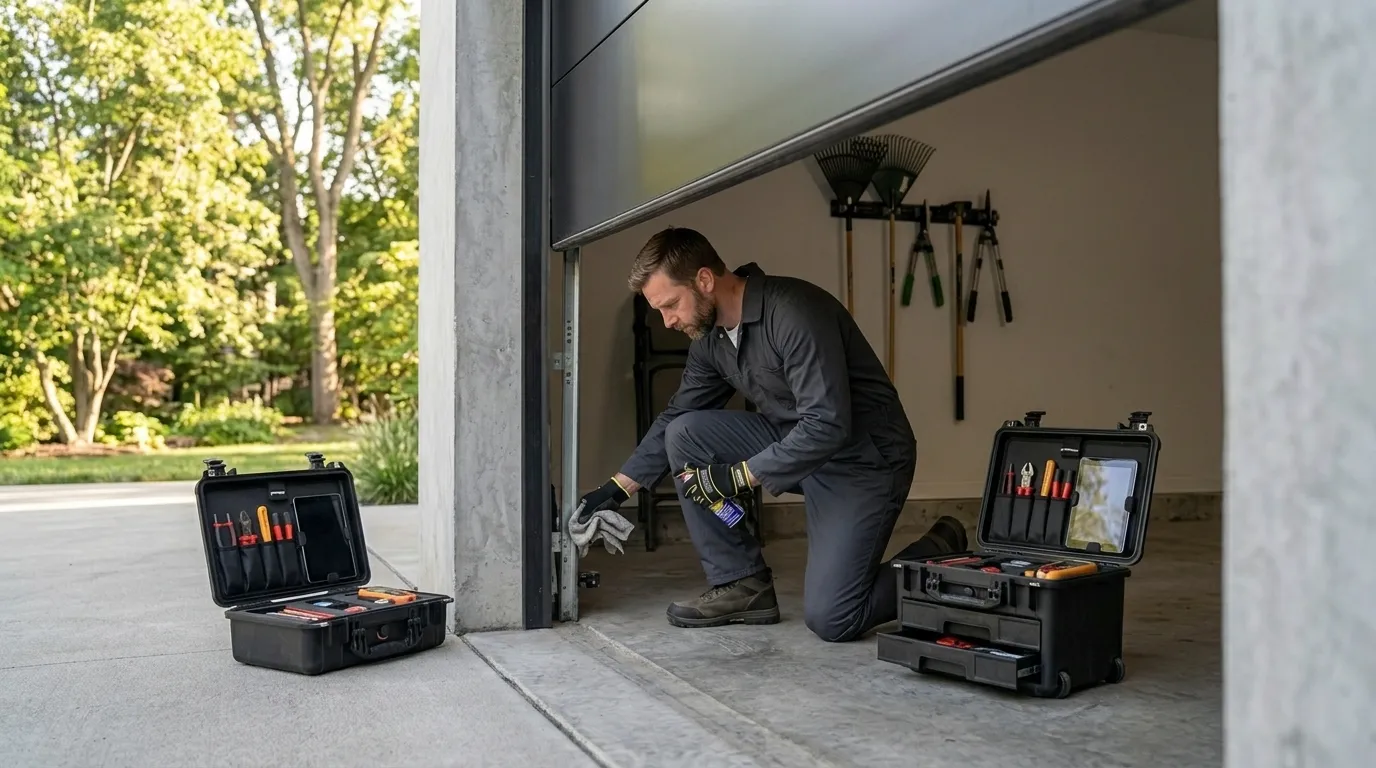
A straightforward roller swap on a door that hasn't damaged its tracks is usually a same-visit job - the door goes back into full use before the truck leaves. Where it takes longer is when the steel-on-steel wear typical of these 1978-era doors has scored the track enough that the track needs to come off and get replaced or realigned, which adds time to the visit. We won't know which situation you're in until someone's looked at the actual grooves in your track, so it's worth mentioning that up front rather than promising a fixed turnaround before the door's been seen.
Where This Job Goes Sideways
The mistake we see on doors this age is replacing only the roller that's making noise and leaving the rest of the set alone. If your door was hung in 1978, every roller on it has had the same cold winters and the same dried-out grease, even if only one is loud enough to notice yet. Swap one and you'll be back out for the next one within a season or two. The other place this goes wrong is ignoring a scored track because the new roller quiets the noise for a few weeks - the groove is still there, and it will chew through the next roller faster than it took to wear out the last one. On a door this old, rollers and track condition need to be looked at together, not roller first and track only if it complains.