
24/7 Emergency Service Open 7 days · 7am–8pm Serving Brighton, CO & nearby
(720) 738-8112
Brighton, CO

What Brighton's Weather and Older Housing Stock Mean for Your Garage Door

Brighton homes built between 1958 and 2010 face severe cold winters that stress garage door springs and openers differently than newer builds elsewhere.

What Brighton's Weather and Older Housing Stock Mean for Your Garage Door

Checking It Yourself

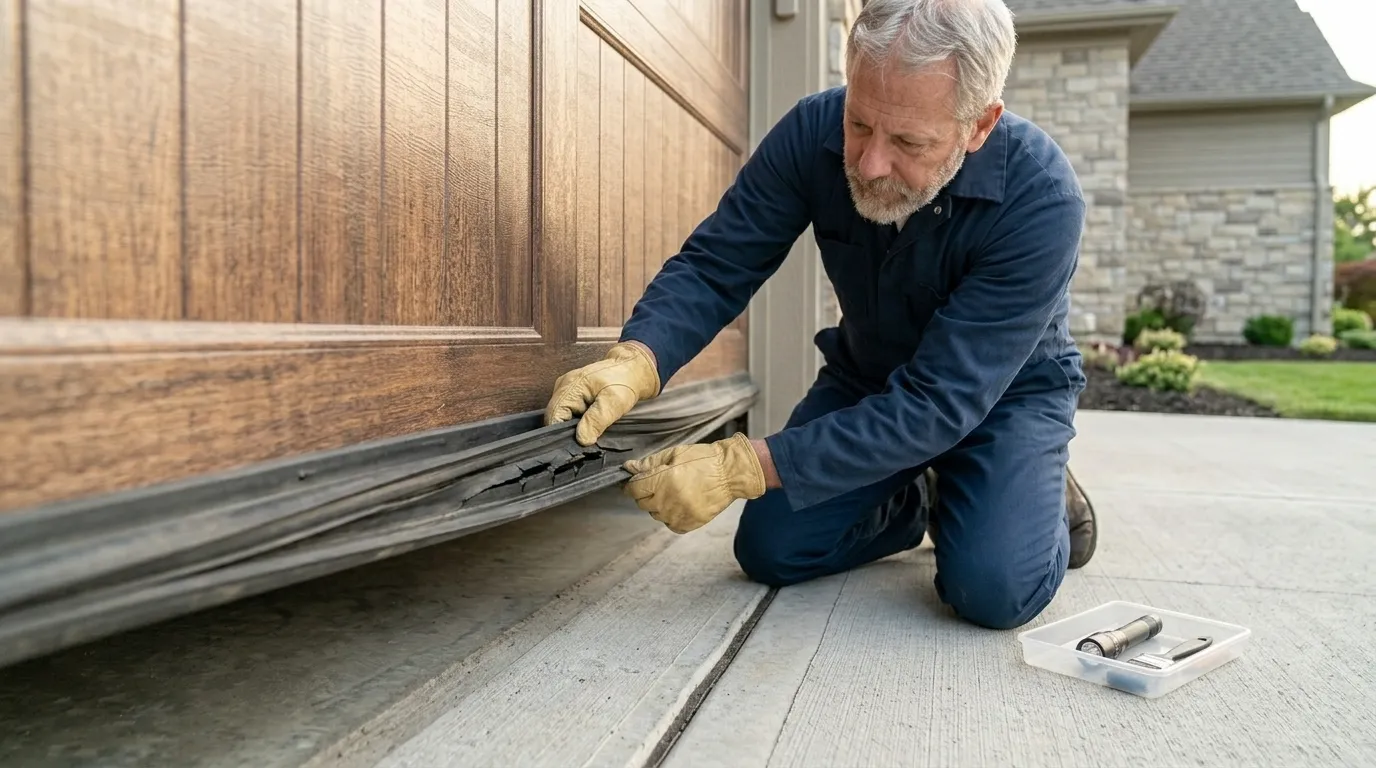
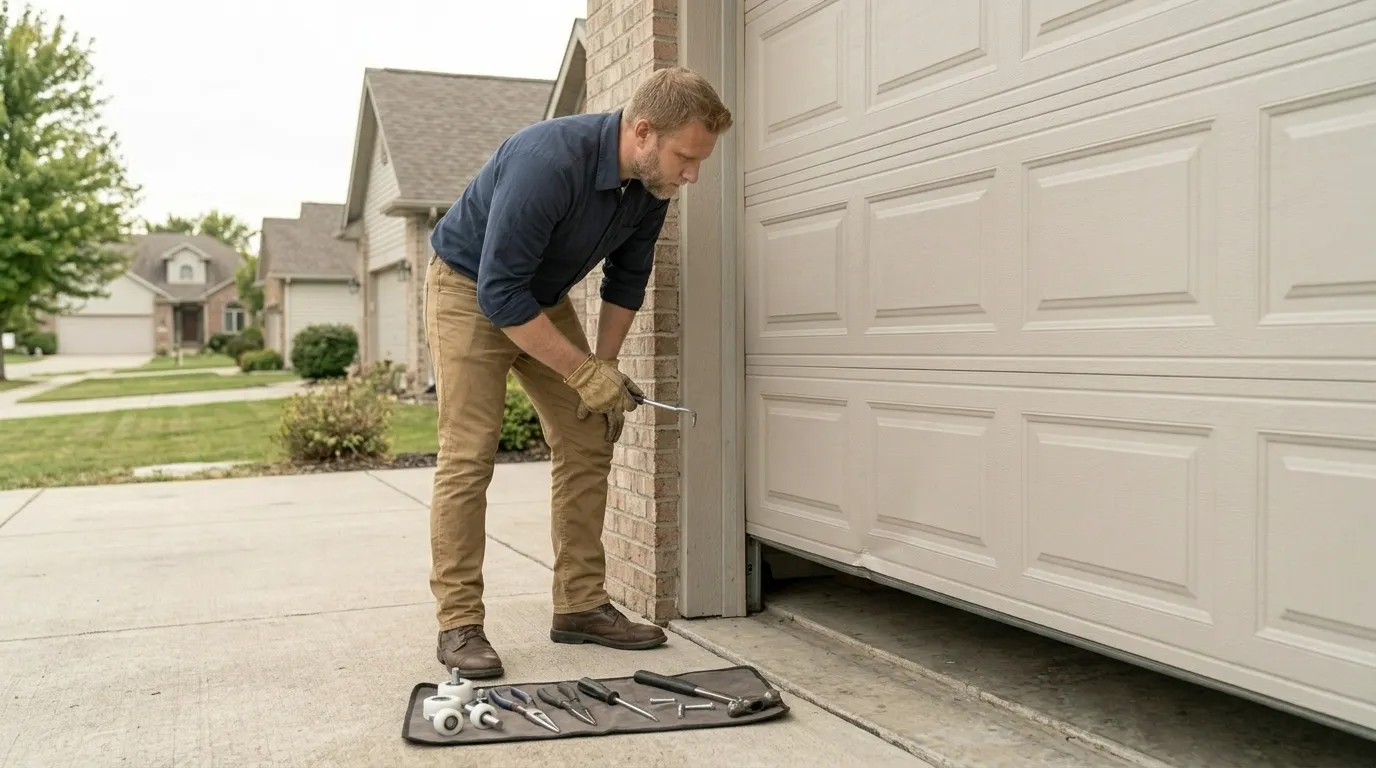
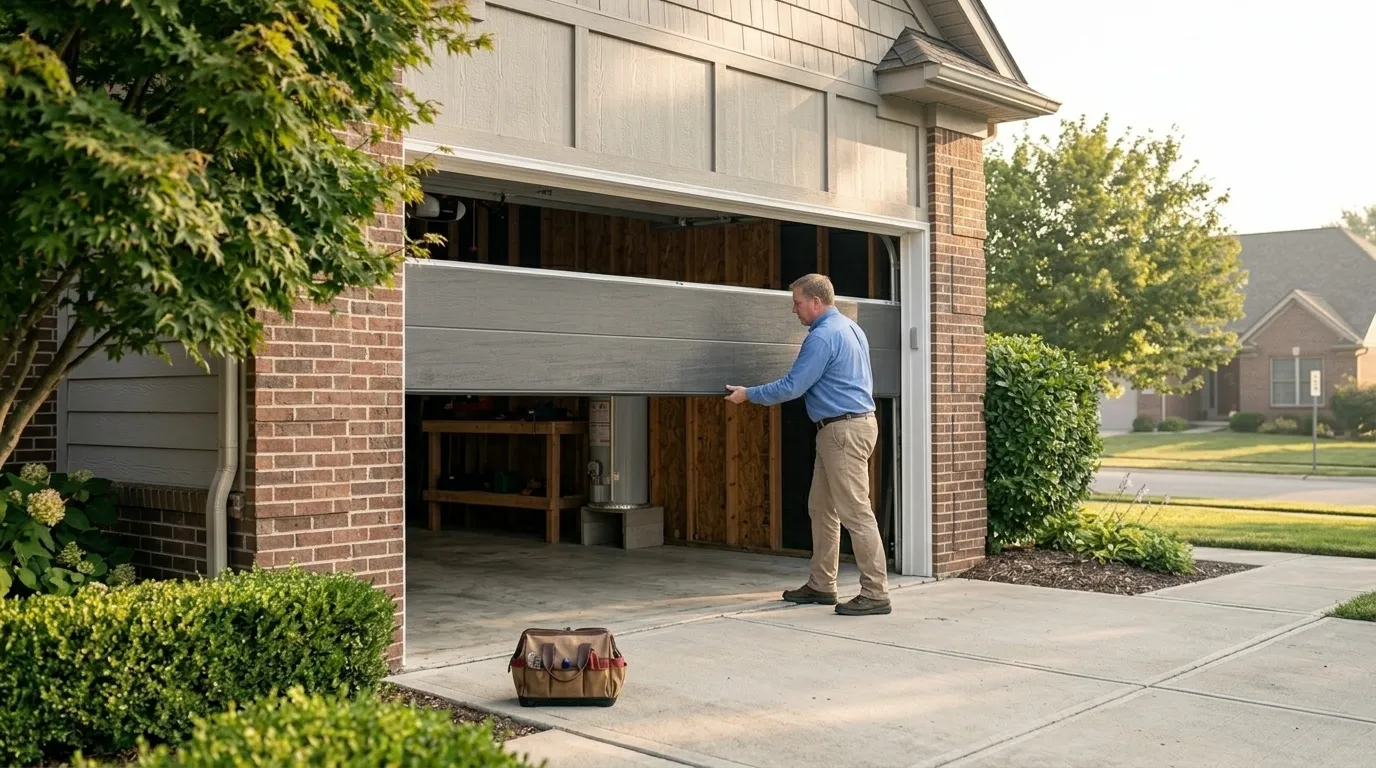
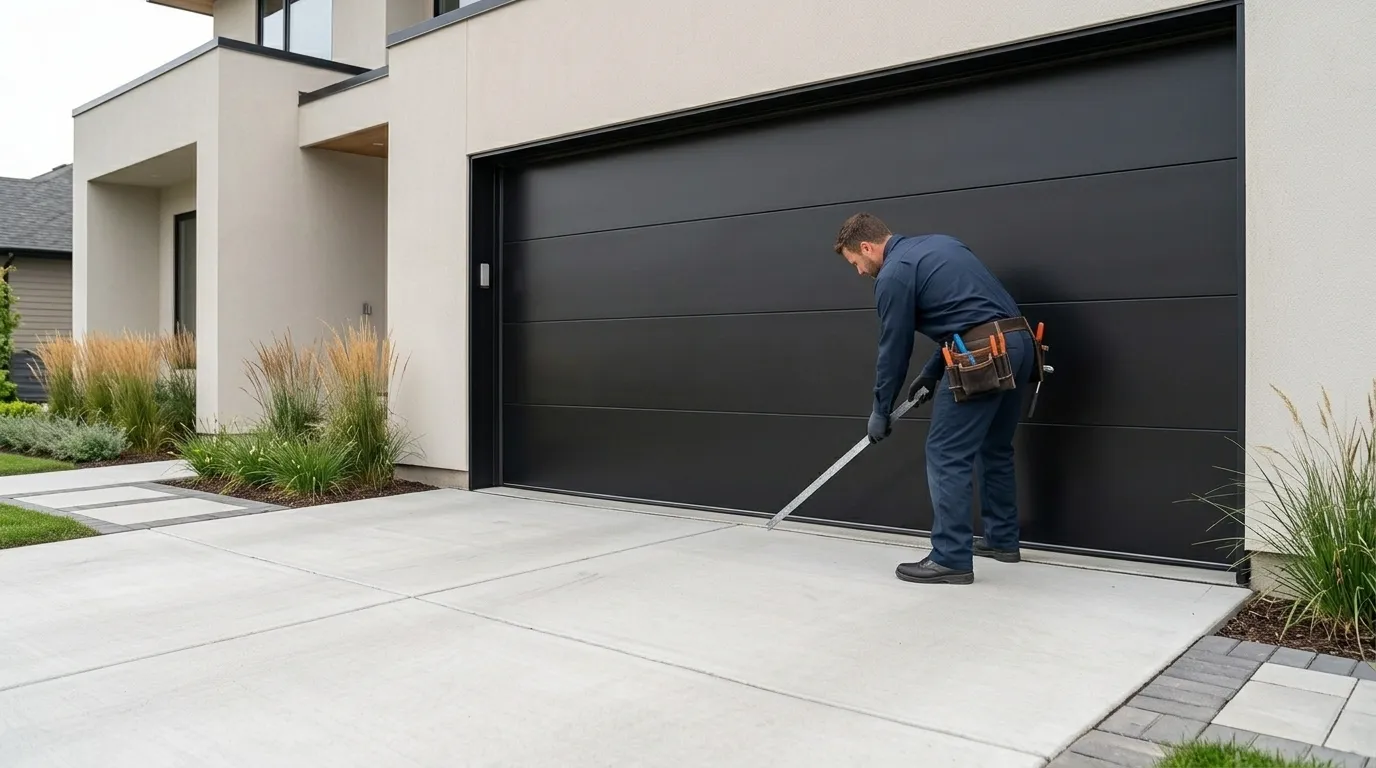
Most houses in Brighton went up between 1958 and 2010, with the bulk of the stock dating to the 1980s and 90s across the area's named neighborhoods. That range matters because a door installed in 1985 uses different spring wire, different track gauge, and often a different opener chain drive than anything sold today. Start with what you can see from inside the garage: pull the release cord and lift the door by hand. It should move smoothly and hold at waist height on its own. If it drops or shoots up, the torsion spring is out of balance, and that's not a DIY fix - the spring is under real tension and it will hurt you. Check the tracks for rust pitting or bent sections, common on doors from that 1980s-90s run that have never been replaced. Look at the weatherstripping along the bottom panel; on original doors it's usually cracked and flat, not sealing the slab to the concrete anymore. Listen for grinding on the rollers too - original steel rollers from that era are loud by design, nylon replacements aren't.

What the Weather Here Does to It

Brighton sits in a cold, severe-winter climate band, and that swings hard on steel garage doors. Torsion springs are steel coils, and steel contracts in cold - a spring set correctly in July can feel noticeably tighter in January, which changes how the door balances at the coldest part of the year. Grease-based lubricant on rollers and hinges thickens in low temperatures, which is why doors that run quiet all summer start groaning the first hard freeze. On houses from the 1958-2010 build range, the steel track brackets were fastened straight to framing that has since shifted with decades of freeze-thaw cycling, so a track that was true a few winters back can be a hair out of plumb now. None of this is dramatic on its own, but stack a slightly stiff spring, thick grease, and a track that's drifted a sixteenth of an inch, and the door starts binding right when you need it to open in the cold most. This is also why openers strain harder in winter here - the same motor that handled the door in September is fighting more resistance in January, even with nothing actually broken yet.

Leaving It Alone

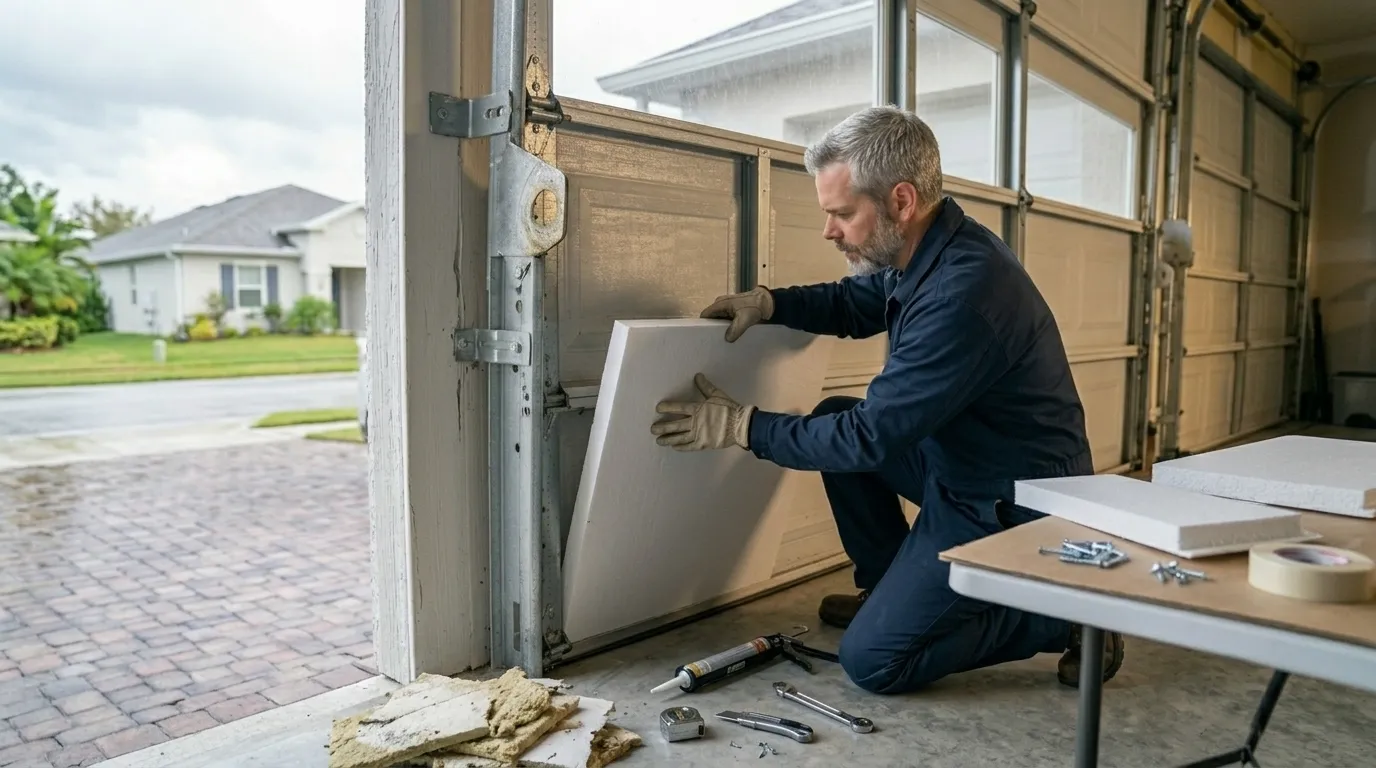
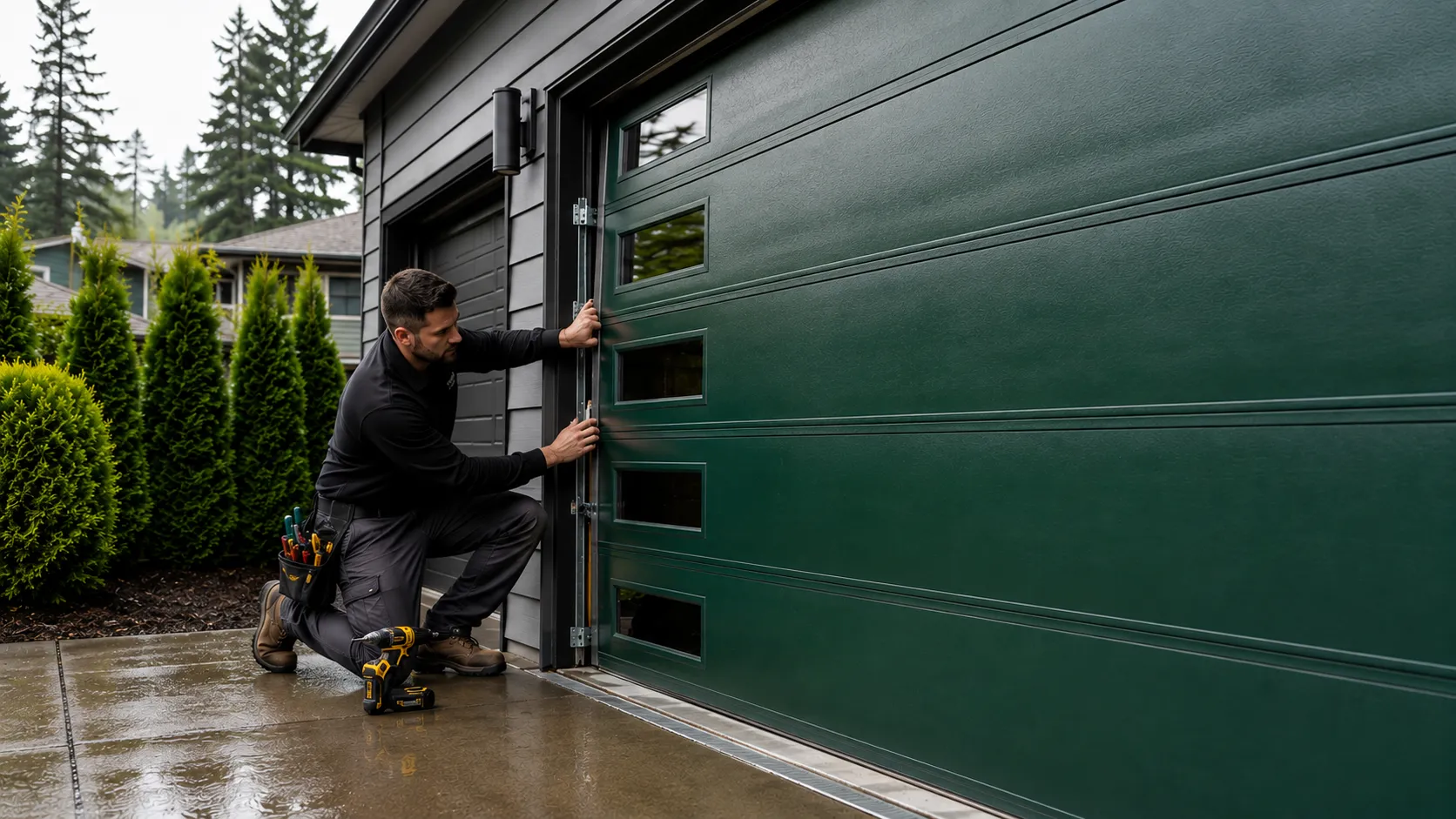
Here's the honest part: not every noise needs a call, and not every job is worth doing. A door that's a little loud on cold mornings and quiets down once it's been open a few times is just thick grease - a shot of the right lubricant on the rollers and hinges fixes it, and you don't need us for that. Where I'd tell you to leave it alone: the torsion spring itself, the cables, anything that involves taking tension off the shaft. Given the age of a lot of Brighton stock - doors built in that 1958-2010 run, plenty from the 80s and 90s - the springs on original hardware are often past the wire life they were rated for, and a spring that lets go under tension can put a cable or bracket through drywall. That's not a job to save on. On the other side, if a door's opener, track, and springs are all original to that build era and several things are wearing out at once, sometimes full replacement costs less over a year or two than three separate service calls chasing failures one at a time. I'll say that plainly rather than run up a bill fixing pieces of a door that's done.

What Is Going On

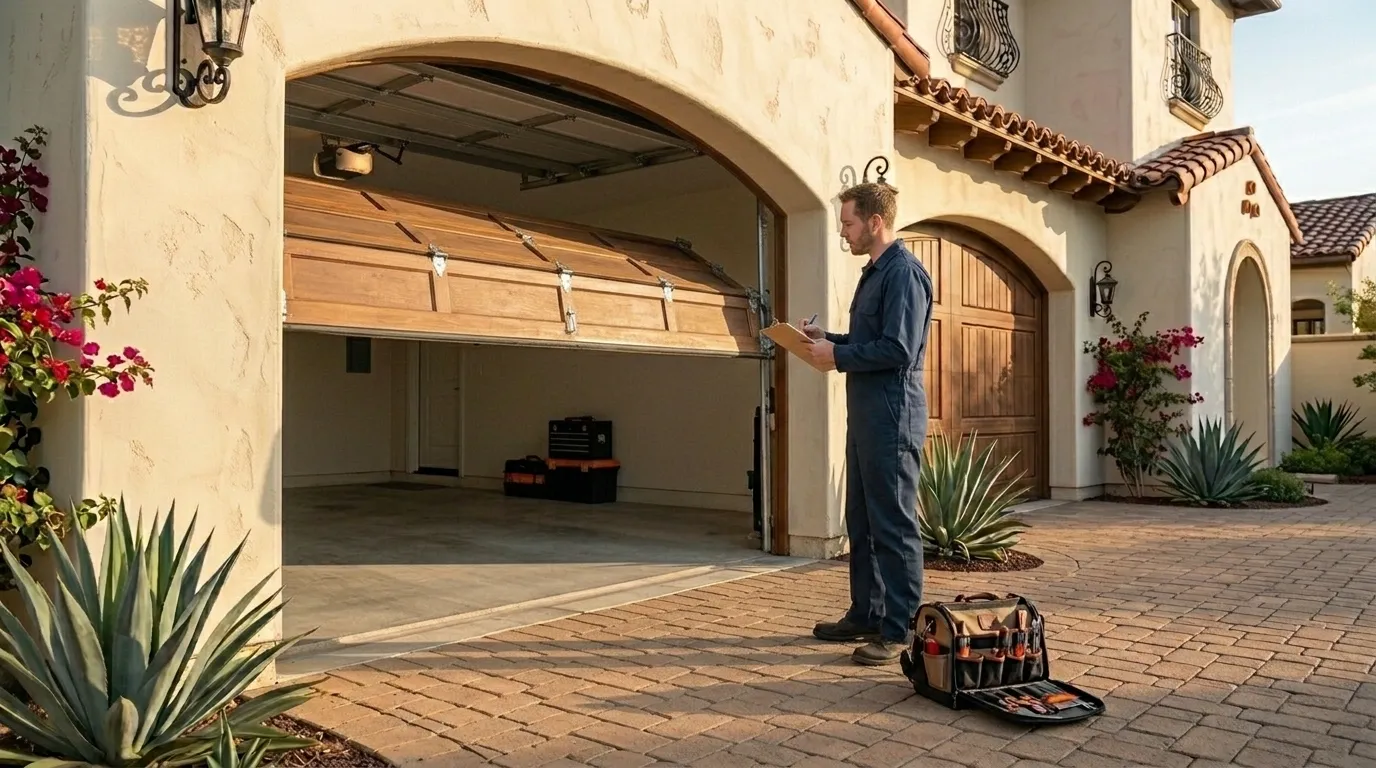
Put those two things together - a housing stock mostly built in the 1980s and 90s, sitting through a genuinely cold winter every year - and you get a fairly predictable failure pattern in Brighton. Springs on original hardware from that era are reaching or past the end of their cycle life right around now, and cold makes a marginal spring show its wear sooner than it would in a mild climate. Add outdated hinges and rollers, worn weatherstripping, and openers original to a 1990s door, and a service call this time of year is often not one broken part but three tired ones acting up together. That's what I mean when I say a call in Brighton in January tends to turn into a longer conversation than the same call in July - it's not that the door failed harder, it's that winter here exposes what summer let slide.
How it works

From “it’s stuck” to “it’s fixed”

A quick, honest process - no guesswork and no surprises, start to finish.

  1. 1
    Tell us what’s wrong - Brighton garage door service

    Tell us what’s wrong

    Describe the symptom - won’t open, loud bang, opener runs but the door won’t move.

  2. 2
    On-site diagnosis - Brighton garage door service

    On-site diagnosis

    A technician tests the door under power and by hand and finds what actually failed.

  3. 3
    Clear, up-front plan - Brighton garage door service

    Clear, up-front plan

    You get the fix that’s needed and what drives the cost - before any work starts.

  4. 4
    Repaired & tested - Brighton garage door service

    Repaired & tested

    The repair is done, the door is set true and tested, and the work area left clean.

Serving Brighton, CO - tell us what your door’s doing and we’ll take it from there.

How we work

What to expect

Diagnosis firstEvery visit starts by finding what actually failed - not a pre-written parts list.
The right part for the doorSprings and openers matched to the door’s weight and age, so the fix holds up.
Straight answersWhen a repair makes more sense than a replacement - or the reverse - you hear it plainly.
Clean, careful workTension released safely, hardware set true, the door tested under power before we leave.
Questions

Frequently asked

Straight answers about garage door repair in Brighton. Still unsure? Ask us directly.

How old does a garage door have to be before the spring is a real risk?

Torsion springs are rated in cycles, not years, but a lot of Brighton's stock is original hardware from a 1958-2010 build range - much of it 1980s or 90s. Cold weather accelerates wear on a spring that's already near the end of its rated life, so original springs on houses from that era are worth having checked before they let go on their own.

Why does my opener struggle more in winter here?

Brighton's cold, severe winters thicken the grease on rollers and hinges and cause steel torsion springs to contract slightly, both of which add resistance the opener has to overcome. The motor isn't broken - it's just working harder against a door that's stiffer in January than it was in September.

Is it worth replacing an old door instead of fixing it?

Sometimes. If the opener, track, and springs are all original to a 1980s or 90s build and several are wearing out together, three separate repair calls can end up costing more than one replacement. It depends on what's actually failing, which is worth a look before deciding either way.

Ready to get your garage door sorted?

Tell us what it’s doing and where you are in Brighton - we’ll take it from there.

Request a QuoteCall