Checking It Yourself
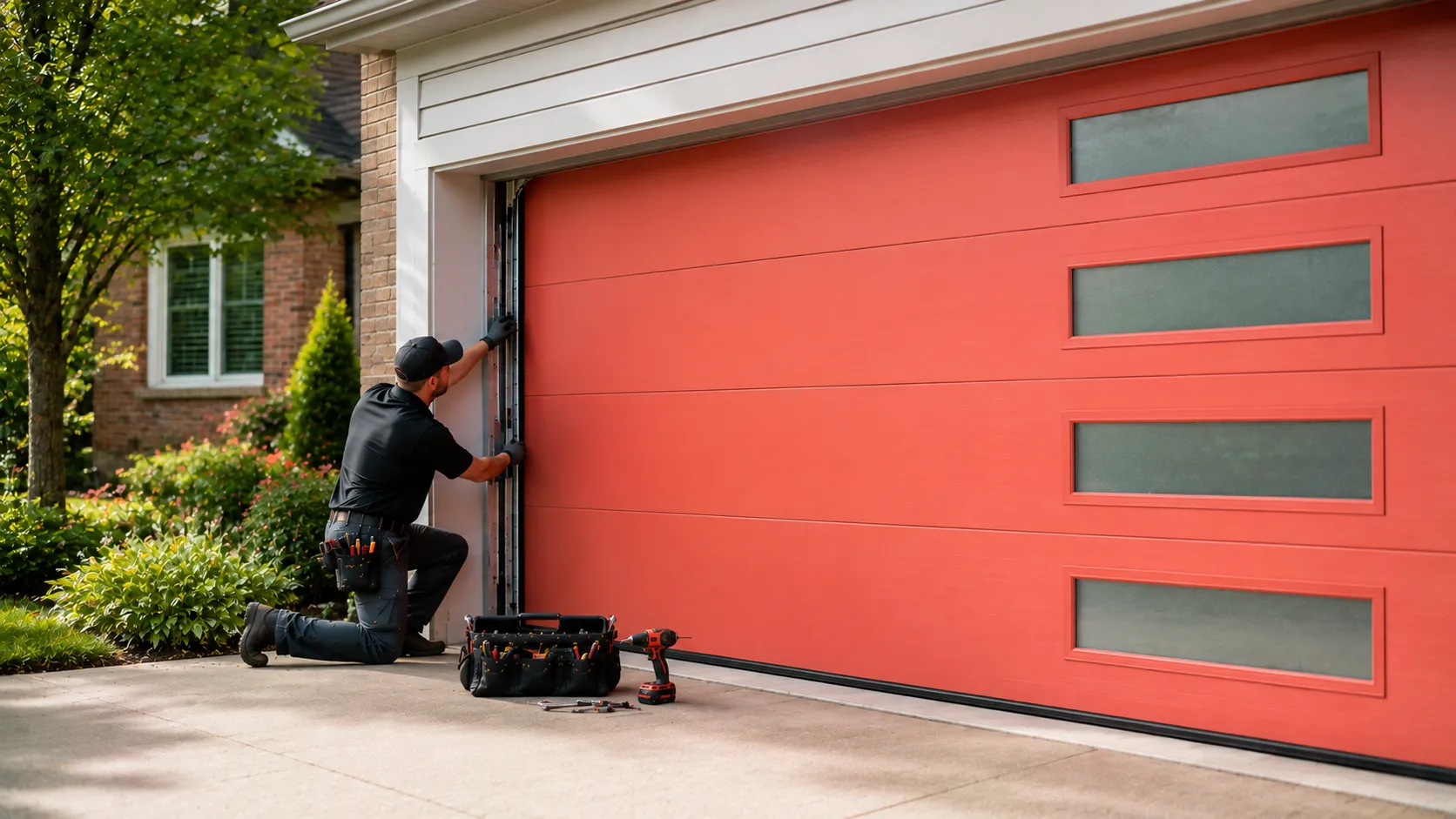
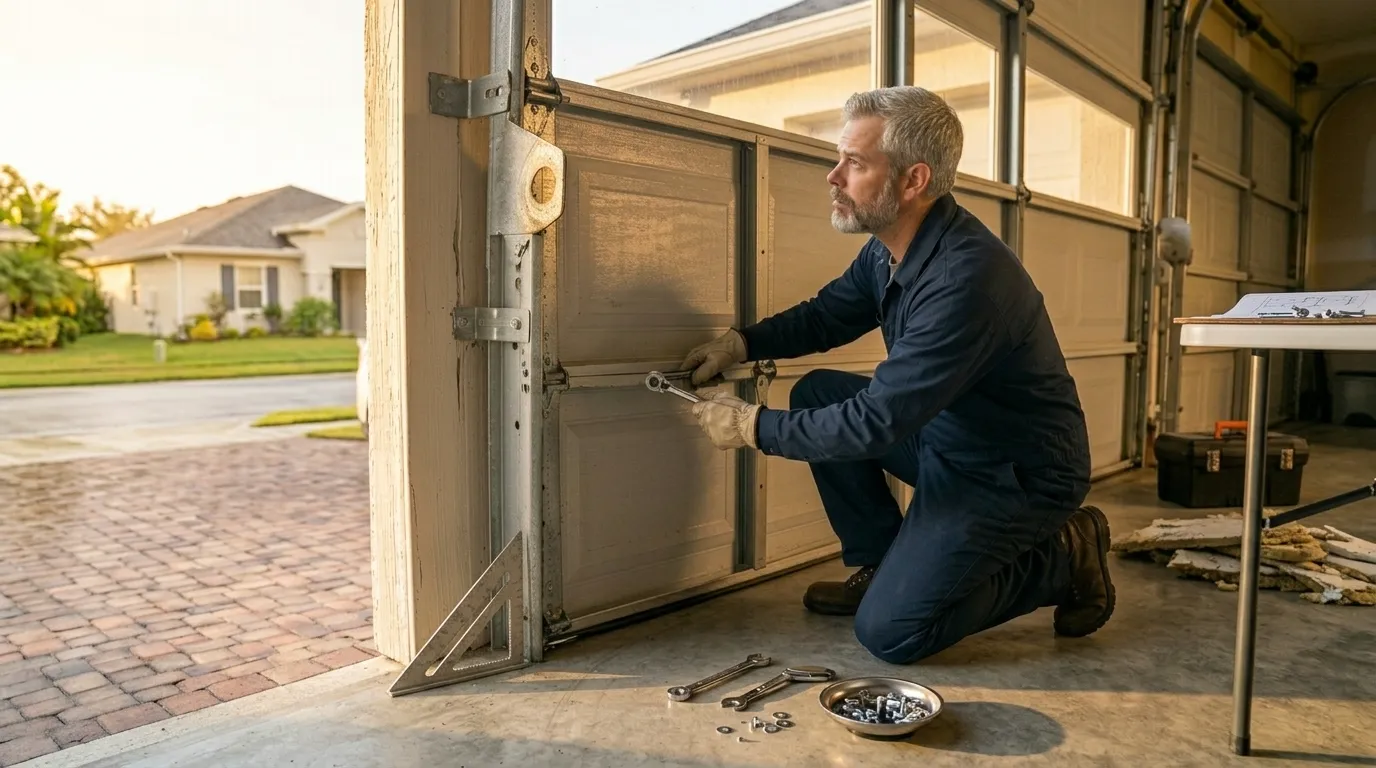
Most of the doors we get called out for going off-track sit on houses built between 1958 and 2010, with the bulk of that stock going up in the 1980s and 90s. That matters because a door of that age has original rollers and track brackets that have flexed through thirty-plus winters. Start by looking at the track itself, not the door. Stand at the side and sight down the vertical rail from bottom to top. A slight lean is normal settling. A gap where the roller has pulled away from the rail, or a track that's bowed outward at a bracket, is not.
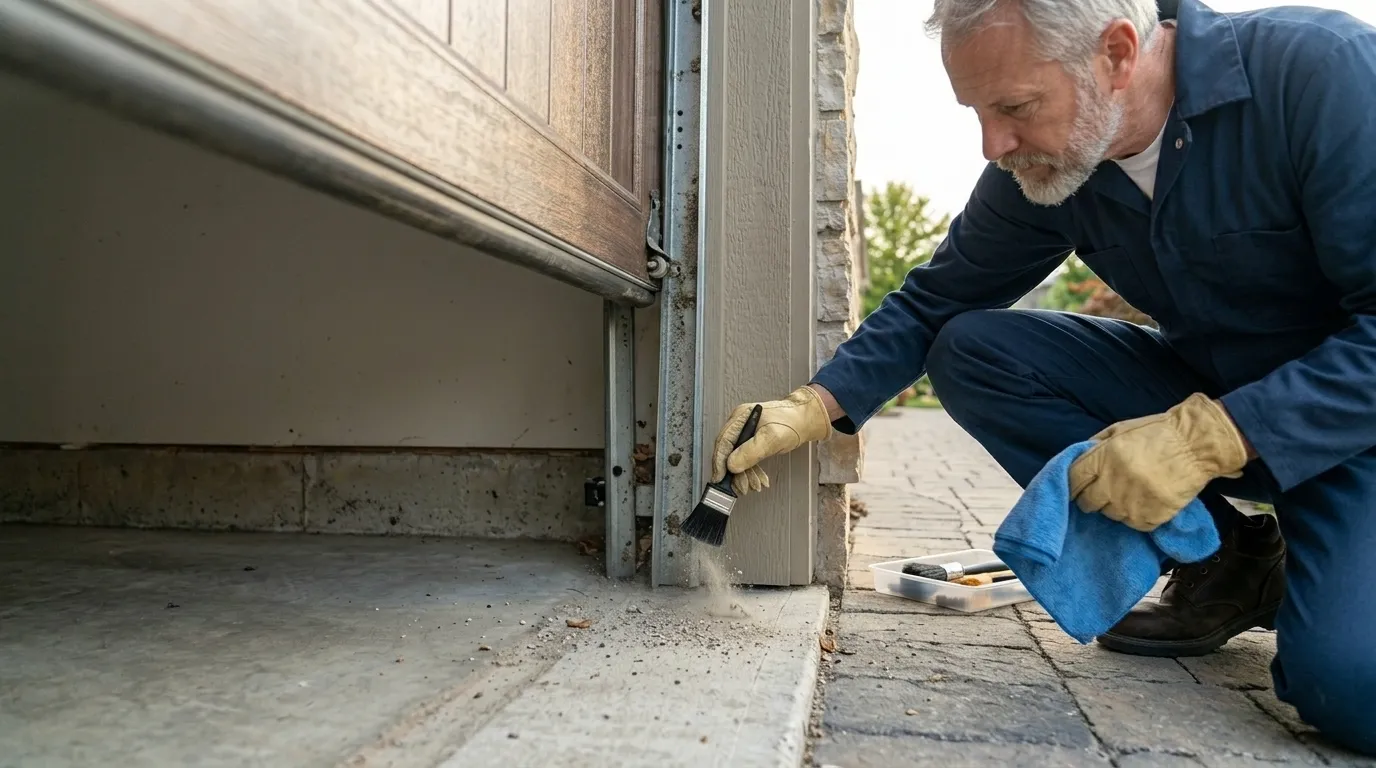
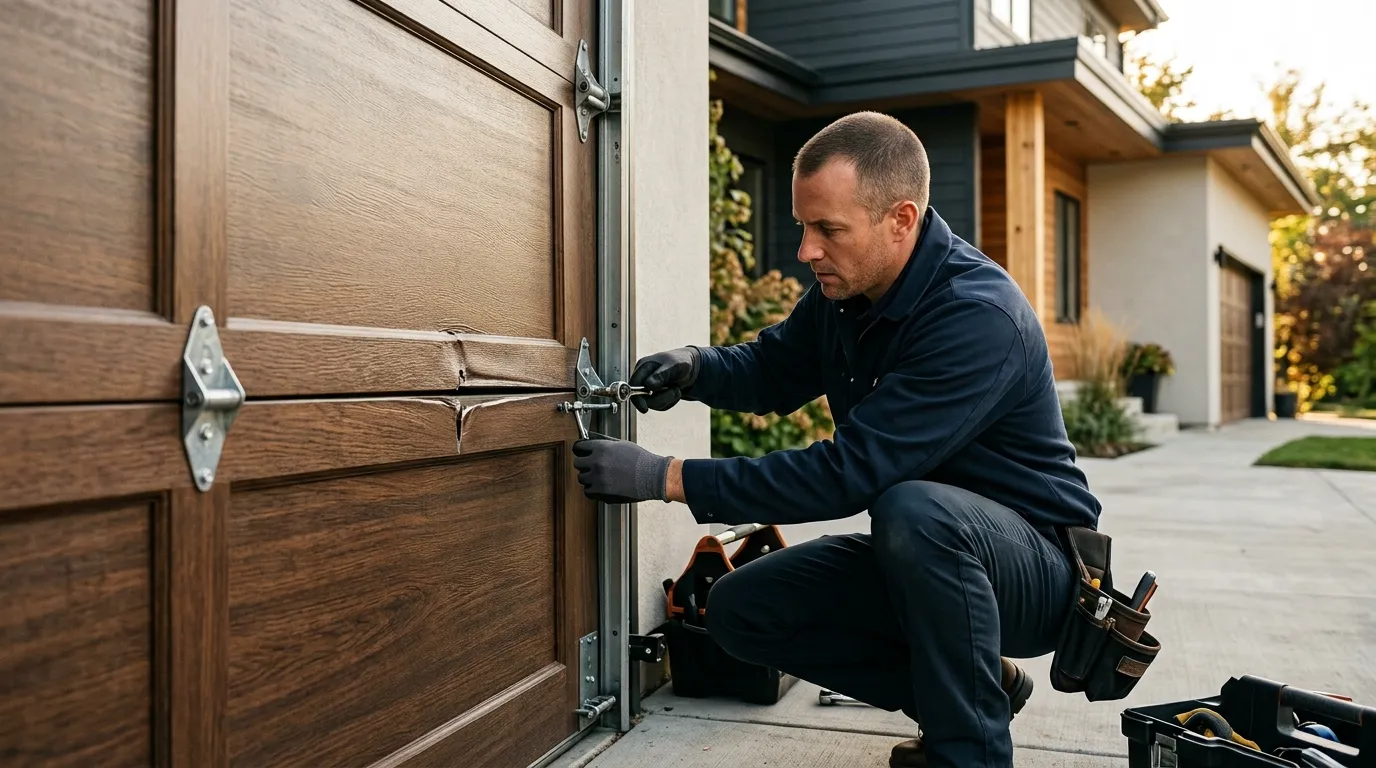
Check the lag screws holding the brackets to the framing. On houses from that 1980s-90s wave, wood jambs have shrunk over the decades and screws back out a turn or two. That slack lets the whole track rock sideways every time the door runs, and a rocking track eventually walks a roller right off the rail.
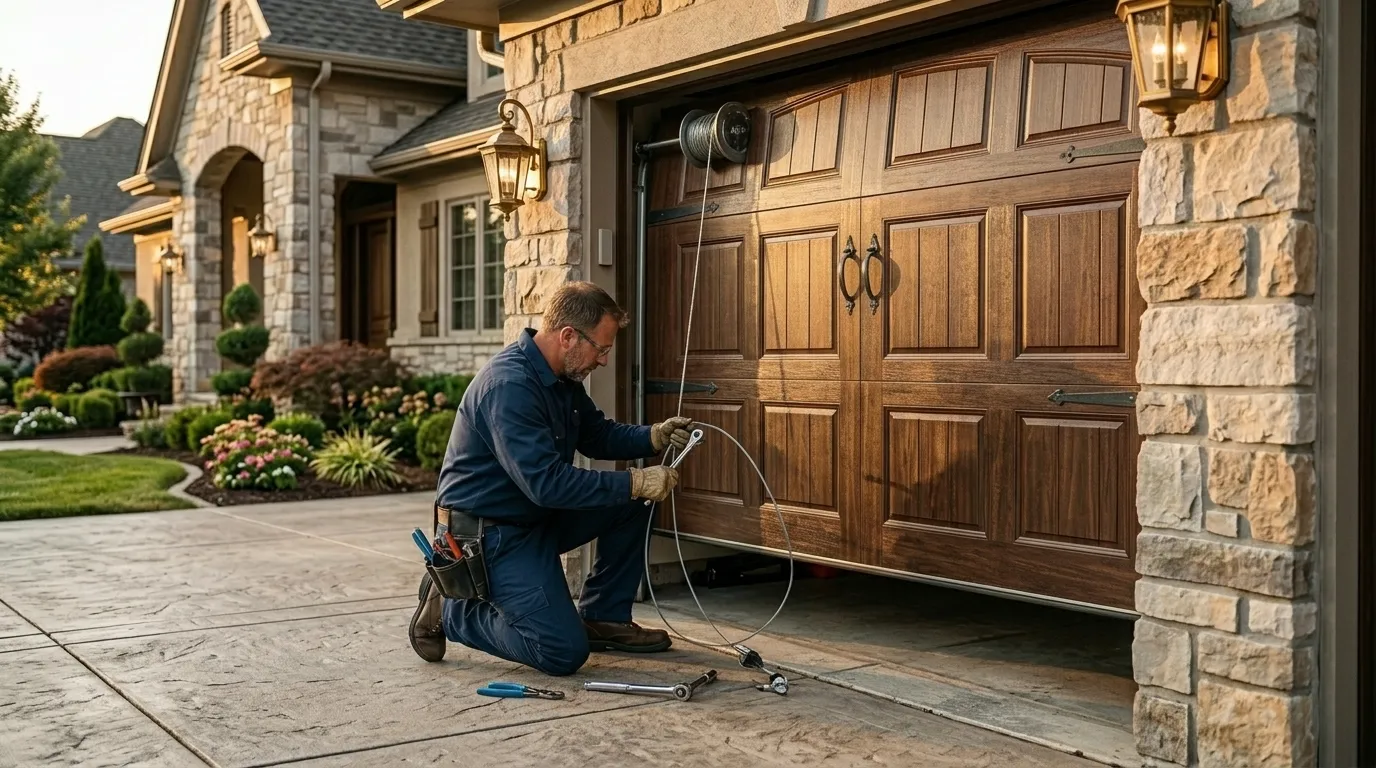
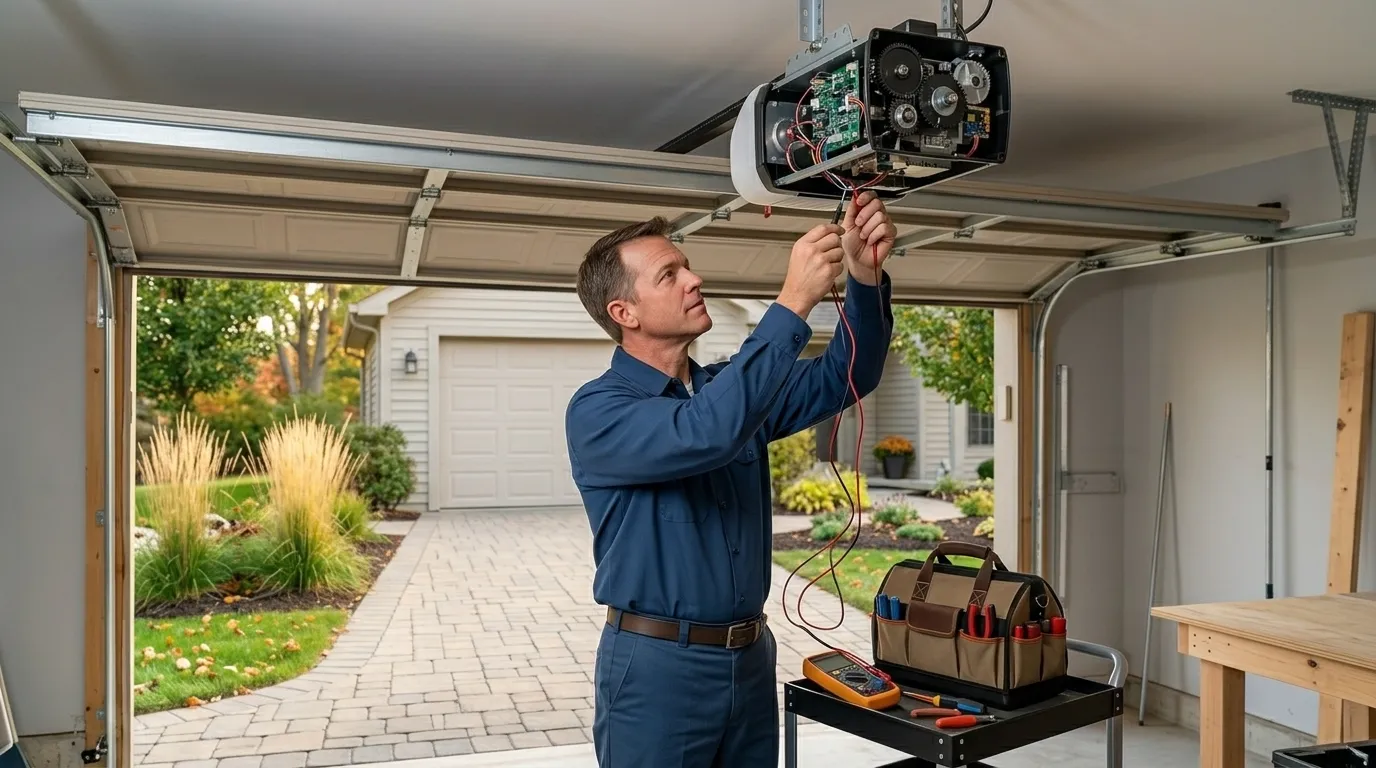
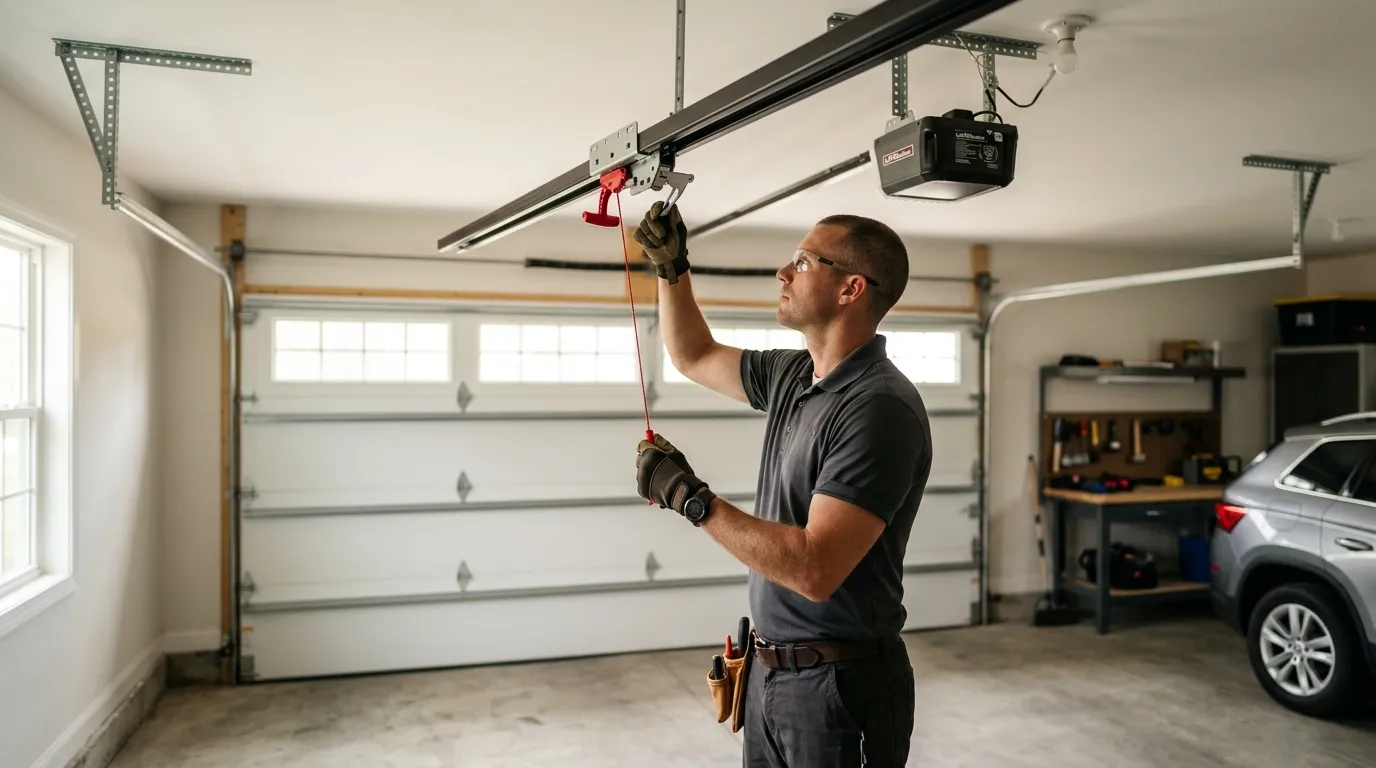
Don't run the opener with the door already leaning off the rail - that's how a cable jumps a drum. If you see daylight between roller and track, stop and call. This is a check-and-call situation, not a check-and-fix-it-yourself one, once the track has actually separated from a roller.
What the Weather Here Does to It
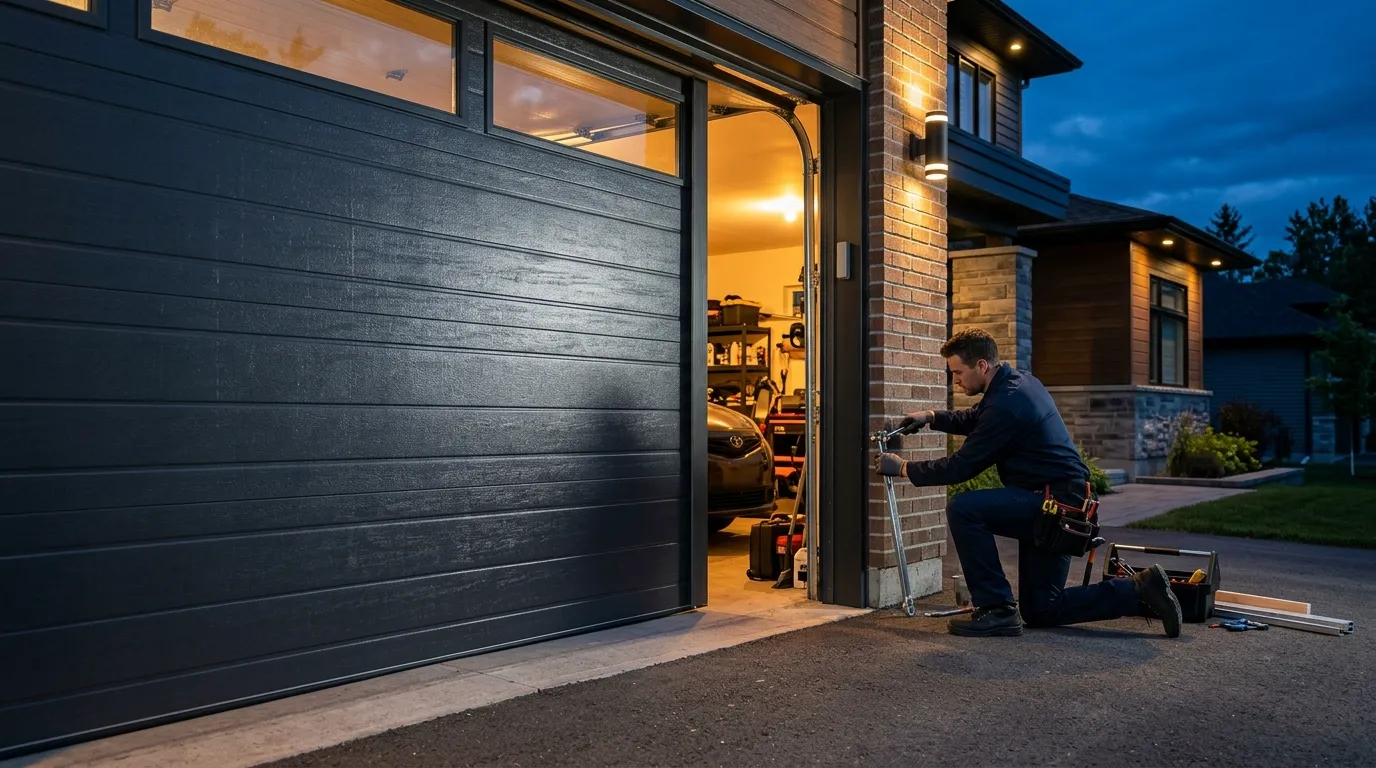
Brighton sits in a cold-severe climate band, and that means real freeze-thaw cycling on anything metal mounted outside a heated wall. Steel track contracts in a hard overnight freeze and expands again by afternoon. Do that a few hundred times a winter and the bracket bolts work loose faster than they would in a mild climate - this is not a one-time storm event, it's the daily grind of a Front Range winter.
Cold also stiffens the lubricant in old rollers, so a roller that used to glide now catches and jerks against the rail. A jerking roller puts sideways load on the track instead of straight-down load, and sideways load is exactly what walks a track out of alignment. Houses built in the 1980s and 90s boom years, which make up most of the stock in Brighton and the towns around it, are hitting the age where that stiffened-roller, loosened-bracket combination shows up together, and that's usually when a door finally jumps track instead of just running rough.
What Is Going On
Underneath the roller-and-bracket wear is a simple mechanical fact: a garage door track only holds alignment as long as every bracket point is pulling in the same direction. On a house from the 1958-2010 building wave that makes up Brighton's housing stock, thirty-plus years of seasonal wood movement, freeze-thaw bolt loosening, and roller wear all push in slightly different directions at different points along the rail. One bracket loosens a season before the next, one roller wears a season before the next, and the track slowly twists instead of failing all at once.
That's why an off-track door rarely happens on a brand-new install - it's a cumulative thing, and it shows up hardest in exactly the housing stock and climate band this area has. Whether you're closer in toward Brighton itself or out toward Todd Creek or Reunion, a door on a house from that same era is working through the same slow drift. Catching the loose bracket before the roller leaves the rail is the difference between a twenty-minute adjustment and a track replacement.