Checking It Yourself
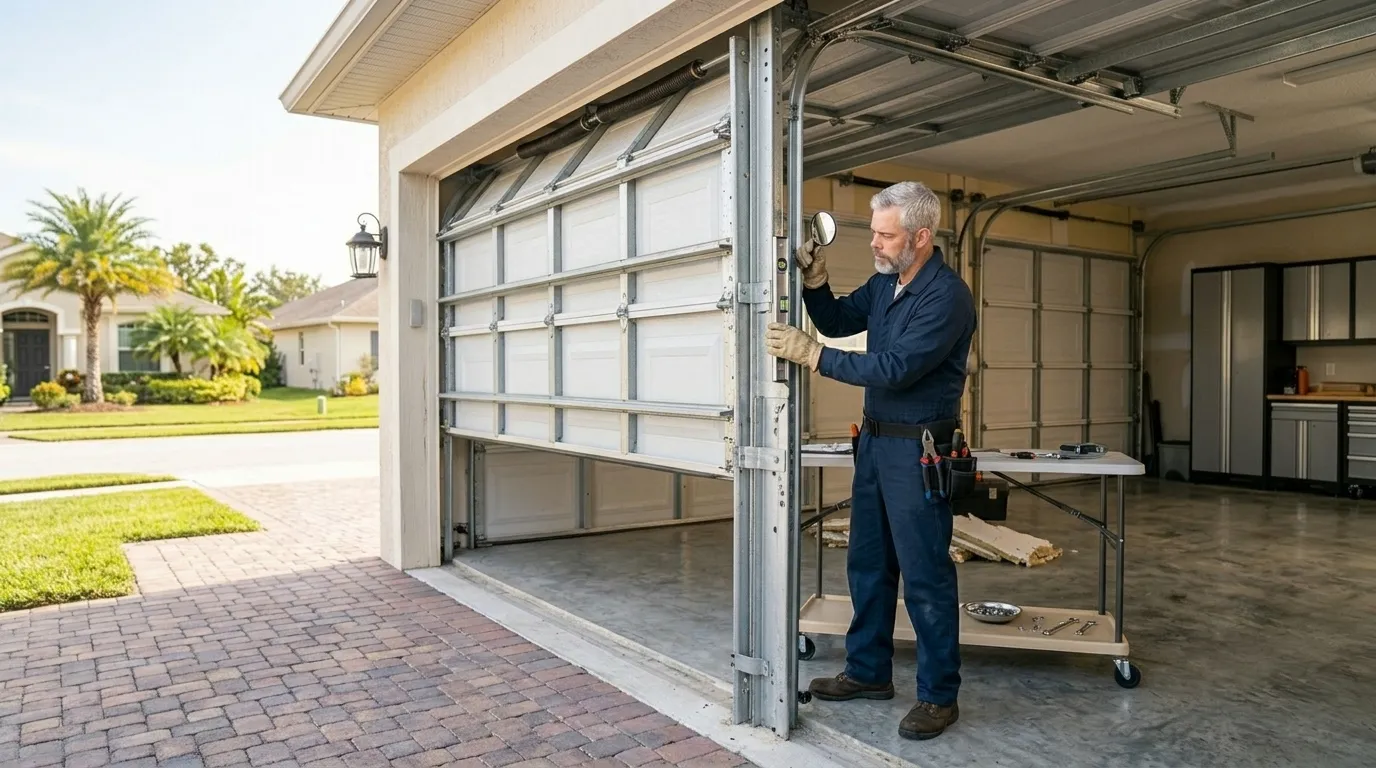
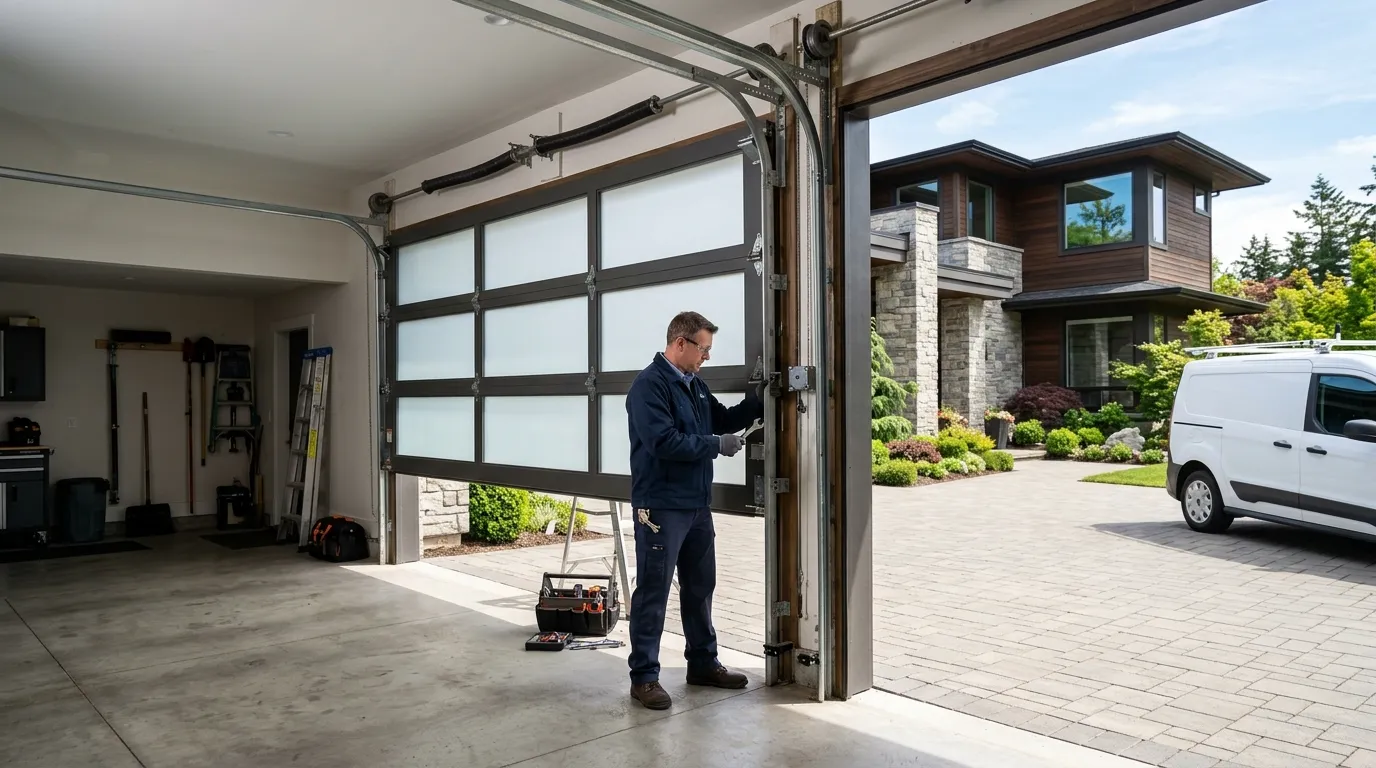
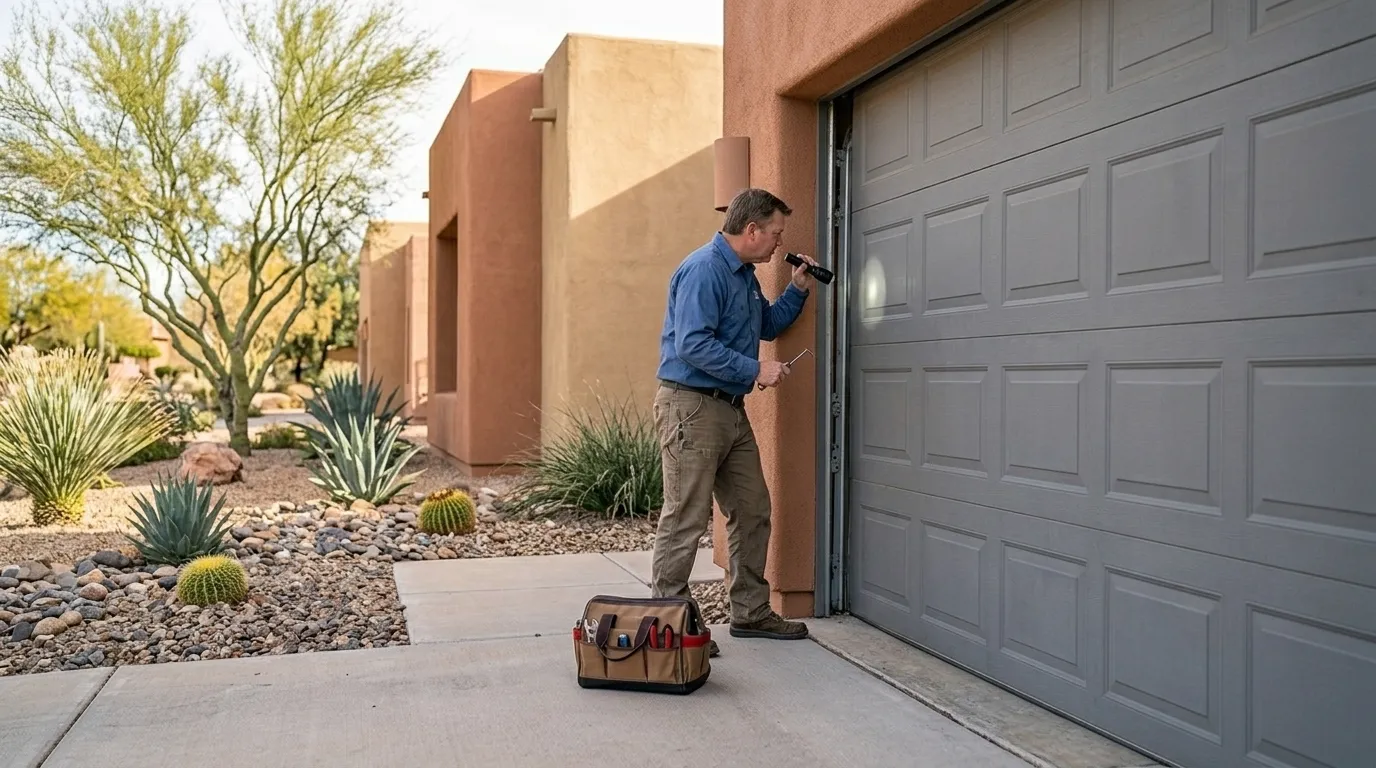
Most houses in the Brighton service area went up between 1958 and 2010, with the bulk of that stock dating to the 1980s and 90s across the 23 named subdivisions out here. That range matters because it tells you what kind of hardware you're probably dealing with: extension springs on older side-mount tracks in the earlier builds, torsion springs on a center shaft in the newer ones. Before you call anyone, open and close the door by hand with the opener disconnected. It should move smoothly and stay put wherever you let go. If it drops on its own, a spring has lost tension - that's not a DIY fix, and it's not worth risking fingers or a trip to the ER over. Check the tracks for daylight gaps where they meet the wall brackets, since decades of freeze-thaw cycling loosens lag screws in wood jambs common to this era of construction. Look at the bottom seal too. A hardened, cracked seal on a door built when Brighton's housing was still filling in during the 90s has usually outlived its rubber by a decade. None of this takes tools. It takes five minutes and a flashlight.
What the Weather Here Does to It
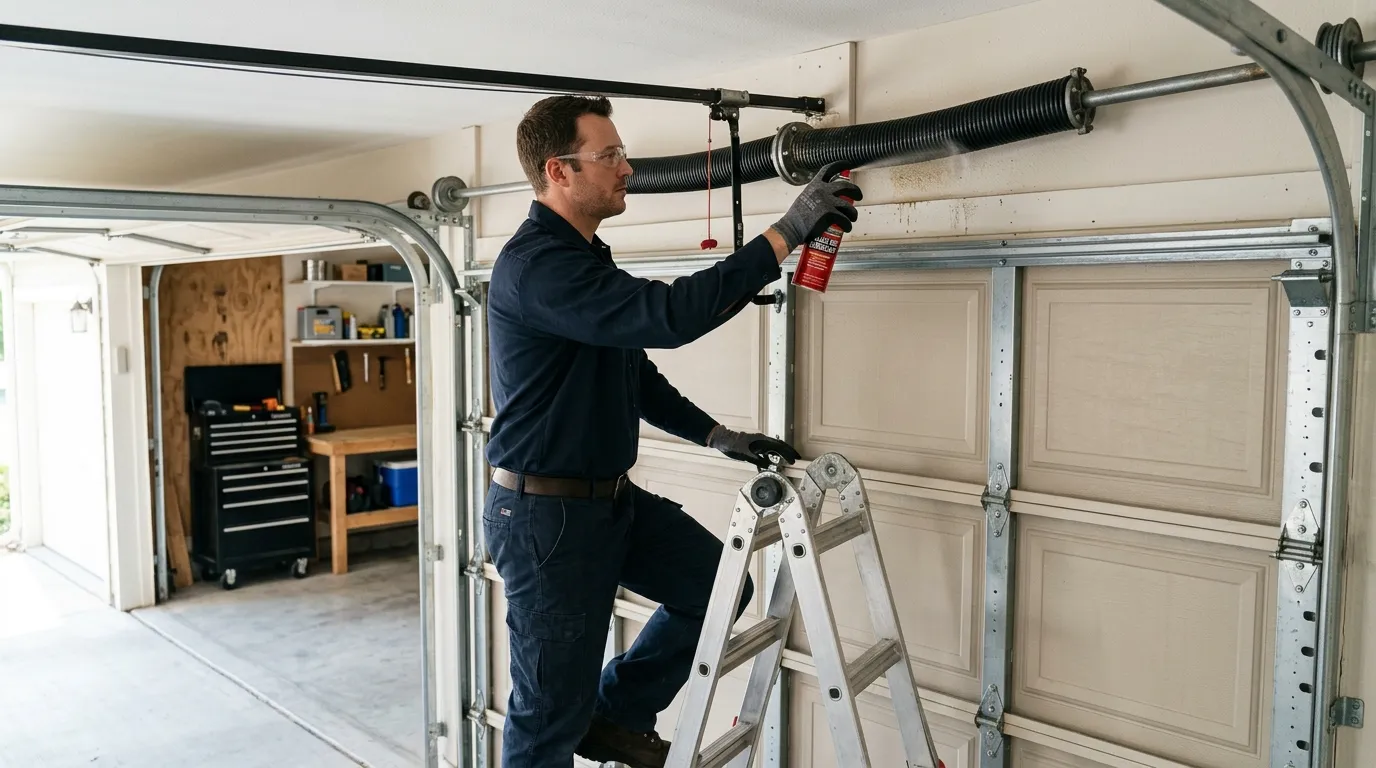
This area sits in a cold, severe climate band, and that shows up in specific ways on a garage door rather than generic ones. Steel contracts hard in a deep overnight freeze, and on a torsion spring that's already near the end of its cycle life, that contraction is often what finally snaps it - which is why late-night and early-morning cold snaps produce more spring calls than mild afternoons. Nylon rollers, common on doors installed anywhere from the 1980s through the 2010s in this area, get brittle and start chipping in sustained cold, and a chipped roller is where that rhythmic thump comes from as it rolls over the track seam. Track hardware also tightens and loosens with the freeze-thaw swing, which is a big part of why lag bolts backing out of the jamb is such a common call here. None of this is exotic. It's ordinary cold-climate wear, but it moves faster on a 30-plus-year-old door than people expect.
What Is Going On
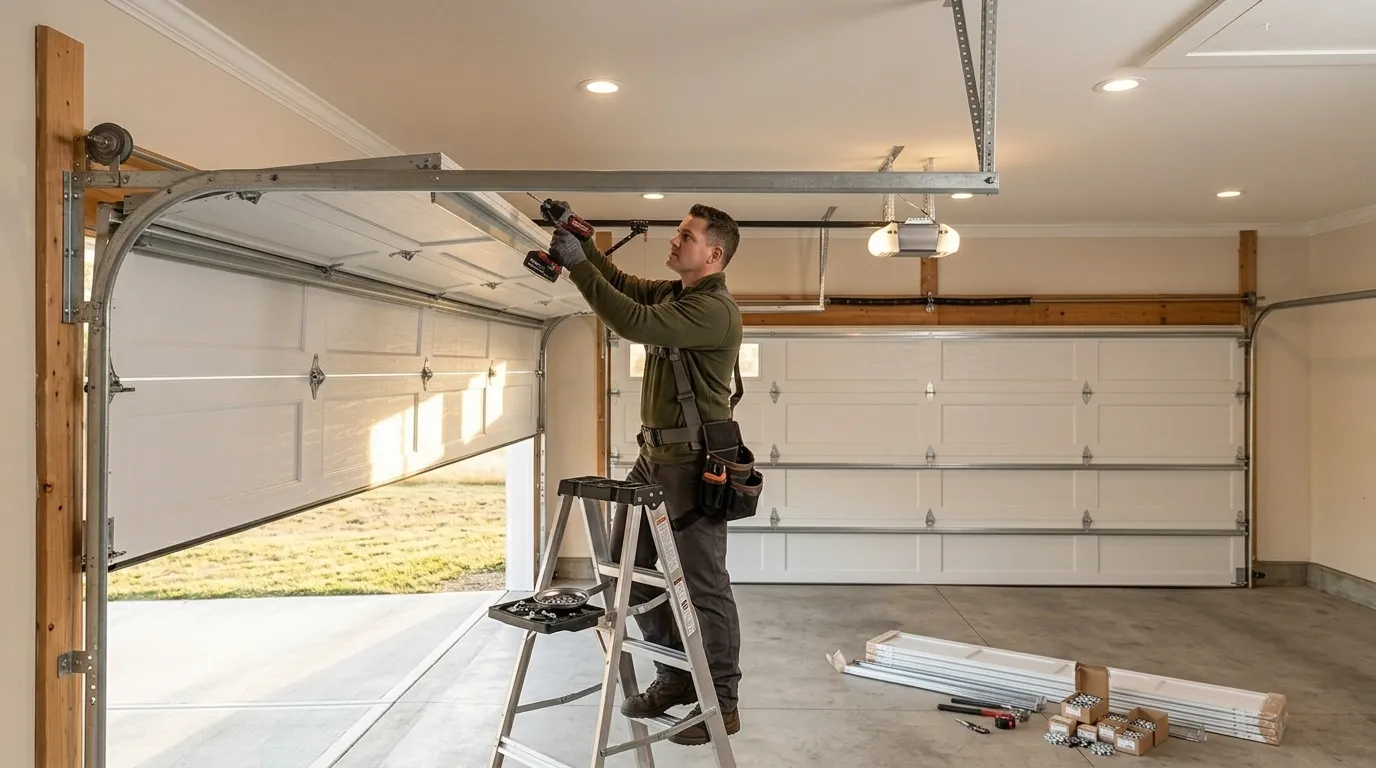
Given the age spread of housing here - median build year 1991, with plenty of stock stretching back to 1958 and forward to 2010 - most of what you hear is age catching up with hardware that was never rated to last forever. A door installed when a subdivision first went in near Todd Creek or out toward Lochbuie is now three-plus decades into a service life that springs and rollers were never meant to cover without replacement. Add a cold, severe climate to that math and the wear accelerates on schedule, not by chance. If you're hearing something new - a pop on opening, a shudder halfway up, a metallic drag - it's worth having someone look at the spring, the rollers, and the track alignment together rather than guessing at one part. We work across this area, including out toward Fort Lupton and the Aristocrat Ranchettes side of things, and the pattern of calls we get lines up almost exactly with the age of the housing stock in each pocket.