24/7 Emergency Service Open 7 days · 7am–8pm Serving Brighton, CO & nearby
(720) 738-8112
Brighton, CO

What Actually Happens When We Come Out to Your Door

Brighton Garage Door Pros breaks down what a service call covers for the cold-climate, 1980s-90s housing stock found across Brighton, CO's neighborhoods.

What Actually Happens When We Come Out to Your Door

Checking It Yourself

Before you pick up the phone, walk out and look at the door with the light off and the opener unplugged. Pull the release cord and lift the door by hand - it should move smoothly and stay put about halfway up. If it slams down or you can't budge it, a spring is losing tension, and that's not a DIY fix.

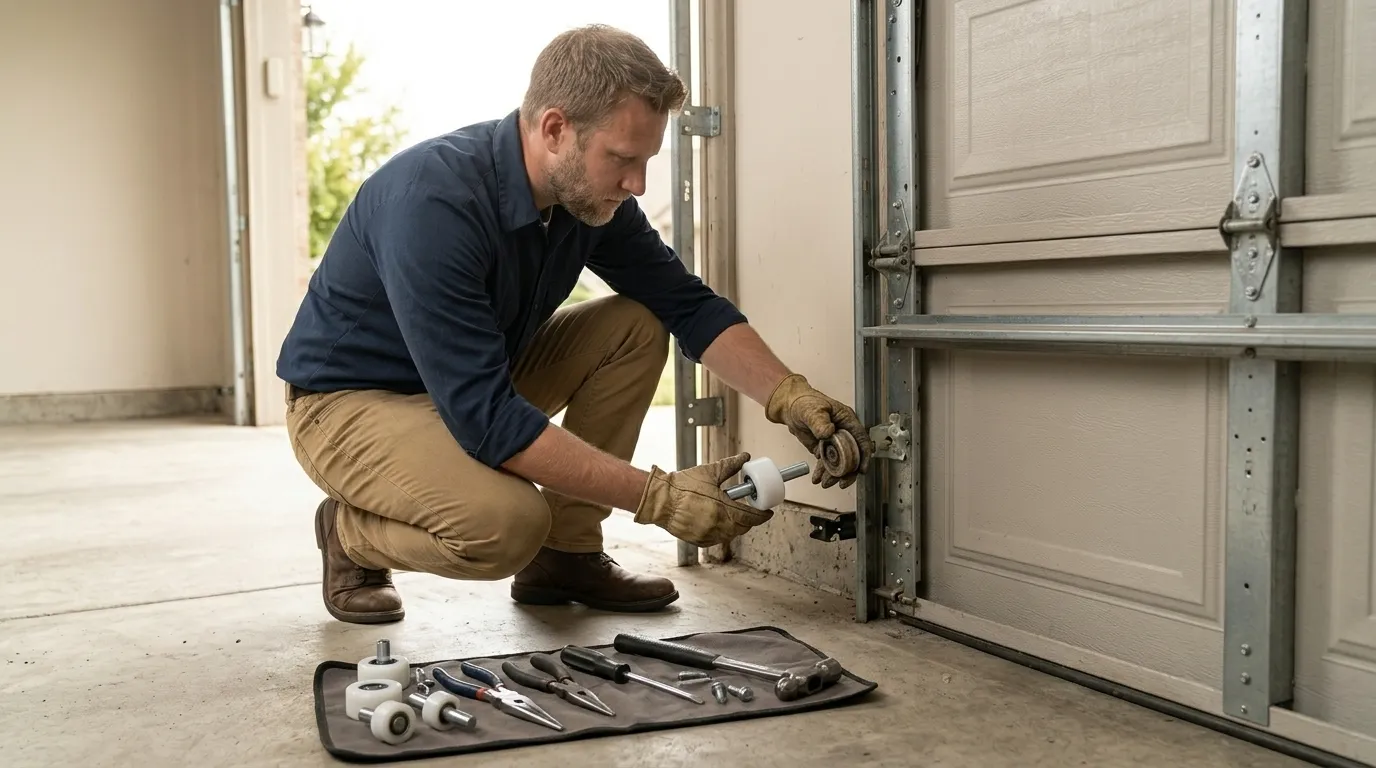
Most of the doors we see sit on housing built between 1958 and 2010, with the median home dating to 1991, so a lot of what's out there is original hardware pushing 30-plus years. Check the rollers for flat spots or cracking, run a hand along the track for dents, and look at the weatherstripping on the bottom panel - if it's cracked or torn, cold air and meltwater are getting in.

Listen while it runs. Grinding usually means a roller or bearing is going. A loud bang on the way up or down is almost always a spring. Neither of those is something to keep operating on - write down what you hear and when it happens, because that detail speeds up the visit.

What the Weather Here Does to It

Brighton sits in a climate band our records mark as cold-severe, and that matters more to a garage door than most people think. Steel panels contract in a hard freeze, which tightens tolerances at the hinges and can turn a slightly-off roller into a grinding one overnight. Grease that moved fine in September turns to paste in January and makes the opener strain to lift a door that isn't actually heavy.

Torsion springs feel this the most. A spring holds tension all year, and cold makes the steel less forgiving - a spring that's been fraying for months is more likely to let go on the coldest morning of the year than on a mild one. That's not a guess, it's just how the metal behaves.

The honest limitation here: we can't stop the temperature swings, and we can't make an aging spring last forever just by lubricating it. What a cold-season check does is catch the fraying, the flat-spotted roller, or the track that's pulled a sixteenth of an inch out of line before one of those turns into a door stuck shut on a Tuesday morning.

Leaving It Alone

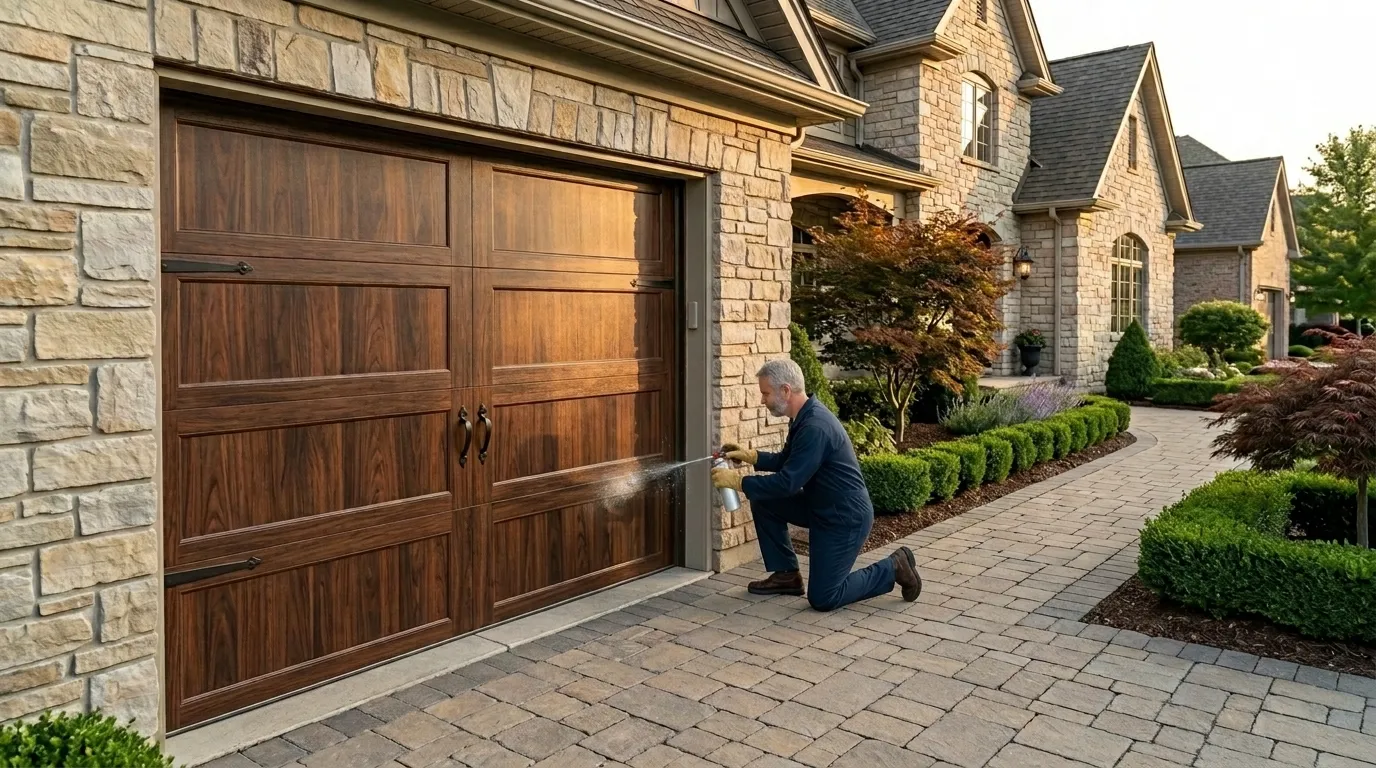
Not every noisy door needs a truck. If the sound is a squeak that shows up only in the cold and goes away once the door's been up and down a few times, that's usually just stiff grease, not a failing part. Spraying a light lubricant on the rollers and hinges (not the track) solves more of these calls than people expect.

Across the service area, 52,989 of the roughly 105,422 households are owner-occupied, and for a lot of those owners the door is original to a house built sometime in the 1980s or 90s. At that age, the question isn't always "repair or replace" - sometimes the opener is fine and only the springs need swapping, and sometimes the whole assembly is old enough that patching one part just moves the failure to the next one. We'll tell you straight which category yours is in rather than sell a repair we don't think will hold.

We also won't recommend replacing a door that's still structurally sound just because it's dated. If the panels are solid and the track is straight, a spring and roller service is usually the honest answer, not a new door.

What Is Going On

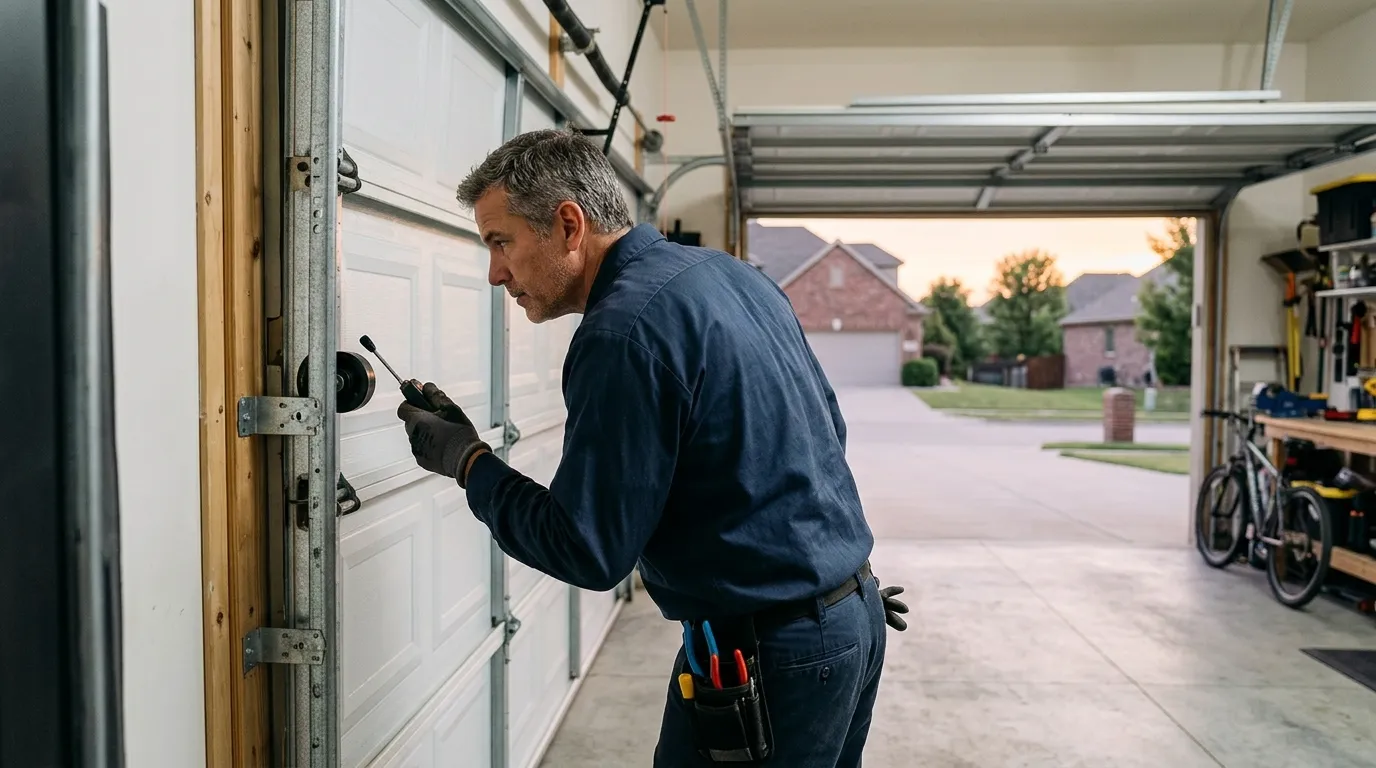
A service call starts with the same walk-through you'd do yourself, but with torque tools and a spring gauge instead of a guess. We check spring tension against the door's actual weight, inspect both cables for fraying at the drum, and run the track alignment with a level rather than an eyeball. On openers, we check the force settings - too high and the door will crush something before it reverses, too low and it won't lift in a hard freeze.

Because the service area covers 23 named neighborhoods built mostly in that same 1980s-90s stretch, we're often working on the same door models and the same chain-drive openers call after call, which means we know where those units tend to fail first. If you're out toward Todd Creek, four miles off, or Lochbuie, five miles out, you're dealing with the same cold-severe swings that stress spring coils here in town. Fort Lupton, eight miles out, and the Aristocrat Ranchettes area, ten miles, run the same vintage of housing.

We leave you with a written note of what we found, what we fixed, and what to watch - springs and cables wear on a schedule, not a whim, and it helps to know where yours stands.
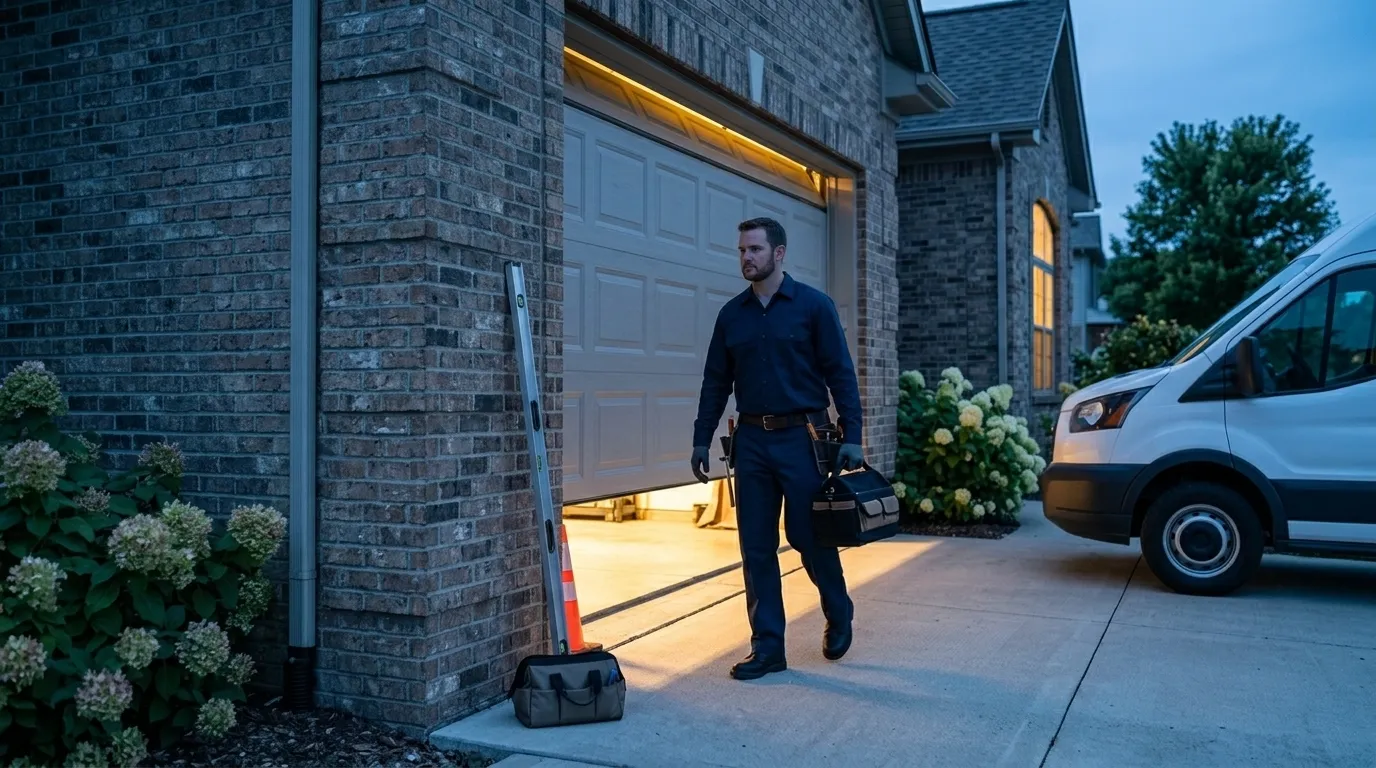
How it works

From “it’s stuck” to “it’s fixed”

A quick, honest process - no guesswork and no surprises, start to finish.

  1. 1
    Tell us what’s wrong - Brighton garage door service

    Tell us what’s wrong

    Describe the symptom - won’t open, loud bang, opener runs but the door won’t move.

  2. 2
    On-site diagnosis - Brighton garage door service

    On-site diagnosis

    A technician tests the door under power and by hand and finds what actually failed.

  3. 3
    Clear, up-front plan - Brighton garage door service

    Clear, up-front plan

    You get the fix that’s needed and what drives the cost - before any work starts.

  4. 4
    Repaired & tested - Brighton garage door service

    Repaired & tested

    The repair is done, the door is set true and tested, and the work area left clean.

Serving Brighton, CO - tell us what your door’s doing and we’ll take it from there.

How we work

What to expect

Diagnosis firstEvery visit starts by finding what actually failed - not a pre-written parts list.
The right part for the doorSprings and openers matched to the door’s weight and age, so the fix holds up.
Straight answersWhen a repair makes more sense than a replacement - or the reverse - you hear it plainly.
Clean, careful workTension released safely, hardware set true, the door tested under power before we leave.
Questions

Frequently asked

Straight answers about garage door repair in Brighton. Still unsure? Ask us directly.

How long does a standard service call take?

It depends on what's wrong, but a spring or roller repair on a residential door is typically a same-visit job once we've diagnosed it. We don't quote a fixed number here because a torsion spring swap and a full track realignment aren't the same amount of work, and we'd rather tell you on-site than guess.

Why does my door act up more in winter?

Brighton sits in a cold-severe climate band, and steel doors, springs, and lubricant all behave differently in a hard freeze than they do in July. Grease thickens, metal contracts slightly, and a spring that's already fraying is more likely to fail on a cold morning than a mild one.

Is my door too old to repair?

Not necessarily. Most housing in the service area went up between 1958 and 2010, with a lot of it from the 1980s and 90s, and plenty of those original doors are still structurally sound. We check the panels and track before recommending anything - if the frame's good, a spring and roller service often makes more sense than replacement.

Can I lubricate the door myself between visits?

Yes. A light lubricant on the rollers and hinges, not the track itself, is a fine thing to do a couple times a year, especially before winter. It won't fix a failing spring or a bent track, but it does reduce the strain that cold weather puts on parts that are already wearing.

Ready to get your garage door sorted?

Tell us what it’s doing and where you are in Brighton - we’ll take it from there.

Request a QuoteCall